About 50 workers are still unaccounted for after a fire tore through an Indonesian candy factory, and rescuers are racing the clock to find them.
Story Highlights
- Police recovered several body bags as crews searched unstable wreckage.
- Officials stressed the missing count is an accountability figure, not confirmed deaths.
- The blaze hit PT Fonusa Agung Mulia in Cikande, Serang regency, Banten province.
- Early counts shifted as authorities and the company reconciled worker rosters.
What Happened at the Factory
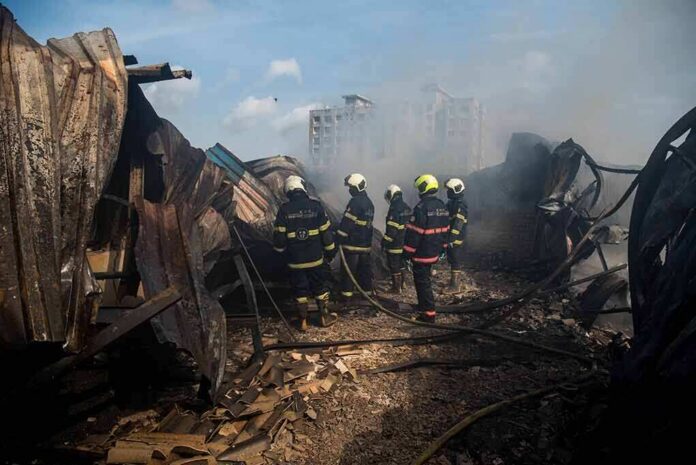
Indonesian police and firefighters responded after a blaze ripped through the PT Fonusa Agung Mulia candy factory in Cikande, Serang regency, in Banten province, on Saturday evening local time. Emergency crews battled hot spots and searched collapsed areas on Sunday. Police reported recovering body bags from the site as part of an ongoing recovery effort. The scene remained dangerous, which slowed search work. Authorities reported about 50 workers missing as crews pushed to reach more areas of the plant.
Police emphasized that the missing count is not a confirmed death toll. The figure reflects workers who had not yet been found or checked in with managers or family. Investigators warned that recovery would take time, including careful work to identify remains. Officials also cautioned that body bags do not equal a one-to-one count of the dead, because the fire’s intensity complicates identification and may require DNA testing in the days ahead.
Who Is Affected and Where
The fire struck a large confectionery producer known for Milkita and other sweets. The plant sits in Cikande, an industrial area west of Jakarta. The company and local leaders coordinated with police and emergency teams to verify who had been on site when flames spread. As rosters were reviewed, some workers reported in, while others stayed unaccounted for. The changing numbers reflected this process. Reporters on the ground described heavy damage across production areas and scattered wreckage.
Local media and wire services documented a fluid picture as day-shift, night-shift, and contract records were checked. Early snapshots listed three confirmed dead and dozens missing, while later updates adjusted the totals as more people were found or treated. That kind of movement is common after mass-casualty events, when managers and rescuers must match partial lists against hospital and family reports. Officials said the cause of the blaze was still under investigation as crews worked.
Why the Numbers Shifted
Search leaders explained that accountability counts change for clear reasons. First, rosters can be incomplete when a building burns and systems fail. Second, workers may flee chaos, go home, or move to clinics without passing through a central checkpoint. Third, families might delay reporting a loved one safe or missing. These factors make early figures rough. Reporters cited several snapshots, including “about 50 missing,” as officials refined the list through Sunday and into Monday.
Indonesia sweets factory fire leaves three workers dead and 37 missing https://t.co/iQ2HQdNiIq
— Express & Star (@ExpressandStar) November 22, 2026
News outlets also noted rising body-bag counts across updates from police and local media. Readers should not assume each bag equals one person. Intense fires can fragment remains, and teams may consolidate material during recovery. Police said forensic work would take time and that families would be contacted as identifications are made. The goal now is to stabilize the site, complete the search, and produce a verified list of the living, the injured, and the dead.
Why This Matters Beyond Indonesia
Factory fires in fast-growing industrial zones often expose weak safety rules, poor training, or tight margins that push speed over safeguards. When rosters are unclear and exits fail, workers pay the price. People across the political spectrum see a common pattern: leaders praise growth, but basic protections lag. This fire echoes past industrial disasters in the region and underscores the need for inspections, alarms, drills, and clear head counts that can save lives when seconds count.
Sources:
youtube.com, kansas.com, ynetnews.com, bostonglobe.com