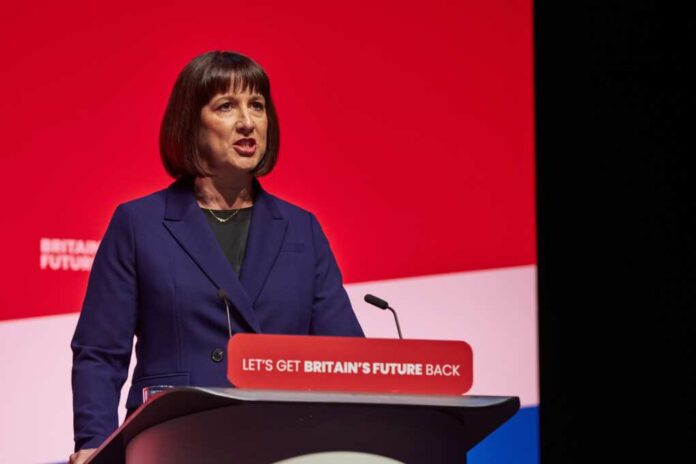
Rachel Reeves’ anticipated departure from Labour’s worker-centric manifesto shakes the foundations of the party’s credibility, causing ripples across the UK’s political landscape.
Story Highlights
- Rachel Reeves is set to dilute Labour’s key worker rights pledge.
- This move could erode Labour’s credibility with trade unions.
- Business lobbying majorly influences this potential policy shift.
- Labour faces internal tensions between pro-business and pro-union factions.
Labour’s Manifesto Pledge Under Threat
Rachel Reeves, Labour’s Shadow Chancellor, is reportedly preparing to modify the scope or timeline for the implementation of the “New Deal for Working People.” This pledge, a central component of Labour’s 2024 manifesto, included commitments to ban zero-hours contracts and end “fire and rehire” practices. These reforms were initially promised within the first 100 days of the party taking office. However, recent media reports indicate that internal discussions and lobbying from major business groups have led the party to reconsider the previously stated timeline and extent of these commitments.
Economic Pressures and Internal Tensions
The UK economy’s slow growth and ongoing regional economic disparities have created a challenge for Labour as it seeks to balance reforms for workers’ rights against achieving stability across economic sectors. Labour’s leadership, including Keir Starmer, aims to retain economic credibility with financial stakeholders while also pursuing social justice objectives. Meanwhile, trade unions are advocating for the swift implementation of comprehensive reforms. Conversely, business groups emphasize that maintaining stability and flexibility in labor laws is necessary to support investment and economic growth.
Labour has a historical record of moderating proposed reforms when faced with economic constraints. Current policy developments are being analyzed by observers as a potential repeat of previous compromises made between ambitious campaign commitments and the realities of governance.
Impact on Labour’s Credibility and Future
This potential policy adjustment carries political consequences for Labour, particularly concerning its relationship with core supporters and trade unions. Any delay or dilution could strain relations with unions and generate public discussion regarding Labour’s commitment to its promises. Conversely, a delay may be viewed favorably by business stakeholders. Workers in precarious employment situations face continued uncertainty regarding the proposed contractual changes.
Rachel Reeves blames everyone but herself and her Govt for the shocking state of the UK economy, and is clearly planning to announce massive tax rises that she and Keir Starmer repeatedly promised NOT to level on us. She has no idea what she’s doing. pic.twitter.com/iStIrunh5V
— Piers Morgan (@piersmorgan) November 4, 2025
Labour’s management of these competing interests will serve as a test of its capacity to reconcile the demands of its core labor base with the concerns of the business community. The final decision on the “New Deal” will significantly impact the party’s future engagement with trade unions, its internal cohesion, and its public standing in the political arena.
Sources:
Labour’s New Deal for Working People