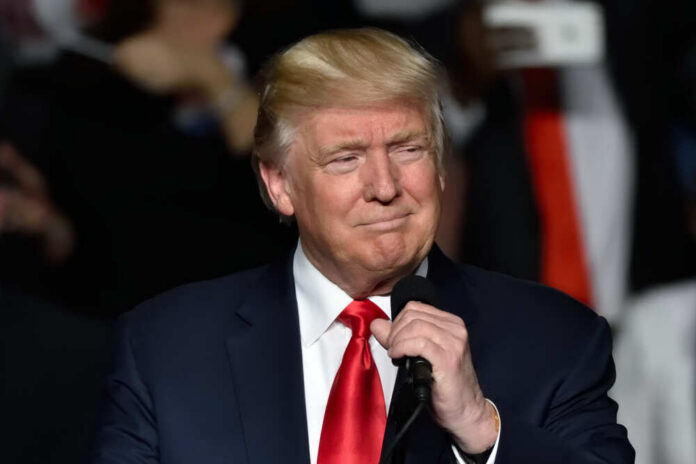
President Trump’s “Cuba will be next” remark is colliding with a war-weary MAGA base that expected America-first restraint, not another rolling foreign-policy escalation.
Story Snapshot
- President Trump has reportedly indicated Cuba could be the next U.S. target after the Iran conflict, framing the island as “weakened” amid a deepening energy and economic crisis.
- A Jan. 29 executive order declared a national emergency tied to alleged threats from Cuba’s government and helped launch an oil blockade that worsened fuel shortages.
- March 2026 brought a major grid collapse, long blackouts, and fresh protests—while Havana also confirmed talks with U.S. officials.
- Analysts warn that removing one leader may not change a security-heavy system, and that pressure without a post-crisis plan can invite chaos.
Trump’s “Next” Comment Lands in the Middle of a Wider War Debate
President Trump’s reported statement that Cuba “will be next” comes as the U.S. fights Iran and as many long-time Trump voters argue the country is sliding back into the kind of open-ended intervention they thought they rejected. The timeline described in reporting ties the remark to recent U.S. actions in Venezuela and Iran, and to Washington’s growing use of economic coercion against Havana instead of a declared invasion.
Trump’s posture also lands amid a second, more sensitive argument inside the coalition: how far U.S. policy should go in lockstep with Israel during the Iran war, and whether America is trading border security and fiscal sanity for another overseas mission set. The available reporting focuses on Cuba policy mechanics—blockade pressure and negotiation—rather than the internal U.S. political split, but the timing explains why the “next” language is igniting nerves.
What the Administration Has Already Put in Motion on Cuba
The most concrete U.S. step in the record is a Jan. 29 executive order declaring a national emergency over threats attributed to Cuba’s government. Reporting describes an oil blockade linked to that posture, tightening fuel access as the island’s power generation and basic services deteriorated. Cuban President Miguel Díaz-Canel publicly confirmed meetings with U.S. officials on March 13, indicating parallel tracks of pressure and talks rather than a single, formal diplomatic reset.
Reporting also links Cuba’s worsening fuel outlook to the collapse of Venezuelan support after a U.S. operation captured Venezuela’s president earlier in 2026. That matters because Cuba’s electrical grid and transportation system are highly dependent on reliable energy supplies, and disruptions cascade quickly into food supply, hospital operations, and public order. In other words, the leverage strategy is built around energy scarcity—an instrument that can move political actors, but also punishes ordinary families first.
Cuba’s Domestic Meltdown: Blackouts, Protests, Emigration, and Prisoners
Multiple sources describe a March 2026 national power grid collapse that left millions without electricity and triggered protests, including incidents like vandalism at a Communist Party office in Morón. Cuba has faced blackouts reported as lasting up to 15 hours, alongside shortages of food and medicine and a large wave of emigration described as exceeding 10% of the population. The regime’s response has emphasized control and repression rather than political opening.
Human-rights reporting adds detail that should matter to Americans who believe free speech and due process are non-negotiable. Cuba’s crackdown after the July 2021 protests left hundreds imprisoned, with tracking groups and watchdogs documenting ongoing detentions years later. A Vatican- and U.S.-brokered release of detainees in 2025 reduced the numbers, but the broader point remains: the state security apparatus is intact, and the tools of coercion remain available even when economic desperation pushes people into the streets.
Pressure vs. Regime Change: What Experts Say Is Realistic
Outside analysis splits on what pressure can realistically produce in the near term. One school argues the U.S. should demand a genuine democratic transition because Cuba’s security services and one-party structures run deeper than any single president. Another assessment says “hardening” is the most likely immediate outcome—meaning the system clamps down and survives—because the state still controls the coercive levers. That combination suggests a high bar for success if Washington’s goal is rapid political turnover.
For conservatives who are exhausted by nation-building, the practical question is narrower than slogans: what is the defined end state, and how does the U.S. avoid a humanitarian collapse or uncontrolled migration surge that hits Florida first? The research notes a U.N. warning about humanitarian conditions and highlights ongoing talks, but it does not provide a detailed U.S. post-change plan. Without that clarity, skepticism inside the base is likely to intensify as costs and commitments grow.
Sources:
The Crisis in Cuba, Explained (TIME Magazine feature on U.S. pressure and Trump’s intentions).
Human Rights Watch — World Report 2026: Cuba
Pressure on Havana Is Mounting — What Comes Next for Cuba Matters
Addressing Threats to the United States by the Government of Cuba
Political Stability in Cuba: Risks of Power Change and Potential Consequences