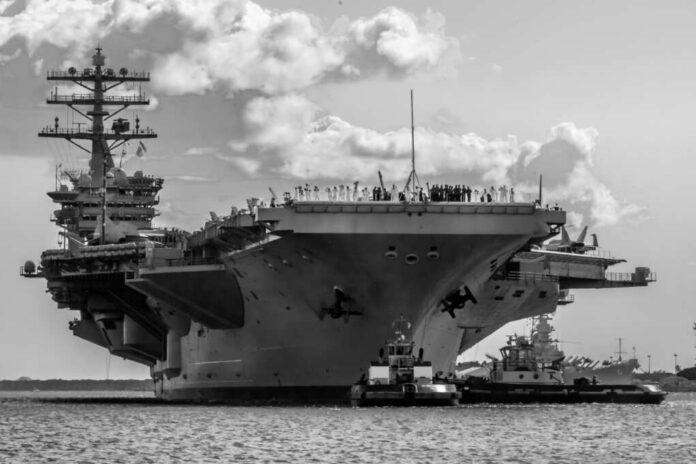
The iconic USS Nimitz, a symbol of American naval superiority, is set to retire, raising concerns about potential gaps in U.S. naval power.
Story Overview
- The USS Nimitz, a Cold War-era supercarrier, retires after 50 years of service.
- The transition to Gerald R. Ford-class carriers may create temporary fleet gaps.
- Concerns grow over the Navy’s ability to maintain its 11-carrier fleet minimum.
- Huntington Ingalls Industries contracted for Nimitz’s defueling process.
USS Nimitz: A Legacy Concludes
The USS Nimitz (CVN-68), the world’s oldest active nuclear-powered aircraft carrier, concluded its service in December 2025, marking the end of an era. After a storied 50-year tenure, the supercarrier returned to Bremerton, Washington, from its final nine-month deployment. The retirement of this Cold War icon, which served in multiple conflicts and patrols across the globe, highlights the ongoing evolution of the U.S. Navy’s strategic capabilities.
The Nimitz’s retirement paves the way for the Gerald R. Ford-class carriers, designed with advanced technology to enhance operational efficiency. However, this transition is not without its challenges. The delay in commissioning the USS John F. Kennedy until 2027 could lead to potential carrier availability gaps, raising concerns about the Navy’s ability to meet its statutory 11-carrier minimum. This situation underscores the strategic risk posed by an aging fleet amid escalating global demands.
Watch:
Transitioning to the Future
The decommissioning process of the USS Nimitz is significant, involving a unique defueling procedure different from past operations like that of the USS Enterprise. Huntington Ingalls Industries, Newport News Shipbuilding, has been contracted to handle this complex task, underscoring their expertise and the importance of sustaining such capabilities within the U.S. defense industry. The $358 million contract highlights the economic benefits tied to this transition, which also supports jobs and technical expertise.
Despite the retirement, the legacy of the Nimitz continues to influence U.S. naval strategy. The Ford-class carriers, equipped with Electromagnetic Aircraft Launch Systems (EMALS) and advanced radar, promise increased sortie rates and reduced operational costs. These technological upgrades aim to enhance the Navy’s global reach and deterrence capabilities, although the transition period remains a critical phase to monitor.
Strategic Implications
In the short term, the Navy faces the challenge of maintaining its global presence with a potentially stretched carrier force. The reliance on existing Nimitz-class ships may test the Navy’s operational flexibility, especially as tensions with global powers like China persist. The long-term outlook hinges on the timely production and deployment of Ford-class carriers to ensure the U.S. maintains its naval supremacy and fulfills its defense commitments.
Nuclear U.S. Navy ‘Supercarrier’ USS Nimitz Will Never Go on ‘Active Duty’ Ever Againhttps://t.co/MH2xBfQUo8
— 19FortyFive (@19_forty_five) January 13, 2026
The retirement of the USS Nimitz is a reminder of the evolving nature of military technology and strategy. As the Navy looks to the future, the lessons learned from the Nimitz era will be pivotal in shaping the next generation of naval warfare. The decisions made today will resonate through the decades, impacting not only military readiness but also the broader geopolitical landscape.
Sources:
USS Nimitz Decommissioning in Sight
USS Nimitz – Wikipedia
USS Nimitz Return from Final Deployment
Nuclear U.S. Navy Supercarrier USS Nimitz Will Never Go on Active Duty Again