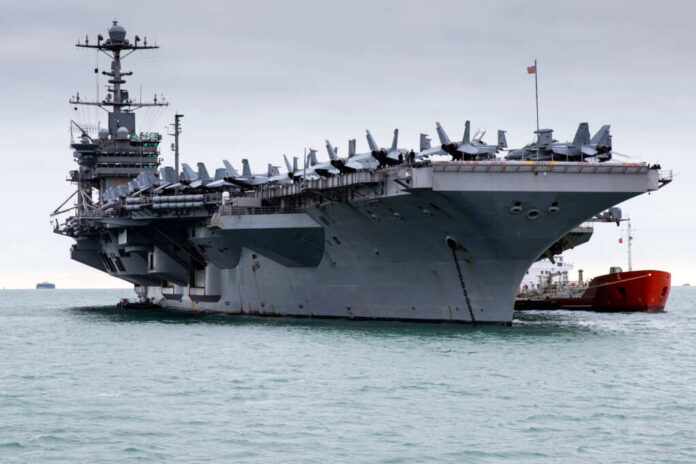
A series of preventable accidents on the USS Harry S. Truman threatens the safety of sailors and highlights systemic issues within Navy operations.
Story Highlights
- Four preventable incidents occurred during the USS Truman’s Red Sea deployment.
- These incidents were attributed to human errors such as fatigue and training deficiencies.
- The Navy has pledged $55 million in upgrades to prevent future mishaps.
- The Truman’s deployment faced constant Houthi missile and drone threats.
Preventable Accidents on the USS Truman
The USS Harry S. Truman’s deployment in the Red Sea was marred by a series of preventable accidents that endangered over 100 sailors. During the eight-month deployment, which included six months in the Red Sea, the Truman faced continuous threats from Houthi missiles and drones. Key incidents included a friendly fire shootdown of an F/A-18, a collision with a freighter, and the loss of two F/A-18 jets. These incidents have been largely attributed to training gaps, fatigue, poor communication, and equipment issues.
On December 22, 2024, a friendly fire incident occurred when the USS Gettysburg mistakenly fired an SM-2 missile at an F/A-18 aircraft from Truman, forcing the pilot to eject. This was followed by a collision on February 12, 2025, with the freighter BESIKTAS-M, resulting in a significant gash to the carrier’s side. These incidents highlight the severe operational challenges and risks faced by the sailors during this deployment.
Navy and Marine aviation accidents doubled amid Red Sea fight https://t.co/e8dGvC27PQ
— Task & Purpose (@TaskandPurpose) January 15, 2026
Navy’s Commitment to Improvements
In response to these incidents, the Navy has committed to investing in the safety and preparedness of its forces. A $55 million upgrade to the AEGIS system has been announced to prevent such mishaps in the future. Navy Vice Chief Jim Kilby emphasized the importance of learning from these incidents and focusing on training and rest standards. Truman’s experiences echo past issues, such as the 2017 destroyer collisions, underscoring the need for comprehensive reforms.
Despite these efforts, the high operational tempo in the Red Sea continues to strain resources. The Truman’s deployment was extended to maintain pressure on Houthi forces, a decision made by then-Secretary of Defense Pete Hegseth. The continued engagement in such a hostile environment without adequate rest or training has been a point of concern among defense analysts.
Impact on Sailors and Broader Implications
The incidents involving the USS Truman underscore the vulnerabilities of carrier operations under intense combat conditions. While there were no fatalities, the risks posed to sailors and the physical damage to equipment have significant implications. The Navy’s focus on enhancing training and rest standards is crucial to prevent future occurrences. The broader impact of these incidents extends to the political arena, where extended deployments and military readiness are under scrutiny.
The Navy’s aviation mishaps, reaching a decade high in FY2025, reflect systemic issues that need addressing. Truman’s deployment highlights the urgent need for reforms to ensure the safety and effectiveness of naval operations. As the Navy works to implement these changes, the lessons learned from Truman’s stint in the Red Sea serve as a critical reminder of the challenges facing the military today.
Sources:
Navy finds USS Truman’s stint in Red Sea was marred by preventable accidents that threatened lives
Navy fighter jet falls off aircraft carrier in Red Sea during bombing campaign in Yemen
Navy and Marines deaths in aviation and recreation
Navy blames crew training for losing F-18s and other mishaps from Truman CSG deployment