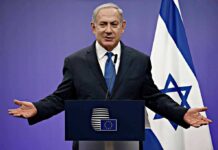
President Donald Trump’s Gaza peace plan hit a major wall on Sunday when Benjamin Netanyahu rejected the deal and tied any Israeli pullback to Hamas’ full disarmament.
Quick Take
- Netanyahu said Israel rejects Trump’s 15-point Gaza document and will not withdraw until Hamas is truly disarmed.
- The plan was built around phased disarmament in exchange for Israeli withdrawal, but Netanyahu said that sequence goes too far.
- The dispute shows how Gaza diplomacy keeps getting stuck on the same question: who moves first, and who verifies the next step.
- Social media and broadcast coverage framed the story as a break with Trump, which is likely to sharpen political pressure on both leaders.
Netanyahu Draws a Hard Line
Netanyahu used a cabinet meeting to make Israel’s position plain. He said, “Israel rejects the 15-point document,” and added that the Israel Defense Forces would not make any withdrawal until Hamas is “truly disarmed.” Reuters reported that he repeated the same message in public remarks, saying Israel would not pull out until Hamas fully disarms. That leaves little room for a quick diplomatic fix.
For Trump, the rejection is a setback because the plan was presented as a route to end the war through staged disarmament and withdrawal. The Washington Post and The New York Times described the proposal as a U.S.-backed framework that would have Hamas give up weapons before or alongside an Israeli pullback. Netanyahu’s response shows he does not accept that order. He wants disarmament first, and only then talks about leaving Gaza.
Why the Sequence Matters
The core fight is not just over the goal. It is over the order of events. CBS News and Fox News reported that Trump’s plan linked Israeli withdrawal to completed disarmament and included outside security steps such as a stabilization force and a new Palestinian police force. Netanyahu said that is still not enough. He called for “real disarmament,” not a version he sees as symbolic or incomplete.
That clash explains why this plan is hard to sell to both sides at once. Hamas wants guarantees before giving up arms. Israel wants proof that Hamas cannot rebuild its military power later. The public record in the provided reporting does not show a detailed, published enforcement system that resolves that gap. Without that, the plan looks less like a finished peace deal and more like a negotiation over trust, timing, and leverage.
Lebanon Adds Another Pressure Point
The Associated Press social coverage also highlighted Netanyahu’s comment that an “important operation” is underway in Lebanon, which adds another layer of tension to Israel’s regional posture. That matters because it shows the Gaza dispute is unfolding while Israel is also managing security pressure elsewhere. Even if the Lebanon operation is separate, it can shape how much room Netanyahu has for compromise in Gaza. It also keeps attention on force, not only diplomacy.
Israeli Prime Minister Benjamin Netanyahu rejects a US-led Gaza plan endorsed by Hamas, putting distance between himself and President Donald Trump as he tries to shore up his base ahead of close elections. https://t.co/LoW2Eh2fXz pic.twitter.com/QGEylVvSJv
— AFP News Agency (@AFP) August 9, 2026
The bigger political picture is familiar to many Americans on both sides. Washington announces a breakthrough, foreign leaders issue mixed signals, and then the fine print starts to break the story apart. CNN and RTÉ have previously described similar gaps between public language and actual Israeli positions, especially on withdrawal terms. This latest clash fits that pattern. It shows how fast a peace plan can become another test of credibility, process, and control.
Sources:
youtube.com, washingtonpost.com, nytimes.com, reuters.com, usatoday.com, rte.ie