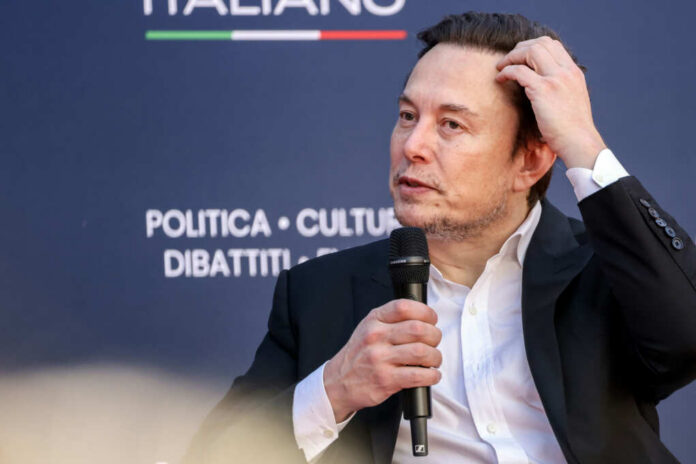
A California jury just slammed the door on Elon Musk’s challenge to OpenAI—not by clearing the company’s conscience, but by saying he sued too late while Big Tech races ahead with barely any guardrails.
Story Snapshot
- A federal jury unanimously ruled against Elon Musk, saying his lawsuit accusing OpenAI of betraying its nonprofit mission was filed too late, without weighing the core allegation itself.
- Musk, an early co-founder who reportedly put in tens of millions, says OpenAI abandoned its “benefit humanity” promise to chase profit and massive outside funding, including from Microsoft.
- OpenAI argued there was never a promise to stay nonprofit forever and that Musk himself explored for‑profit options before leaving.
- The verdict underscores how powerful technology institutions can use technical defenses while artificial intelligence rapidly expands with limited transparency or constitutional oversight.
Jury Ends Musk’s Case on a Technical Clock, Not on OpenAI’s Conduct
A federal jury in California unanimously ruled that Elon Musk’s lawsuit accusing OpenAI and chief executive officer Sam Altman of abandoning the company’s original nonprofit mission was filed too late under the statute of limitations, ending the case without a ruling on whether the mission was actually betrayed.[1][2] Reporters say jurors deliberated for less than two hours after an eleven‑day trial that featured competing accusations about whether OpenAI’s leadership prioritized profit over its stated promise to benefit humanity.[1] Musk has vowed to appeal.[2]
Court coverage explains that Musk’s legal team argued OpenAI’s transformation from a nonprofit research lab into a powerful for‑profit enterprise violated founding commitments and effectively “stole” a charity he helped create.[2] He reportedly sought up to one hundred fifty billion dollars returned to the nonprofit parent, dissolution of the for‑profit structure, and removal of Altman and co‑founder Greg Brockman from leadership—remedies that would have fundamentally reshaped one of the world’s most influential artificial intelligence companies. The jury, however, never reached those claims because it concluded Musk waited too long to sue.[1]
Inside the Dispute: From “Benefit Humanity” to Big‑Money Artificial Intelligence
Background reporting describes Musk as an early co‑founder and major funder of OpenAI, contributing tens of millions of dollars when it launched in 2015 as a nonprofit effort to develop safe artificial intelligence for the benefit of humanity rather than for shareholder gain. By 2017 and 2018, leaders inside OpenAI, especially Altman and Brockman, were pushing to create a for‑profit arm, arguing that nonprofit donations could not cover the enormous computing and talent costs needed to compete in advanced artificial intelligence. Musk withdrew from the board amid those tensions and later started his own artificial intelligence venture.[1]
Evidence presented at trial reportedly included internal emails and text messages about the move toward a for‑profit structure and major outside capital, including Microsoft’s investment, which Musk’s side said showed a conscious pivot away from the original mission. Musk’s attorneys also pointed to Altman’s brief 2023 firing by OpenAI’s board for being “not consistently candid” as a sign of deeper trust issues around how the company is governed. OpenAI’s lawyers countered that there was never a binding promise to remain nonprofit forever and argued that Musk himself explored merging OpenAI with Tesla or forming a for‑profit entity while still involved, undercutting the idea that commercialization was an unforeseeable betrayal.[1]
Statute of Limitations: How Timing Trumped the Substance of the Case
Reports from the courtroom say OpenAI’s defense turned heavily on the statute of limitations, the legal time window for bringing a claim.[1] Jurors were shown emails and text messages indicating Musk knew about the very conduct he was complaining about by 2021 at the latest, three years before he filed suit. Based on that record, the jury concluded his claims were time‑barred, which made OpenAI “not liable” as a matter of procedure rather than a declaration that its corporate transformation fully honored the original charter.[1][2]
This kind of procedural victory is common in complex corporate fights, but it creates a public‑perception problem: headlines now say Musk “lost” and OpenAI “won,” while the core question—did a nonprofit mission get sidelined in favor of big‑money artificial intelligence?—remains unanswered in court.[1][2] Commentators already cast the suit as “sour grapes” or “lawfare,” leaning into personality politics rather than grappling with whether a mission built on benefiting humanity can be quietly reinterpreted once billions of dollars are at stake.
What This Means for Conservatives Watching Big Tech and Big Government
The outcome should concern conservatives who worry about concentrated power in both government and Silicon Valley. The case shows how a well‑resourced institution can defeat a major challenge from a co‑founder without ever putting its core promises on trial, simply by persuading a jury that the clock ran out.[1] As artificial intelligence systems spread into banking, hiring, surveillance, and even information control, the public still lacks clear visibility into who directs these tools and whether their decisions respect constitutional principles like free speech and due process.
12/14 🤖 AI & TECH — A California federal jury on May 18-19 unanimously dismissed all claims in Elon Musk's lawsuit against OpenAI and CEO Sam Altman, ruling the case was time-barred by the statute of limitations. Judge Yvonne Gonzalez Rogers adopted the verdict. Musk had sought…
— The Syndicate (@SyndicateRSS) May 20, 2026
At the same time, commentators note OpenAI’s massive valuation and preparations for a potential stock offering, suggesting the company is moving forward confidently after the verdict.[1] That combination—rapid commercial expansion, weak transparency, and legal fights resolved on narrow grounds—highlights why Congress and state legislatures, not just courts, will be critical in setting limits that keep artificial intelligence from becoming another unaccountable layer of power over ordinary citizens. For readers who value individual liberty and limited government, the unresolved questions behind Musk’s failed lawsuit should be a wake‑up call, not a closed chapter.
Sources:
[1] Web – Federal jury delivers verdict on Musk’s lawsuit against OpenAI
[2] YouTube – Elon Musk loses lawsuit against OpenAI and Sam Altman | ABC NEWS