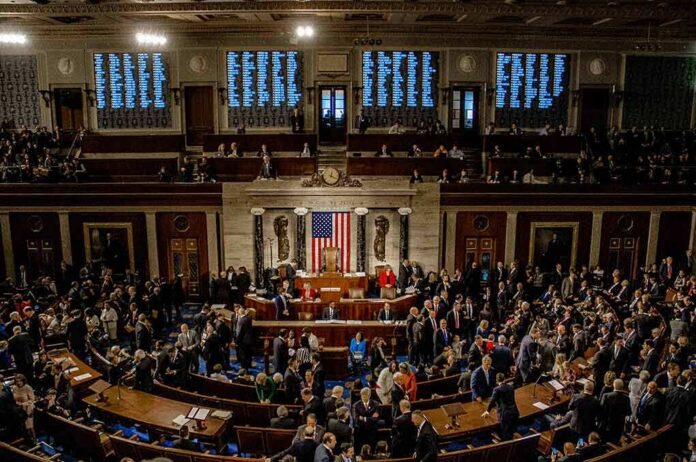
Congress kept the lights on but punted big decisions again, passing a short-term funding bill that runs only through December 11.
Story Snapshot
- The Senate approved the stopgap bill 90-6, showing rare wide bipartisan support.
- The House later passed it 370-48, sending the measure to President Trump for signature.
- The bill funds agencies at current levels through December 11 to avoid a shutdown before the elections.
- Lawmakers added a few targeted exceptions, signaling real negotiations, not a simple extension.
What Congress Did This Week
The Senate voted 90-6 to pass a continuing resolution that keeps the government funded through December 11. The bill, known in Washington as a stopgap, holds spending near current levels. Leaders in both parties backed the move to prevent a shutdown heading into election season. Senators described it as a bridge to finish full-year spending bills in the coming weeks. The large margin suggests most lawmakers saw a shutdown as the worse option.
The House followed with a 370-48 vote, completing congressional approval and sending the bill to President Trump. The vote spread across both parties, reflecting broad agreement to avoid service cuts and pay delays that come with shutdowns. The measure now waits for the routine step of the president’s signature to take effect. Coverage described the bill as keeping agencies open while the parties keep talking about longer term funding.
What Is In The Stopgap — And Why It Matters
Reporters said the bill includes a handful of exceptions that lawmakers negotiated with the White House. Those exceptions let some programs adjust deadlines or continue specific work. That shows the package was not a blank placeholder. It aimed to avoid waste and disruption in areas with time-sensitive needs. Still, most funding stays flat. That means no updates for new prices, new demands, or new missions until a full deal is struck.
Leaders called the measure a bridge that buys time for the twelve annual spending bills. This approach fits a long pattern. When deadlines loom, Congress often turns to short extensions rather than settle every fight. A report from Congress’s own researchers says such moves have been common for decades. By the early 1980s, they were already called the norm rather than the exception. This history helps explain why both parties accept short-term deals even when they dislike them.
Why Voters Are Frustrated
Many Americans see these repeat extensions as proof Washington cannot plan ahead. Families and small businesses must live within a budget. They expect the same from the people they elect. Fiscal groups warn that stopgaps avoid shutdown pain but do not fix rising debt or tough tradeoffs on taxes and spending. Each delay keeps the government on autopilot. It also shields leaders from making clear choices on priorities, which fuels the sense that the system serves insiders first.
Short-term bills also create waste on the ground. Agencies start and stop projects. Contractors wait to hire or build. Communities that rely on grants get mixed signals. These delays can raise costs for roads, bases, labs, and schools. The longer Congress floats on temporary plans, the more planning breaks down. That hurts both conservative goals of restraint and liberal goals of service delivery. The shared result is drift, not direction, and less trust in the government’s basic competence.
What Comes Next Before December 11
Appropriators must write and pass the twelve full-year bills or craft another extension by December 11. Leaders say they want to settle the bills this fall. That will require deals on total spending, policy riders, and how to handle programs that face urgent needs. If they fail, another stopgap could land. That would again avoid a shutdown but deepen the cycle that both parties say they want to end. Voters will judge whether Congress can convert time into real work.
Sources:
insidedefense.com, govexec.com, naco.org, northeasttimes.com, washingtonpost.com, nteu.org, conference-board.org