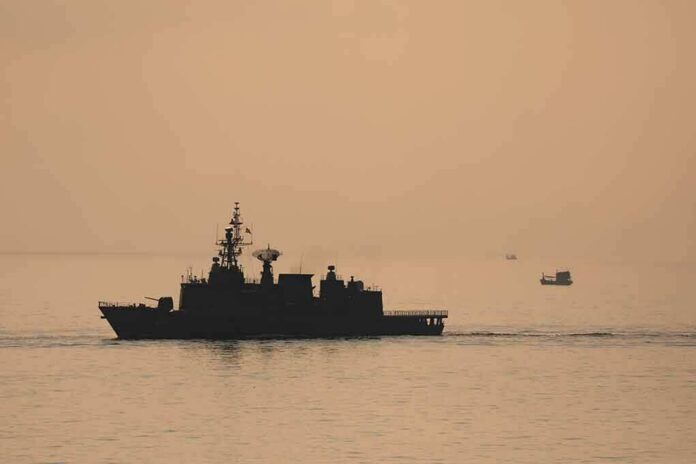
Oman says it is close to opening a temporary shipping corridor through the Strait of Hormuz to get stalled vessels moving again and steady energy flows.
Story Highlights
- Oman says a temporary corridor is nearing announcement after talks with Iran.
- The plan is coordinated with the International Maritime Organization and would not charge transit fees.
- Iran and Oman say they have an understanding on the route’s coordinates.
- The Strait of Hormuz carries about one-quarter of seaborne oil, so even a “temporary” fix matters.
Oman’s Plan and What It Would Do
Oman’s Foreign Ministry said it is working “in coordination with the International Maritime Organization” to offer a temporary corridor for all vessels in the Strait of Hormuz, with coordinates to be announced by the organization and Omani authorities. The statement said Oman aims to ensure freedom of navigation and would not impose transit fees, underscoring that safety and access are the goals, not revenue. Muscat said the move is meant to improve safe passage while longer-term talks continue.
Iranian and Omani officials say they have reached an understanding on the geographic coordinates for a route, and a joint announcement is being finalized, pending outside interference, according to reporting from Dubai that cites Iran’s Foreign Ministry spokesperson. Other outlets also reported that an agreed route is under review and in the final drafting stage in Tehran and Muscat. Iranian officials have described the pathway as temporary and focused on safe, two-way transit through the chokepoint.
Why a “Temporary” Corridor Still Matters
The Strait of Hormuz is only 29 nautical miles wide at its narrowest point and already uses two-mile-wide inbound and outbound channels managed under a traffic separation scheme. About one-quarter of global seaborne oil typically moves through this passage, which makes any change in routing a potential market mover. When so much energy depends on a tight lane, a clear, jointly announced corridor can reduce risk premiums, restore some shipping confidence, and lower costs passed to families and businesses.
Recent months have seen shipping volume drop and risk surge as the regional conflict spilled into the water. Analysts have tracked far fewer daily transits than normal as ship owners waited for clearer guarantees of safety and insurance coverage. A defined, temporary route that both Iran and Oman back—especially with the International Maritime Organization involved—can help captains, insurers, and cargo owners make decisions faster and at lower risk.
How We Got Here and What Comes Next
Oman has played mediator for months, hosting talks with Iran on options to keep vessels moving through Hormuz. Reports from regional and international outlets describe negotiations that moved into “final stages” in early August, with both sides signaling progress on coordinates and procedures. A joint framework has also referenced steps like demining, which, if implemented, would further reduce hazards to commercial traffic in the congested waterway. These steps fit a pattern of crisis-era routing tweaks aimed at deconfliction rather than a full redesign.
Officials in Tehran have framed the corridor as a temporary measure, potentially lasting a few months, while broader security and political issues remain unresolved. That timeline suggests a stopgap to stabilize flows and prices while stakeholders test whether traffic can scale up safely. Oman’s pledge of no tolls lowers friction for shippers who already face higher insurance and rerouting costs when Hormuz is risky. The faster a clear notice to mariners appears, the sooner stranded cargo can move.
What This Means for Americans Watching Pump Prices
Energy prices hit family budgets first and hardest. When ships cannot pass Hormuz, oil markets bake in fear, and that shows up at the gas pump. A credible, temporary corridor backed by Oman, understood by Iran, and aligned with the International Maritime Organization could shave risk costs and steady supply. The Strait’s role in moving roughly a quarter of seaborne oil means small safety gains can have outsized effects on price swings that frustrate both workers and retirees.
Omani Foreign Minister Badr Albusaidi said on Tuesday that he hoped his country and Iran would soon announce the establishment of a temporary shipping corridor in the Strait of Hormuz after weeks of negotiations.https://t.co/MAieW2N1Ir
— The Peninsula Qatar (@PeninsulaQatar) August 25, 2026
People across the political spectrum worry that global crises, opaque deals, and distant bureaucracies keep pushing prices up while wages lag. This development is not a cure-all, but it is a practical fix that could move tankers, ease insurance hurdles, and check some of the “crisis premium” that hits American consumers. Oman’s public commitment, Iran’s stated understanding on coordinates, and involvement from the International Maritime Organization give this plan a real shot at impact if parties follow through.
Sources:
insiderpaper.com, bbc.com, reuters.com, aljazeera.com, english.news.cn, timesofindia.indiatimes.com, fm.gov.om, bloomberg.com, nytimes.com, cnn.com, hormuzstraitmonitor.com