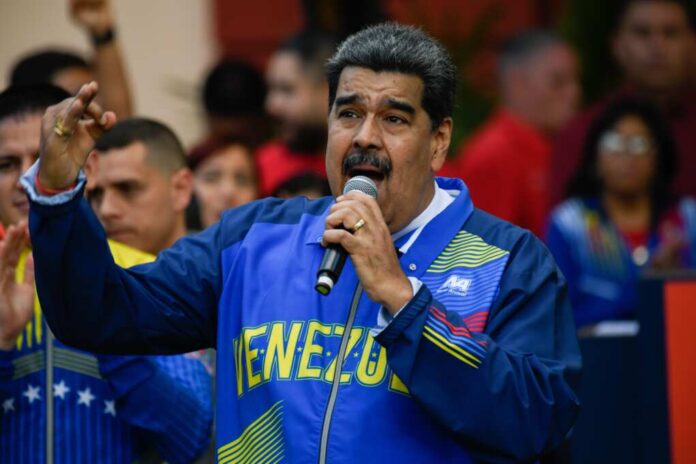
The Trump administration’s latest sanctions aim to dismantle the financial networks of Nicolás Maduro’s regime by targeting his family members and their illicit activities.
Story Highlights
- Three nephews of Nicolás Maduro’s wife are re-sanctioned for drug trafficking and sanctions evasion.
- The sanctions target six shipping companies and associated vessels in Venezuela’s oil sector.
- These actions reverse Biden-era leniency, aiming to disrupt Maduro’s financial networks.
- Sanctions reflect the Trump administration’s hardline stance on Venezuela’s “narco-terrorist regime.”
U.S. Sanctions Target Maduro’s Inner Circle
On December 10, 2025, the U.S. Department of the Treasury’s Office of Foreign Assets Control (OFAC) imposed new sanctions targeting the inner circle of Venezuelan President Nicolás Maduro. These measures specifically focus on three nephews of Maduro’s wife, Cilia Flores, who were previously convicted of drug trafficking. This action is part of a broader strategy to cut off financial resources that sustain the Maduro regime, particularly through Venezuela’s oil sector.
The nephews, known as “narco-nephews,” were previously granted clemency under the Biden administration, which the current administration views as a critical oversight. By re-sanctioning these individuals, the Trump administration aims to underscore its commitment to dismantling what it perceives as a narco-terrorist state.
The sanctions extend to six shipping companies and their vessels, accused of evading sanctions to transport oil, thereby funding Maduro’s regime. The targeted companies include Myra Marine Limited and Arctic Voyager Incorporated. These actions are intended to tighten the economic noose around Maduro’s government by disrupting its vital oil exports.
Watch:
Reversal of Biden-Era Policies
These sanctions mark a significant departure from the policies of the previous administration, which attempted to negotiate with Maduro’s regime in hopes of securing fair elections. The Trump administration, however, has taken a decidedly tougher stance, viewing previous negotiations as having failed to curb Maduro’s grip on power.
By reversing the leniency shown during the Biden years, the current administration seeks to pressure Maduro into stepping down and to restore democratic governance in Venezuela. The sanctions are part of a broader international effort, with allies such as the EU, UK, and Canada also imposing restrictions.
Implications for Venezuela and Beyond
The immediate impact of these sanctions is likely to be felt in Venezuela’s oil sector, a crucial lifeline for the regime. By disrupting the flow of oil revenue, the sanctions aim to weaken Maduro’s financial base, potentially leading to economic contraction and increased domestic unrest.
In the long term, these measures are designed to isolate Maduro internationally and encourage a transition to a more democratic government. However, the sanctions also risk exacerbating the humanitarian crisis in Venezuela, as economic pressures continue to mount. Observers note that while the sanctions are a strong signal of the U.S. commitment to opposing Maduro, they must be carefully balanced with efforts to alleviate the suffering of the Venezuelan people.
Sources:
Wikipedia: Sanctions during the Venezuelan crisis
U.S. Treasury: Press Release on Sanctions
Fox News: Trump Administration Sanctions Maduro’s Narco-Nehews
State Department: Venezuela-Related Sanctions