
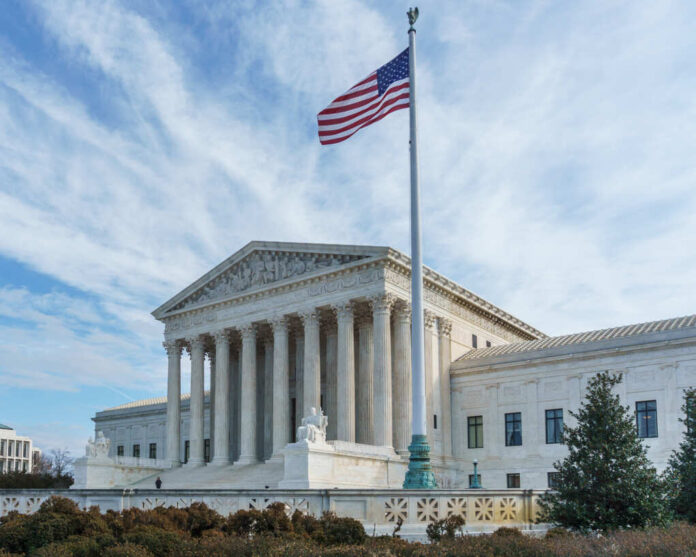
Justice Neil Gorsuch’s recent opinions addressing disputes with lower courts have been described by legal analysts as reinforcing Supreme Court authority and emphasizing constitutional interpretation.
Story Highlights
- Justice Gorsuch tackles rogue lower courts undermining Supreme Court authority.
- His rulings emphasize textualism and originalism, aligning with conservative values.
- The confirmation process of Gorsuch set a new precedent in Senate procedures.
- Gorsuch’s impact continues to shape key judicial decisions on religious liberty and administrative law.
Gorsuch’s Battle Against Rogue Lower Courts
Justice Neil Gorsuch has been a pivotal figure in addressing the overreach of lower courts that defy Supreme Court directives. His recent opinions underscore a commitment to restoring judicial order and ensuring that lower courts adhere to precedents established by the highest court. This approach resonates with conservative values, particularly in upholding constitutional principles and limiting judicial activism that seeks to undermine established laws and rights.
Gorsuch’s legal philosophy, rooted in textualism and originalism, ensures that his decisions align with the framers’ intent and the Constitution’s original meaning. This judicial approach defends against interpretations that extend beyond the text, a concern for many conservatives wary of judicial overreach. By reinforcing these principles, Gorsuch aims to preserve the judiciary’s role in interpreting—not creating—law.
The Confirmation Process and Its Implications
The confirmation of Neil Gorsuch to the Supreme Court was a landmark event characterized by significant political maneuvering. It followed the Senate’s unprecedented refusal to consider President Obama’s nominee, Merrick Garland, setting the stage for a contentious confirmation process. The Republican-controlled Senate’s decision to invoke the “nuclear option” eliminated the filibuster for Supreme Court nominees, fundamentally altering the confirmation landscape.
This procedural shift was a double-edged sword, facilitating Gorsuch’s confirmation while also eroding longstanding bipartisan norms. While conservatives celebrated the appointment of a justice committed to their values, the political ramifications continue to reverberate, posing questions about future nominations and the potential for increased politicization of the Court.
Impact on Supreme Court Jurisprudence
Since 2017, Gorsuch has participated in key rulings, including Bostock v. Clayton County (2020) and several cases challenging administrative law precedents. His opinions reflect a clear departure from judicial deference to executive agencies, challenging doctrines like Chevron deference, which many conservatives view as enabling unchecked bureaucratic power. This stance not only aligns with conservative priorities of limiting government overreach but also strengthens the judiciary’s role in maintaining checks and balances.
Justice Gorsuch Gives Rogue Lower Courts The Smackdown They Deserve https://t.co/GR7AmWpNCS
— SWEET TEEs (@SWEETTEEs7) August 25, 2025
Gorsuch’s presence on the Court ensures a continued focus on constitutional adherence and a commitment to the principles that have long guided conservative legal thought. His role in shaping the Court’s direction underscores the significance of judicial appointments in preserving and promoting foundational American values, a priority for those concerned with maintaining the integrity of the nation’s legal system.
Sources:
Justia U.S. Supreme Court Center
Wikipedia: Neil Gorsuch Supreme Court nomination
Wikipedia: Neil Gorsuch
HeinOnline Blog
Law Library of Congress Supreme Court Nominations Guide