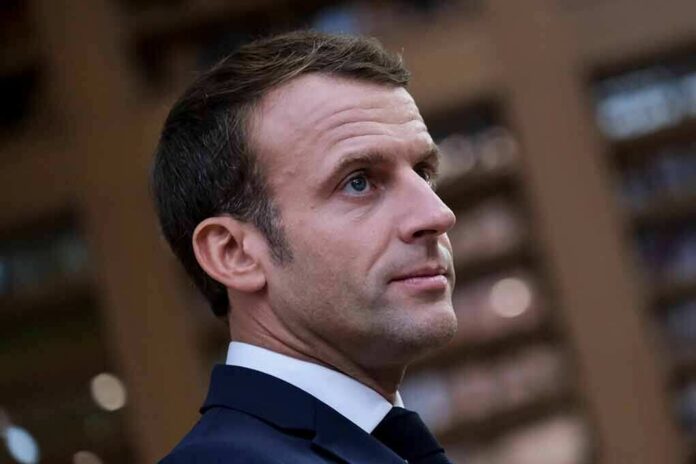
France’s highest court struck down the under-15 social media ban, yet President Emmanuel Macron is now urging the European Union to impose a similar rule across all member states.
Story Highlights
- France’s under-15 social media ban was blocked by the Constitutional Council over free speech and privacy concerns.
- President Macron is pressing European leaders for a unified ban across the European Union to protect children online.
- European Union officials are advancing age checks and exploring minimum-age rules, but methods and safeguards remain contested.
- Digital rights groups and some experts warn blanket bans may backfire and erode privacy without fixing core risks.
French Ban Blocked Over Rights Concerns
France’s Constitutional Council halted the nation’s new under-15 social media law, ruling it infringed freedom of expression and privacy. The decision paused a flagship policy that aimed to bar children under 15 from opening or keeping social media accounts. Supporters argued the ban would fight bullying and mental health harms. The court said the enforcement design risked sweeping data checks on everyone. President Emmanuel Macron asked his government to rewrite the bill after the ruling.
The blocked law had moved quickly through France’s legislature earlier this year. Lawmakers first backed a plan to require age checks for all users, then debated which tools were legal and practical. European Union institutions reviewed the plan’s fit with common rules. Analysts said the European Commission did not reject a minimum-age idea on its face, but raised alarms about a parallel enforcement system outside current European frameworks. That structure, not the age line itself, drew sharp pushback.
Macron’s Push for an EU-Wide Rule
President Macron now wants the European Union to adopt one standard so platforms and families face clear rules across borders. Macron’s office said he convened European leaders to align on limits for minors’ access. Macron also argued children under 15 should be directly barred, not allowed on platforms through parental-consent workarounds that vary by country. He linked the push to public safety concerns after high-profile youth harms and unrest tied to online content.
European bodies are already moving toward stronger guardrails for minors online. The European Parliament has studied a common minimum age and endorsed tougher age-assurance duties in several texts. The European Commission issued guidance that says age verification can be appropriate when a law sets a minimum age, if methods are accurate, reliable, and non-intrusive. These steps show a shift from platform promises to enforceable design rules for youth safety.
Age Verification Tech and Civil Liberty Fears
European leaders are testing ways to check age without building a giant database of personal details. Proposals include privacy-preserving checks that confirm a user’s age band, not full identity. Supporters say this protects children while limiting data exposure. Critics warn any large-scale gate can become a tracking tool. France’s court flagged the risk of turning every adult into a subject of constant age checks, which could chill speech and normal use online if built poorly.
French President Macron urges EU chief to ban social media for under 15s https://t.co/MiJXvXZs7T
— Gulf Today (@gulftoday) September 7, 2026
Digital rights advocates argue blanket bans miss the root causes of harm. Groups across Europe say bans may isolate teens, drive them to riskier corners of the internet, and burden families with workarounds. They call for safer product designs, better reporting tools, and real-time support for victims. They also warn that strict gating can exclude vulnerable youth who rely on online communities for help and voice. Their core message: solve harms without mass surveillance or silencing minors.
Why This Fight Matters Beyond Europe
American readers should track this clash because Europe often sets the global playbook for tech rules. If the European Union agrees on a firm age limit and a trusted way to prove age, large platforms will likely adapt those systems worldwide. That could shape how companies treat data, design feeds, and label content for all users. It could also set new norms for what proof people must show to speak or join a public square online, which alarms civil libertarians.
What To Watch Next
Watch for three signals. First, see whether Macron secures backing from key European capitals for a direct under-15 bar. Second, note how the European Commission calibrates age checks to meet accuracy goals without building a tracking layer. Third, look for new court tests as civil society challenges sweeping rules. The balance point will be clear, narrow rules that shield kids, protect speech, and avoid data overreach. That is the needle Europe is trying to thread.
Sources:
bbc.com, lemonde.fr, reuters.com, aljazeera.com, healthpolicy-watch.news, theguardian.com, english.news.cn