Federal agents say a Venezuelan man who overstayed his visa handed out “Shoot Trump, be a hero” stickers in Provo before Immigration and Customs Enforcement arrested him.
Story Snapshot
- Homeland Security says the man entered legally in 2016 and overstayed his visa.
- Agents arrested him on October 16 in Provo during a targeted enforcement action.
- Officials linked him to stickers urging violence against President Trump.
- Utah outlets reported the arrest and echoed federal details from the release.
What Officials Say Happened in Provo
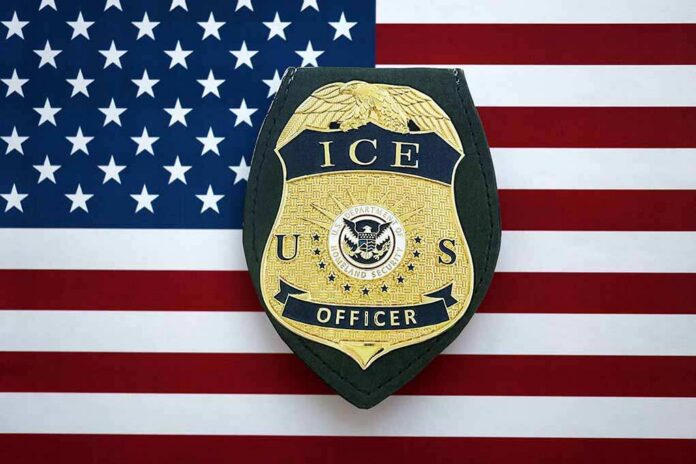
The Department of Homeland Security reported that special agents arrested Hector Alejandro Mujica-Hernandez on October 16 in Provo, Utah. The agency said agents acted after receiving Federal Bureau of Investigation (FBI) information about alleged threats found online. The Department of Homeland Security described the operation as a targeted enforcement action. The arrest came weeks before the agency made the news public in a November 23 press release outlining the case and summarizing the alleged conduct.
The Department of Homeland Security said Mujica-Hernandez was lawfully admitted to the United States in July 2016 and later chose to overstay his visa. The agency stated that he violated immigration law by remaining in the country without status. Local reporting by KSL, KUTV, and Fox 13 mirrored those basic facts. Those outlets cited the federal release for the arrest date, location, and the visa overstay basis for the detention in Utah.
Alleged Threats and the Sticker Distribution
Officials linked the man to stickers that urged violence against President Trump. The Department of Homeland Security release referenced stickers with messages such as “Shoot Trump, be a hero,” which appeared in connection with an anti-Immigration and Customs Enforcement meeting in Provo. Utah stations reported the sticker angle and repeated the federal description of the messages. The reports did not include a charging document for threats but centered on the immigration arrest that followed.
The Department of Homeland Security press release attributed the lead to the Federal Bureau of Investigation, which it said flagged alleged threats through online activity. The agency then conducted a targeted enforcement action under immigration authority. Local coverage noted these claims and identified Homeland Security Investigations as the operational arm involved in the arrest. The articles emphasized the visa overstay and the violent sticker messages described by federal officials.
How This Fits Into Immigration Enforcement and Speech Laws
This case blends two separate issues: immigration status and whether speech crosses into a true threat. Immigration and Customs Enforcement acts on civil immigration violations like overstays. Prosecutors handle criminal threat cases under separate law. Research shows that many people now come legally and later lose status by overstaying, which has become a significant share of recent unauthorized additions. That category remains distinct from criminal accusations about threats or incitement, which require their own legal proof.
According to official statements from the Department of Homeland Security and federal immigration authorities, a Venezuelan national was arrested in Utah following an investigation into threats against Donald Trump.
Federal officials reported that Hector Alejandro…
— Aya Lin ❤️ (@AyalinCreator) November 24, 2026
Federal officials framed this arrest as a status case with public safety concerns tied to alleged violent messages. Communities across the spectrum worry about both safety and civil liberty. Conservatives see a system too slow to remove people who break immigration rules. Liberals fear sweeping actions that chill protest and target immigrants. Both sides share anger at a government that often moves late and communicates poorly. Clear, timely facts help people judge actions taken in their name.
Sources:
thegatewaypundit.com, dhs.gov, ksl.com, aol.com, whmi.com, knowledge.uchicago.edu