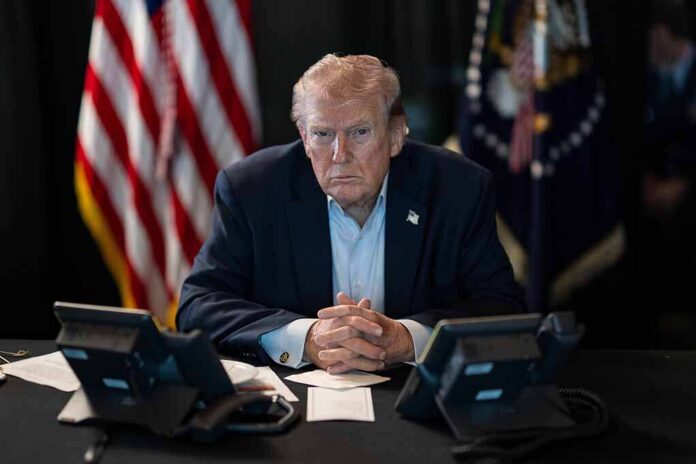
President Trump dismissed an ABC News reporter’s question about a controversial Vivek Ramaswamy ad, then later praised the spot even as top Republicans called for it to come down.
Story Snapshot
- Trump first said he did not know about the ad, then later called it “powerful”.
- The ad features Amy Acton’s estranged mother making harsh claims; Ramaswamy’s team produced it.
- ABC’s Karen Travers pressed Trump; he knocked the question and insulted an ABC reporter.
- Republicans and Democrats criticized the ad; Vice President JD Vance praised Ramaswamy’s “audacity”.
What Happened During the White House Exchange
ABC News correspondent Karen Travers asked President Trump at the White House about a viral ad from Vivek Ramaswamy’s campaign that attacks Democratic Ohio candidate Amy Acton. Trump replied that he did not know about the ad, while describing a bitter family dispute at its core. He said it was an unusual situation and that it did not reflect on Ramaswamy. He also criticized an ABC reporter, shifting focus from the policy issues to press conduct.
Reporters asked because the ad used a video featuring Donna Arthur, Amy Acton’s estranged mother. The video accused Acton of lying about parts of her past. ABC News said the clip spread fast online as the Ohio race heated up. The Acton campaign slammed the tactic. Questions focused on whether the ad’s personal attacks crossed a line and whether Trump supported the message or the method behind it.
Trump’s Later Defense and Party Reaction
After first saying he did not know about the ad, Trump later called it “powerful” and asked why anyone would not use it. He urged that it stay up. That stance set him apart from several Republicans who said the ad should come down. Ohio Governor Mike DeWine and other party figures criticized the attack. The reaction showed a split in the party on how far to go with personal material in high-stakes races.
Vice President JD Vance praised Ramaswamy’s “audacity,” signaling support from Trump’s ticket for the hard-hitting approach. ABC News reported that Ramaswamy’s campaign produced the ad and that it became a central flashpoint in the Ohio governor’s race. The campaign’s decision to elevate a family feud forced both sides to explain their red lines on political messaging and basic standards of fairness in public life.
Why the Ad Matters Beyond One Race
The dispute highlights three trends: campaigns leaning on emotional personal attacks, leaders distancing themselves from controversy before later embracing its benefits, and fights with the press overshadowing substance. Research shows political ads, including attack ads, usually move voters only a little on average. Their power often comes from media attention, base energy, and forcing a response from rivals, more than changing many minds in the center.
That helps explain the stakes. A viral ad can frame a race and dominate headlines even if it barely shifts polling. When a president praises such an ad, it can harden divisions and set a norm for future campaigns. When party leaders push back, it shows concern about blowback and the dignity of the process. For many Americans, on the left and right, this fight feels like more proof that winning often outranks truth and decency in politics today.
Press, Power, and a Familiar Cycle
Trump’s jab at an ABC reporter fits a long pattern where politicians and journalists clash and accuse each other of bias. Those clashes can distract from the hard questions voters care about: Who made the ad, what proof backs its claims, and where do leaders draw the line? The latest exchange again placed style over substance. It also echoed a broader belief that the political class chases headlines while big problems go unsolved.
President Trump hurled a degrading insult at a female ABC reporter while defending a controversial ad by Vivek Ramaswamy. https://t.co/TYKpAJfSGZ pic.twitter.com/KX779RLICL
— Irish Star US (@IrishStarUS) October 23, 2026
Voters watching this saga see the same old cycle. Campaigns test darker messages because the short-term payoff can be attention and outrage. Leaders sometimes deny ties, then later defend the result once it gains traction. Newsrooms press for answers and become part of the story. The Ohio fight shows how modern politics can make family pain a weapon. It also shows why many Americans think the system serves the powerful first, and the public last.
Sources:
mediaite.com, abcnews.com, abc17news.com