Presidential Medals of Freedom often tell you as much about a president’s priorities as about the recipient’s résumé; President Trump’s decision to honor Roger Clemens fits squarely in that tradition, marrying towering athletic accomplishment to a statement about who merits national recognition.
At a Glance
- At a San Antonio rally, President Trump announced Roger Clemens will receive the Presidential Medal of Freedom.
- Trump praised Clemens as among the greatest pitchers ever and highlighted his seven Cy Young Awards and Texas roots.
- Clemens accepted onstage, calling the honor stunning and greater than any playing achievement.
- The Medal of Freedom is awarded at the president’s discretion and has long reflected each president’s values and signaling.
What Happened: A Rally Stage Becomes a Medal of Freedom Announcement
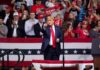
During a campaign-style event in San Antonio, President Trump brought Roger Clemens onstage and said he would award the former pitcher the Presidential Medal of Freedom, the nation’s highest civilian honor. Trump framed Clemens as “one of the greatest athletes and maybe the greatest pitcher of all time,” citing his career dominance and record-setting Cy Young haul. The moment was unmistakably public: Clemens had introduced Trump earlier in the program, and, when told of the honor, he expressed surprise and gratitude, calling it a distinction that “supersedes anything” from his baseball career. Multiple national outlets captured the exchange and the language of the pledge.
In making the case, Trump linked Clemens’s baseball credentials to his absence from the Hall of Fame, presenting the medal as recognition befitting the performance of an all-time great whose candidacy stalled amid long-running disputes over performance-enhancing drug allegations. The announcement resonated locally as well: Clemens played his college ball at Texas and starred for the Houston Astros, giving the ceremony a home-state frame.
The Honor’s Mechanics: Presidential Discretion by Design
The Presidential Medal of Freedom operates by executive discretion rather than through a formal, statute-defined nomination and vetting pipeline. Under governing executive orders, the president may select “any person” who has made an especially meritorious contribution across domains ranging from national security and world peace to culture, science, sports, and public service; there is no mandated selection committee, no congressional ratification, and no prescribed quotas. The design is intentional and longstanding, and over six decades it has allowed occupants of the office to highlight varied forms of excellence while projecting their own priorities.
Academic treatments of the medal and Congressional Research Service summaries converge on the same point: this is a quintessentially presidential instrument. Recipients often arrive in clusters, ceremonies ebb and flow with each administration’s cadence, and selections frequently track the incumbent’s personal and political sensibilities as much as any fixed standard. It is not a plebiscite on popularity, nor does it reliably move public approval; it is a presidential act of recognition in the register of civic values.
Why Clemens: Performance, Legacy, and a Presidential Judgment
On the merits that matter to baseball history, Clemens is a statistical colossus. He won seven Cy Young Awards, more than any pitcher in Major League Baseball history, and compiled a career that places him at or near the top of multiple all-time leaderboards. Those facts anchor Trump’s rhetoric and explain why Clemens’s on-field case has remained compelling to a broad swath of fans and analysts even as Hall of Fame voters withheld induction. At the San Antonio event, Trump presented the medal as a rectifying gesture—a way to honor a body of work widely considered elite at the very top of the sport.
That framing does not erase the controversy around the steroid era, which mainstream reporting has consistently noted when discussing Clemens’s legacy and Hall of Fame outcomes; it does, however, locate the presidential prerogative where the law and custom place it: in a values judgment about national contribution as the president sees it. Past presidents have used the medal to honor athletic excellence, cultural influence, scientific breakthroughs, humanitarian service, and geopolitical leadership. In that context, honoring one of baseball’s most dominant pitchers sits well within precedent.
The Rally Context: Texas Roots and a Public Embrace
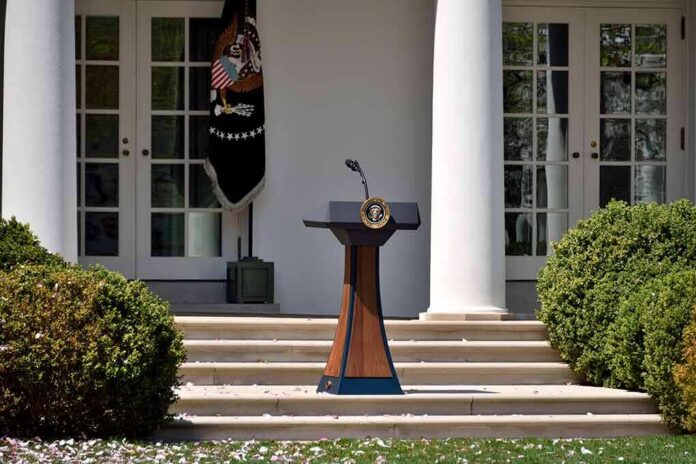
Presidents announce Medals of Freedom in many venues: East Room ceremonies, Rose Garden events, and—at times—public rallies where the symbolism of place and audience amplifies the message. The San Antonio setting did two bits of narrative work. First, it underscored Clemens’s Texas identity—college star at Texas, later a leading figure for the Astros—so the honor read, in part, as a homecoming tribute. Second, it let the recipient acknowledge the award in real time, giving the public an unmediated moment of acceptance and gratitude. Clemens, by all accounts, was taken aback and appreciative, which deepened the sense of ceremony even absent the trappings of a formal White House investiture.
Campaign-style staging can prompt observers to read politics into the act; the Medal of Freedom’s history shows that politics is inseparable from it in a structural sense. The office confers the right to choose; the venue, tone, and timing communicate the chooser’s intent. That has been true across administrations of both parties since the medal’s modern inception in 1963.
How This Fits the Medal’s Historical Pattern
Across the decades, the roster of recipients reads like a cross-section of American public life: heads of state and civil rights leaders, economists and astronauts, artists and athletes. The connective tissue is presidential choice. Analyses have found that the distribution of honorees clusters by theme and moment—civic leadership in one era, cultural icons in another—as presidents use the medal to articulate what, at that time, they want the nation to celebrate. Some years bring large classes, others just a handful, with little predictive value for political standing or polling impact.
Sports figures have been regular honorees for precisely this reason. Athletics furnish a language of excellence familiar to a broad public—durability, peak performance, competitive grace under pressure—and, when a president confers the medal on a player, coach, or trailblazer, the White House is effectively saying those virtues belong in the nation’s civic pantheon. Clemens’s résumé, considered in this light, delivers the kind of sustained, statistically validated dominance that has often met the threshold for recognition by prior presidents.
Roger Clemens received a presidential medal of freedom just to continue showing us that the prez will devalue that award until it’s vapor.
— Curtis Metcalf (@Curtis_Metcalf_) October 8, 2026
What to Watch Next
After an announcement, the process typically culminates in an investiture where the medal is physically bestowed and an official citation is read into the record. Citations are concise statements that encapsulate the grounds for the award—career achievements, public service, or other contributions. Given the San Antonio pledge and Clemens’s onstage acceptance, the logical next step is scheduling and publication of the citation that will formalize the administration’s rationale within the language of the medal’s tradition.
Sources:
nypost.com, justthenews.com, rmb.reuters.com, foxnews.com