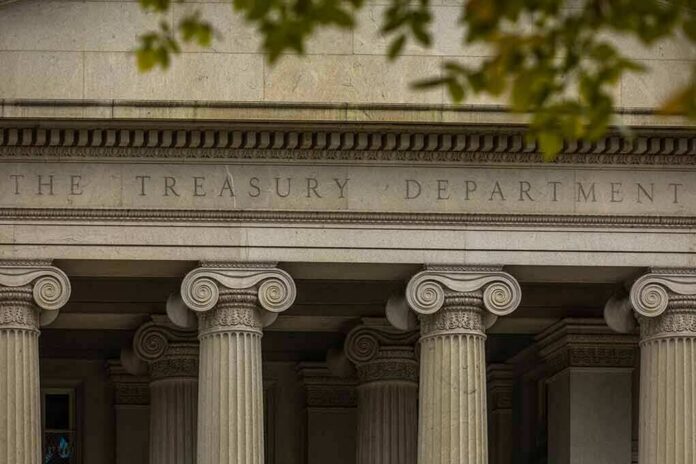
The Treasury Department says more than 60 million American children are now automatically enrolled in Trump Accounts, shifting a major financial policy into “default on” for families nationwide.
Story Highlights
- Treasury completed automatic enrollment for eligible minors in Trump Accounts.
- Authority comes from Section 530A of the tax code created by the 2025 law.
- Supporters say defaults expand access; critics question who benefits most.
- Evidence shows auto-enrollment boosts participation, not guaranteed outcomes.
What Changed: Auto-Enrollment Went Live Nationwide
The United States Department of the Treasury announced it finished automatically opening Trump Accounts for eligible minors, citing more than 60 million new accounts now in place. The move switches the system from opt-in to default enrollment for children with valid Social Security numbers. Treasury framed this as expanding access and creating a channel for seed deposits and donations. Officials said parents and guardians can claim and manage the accounts through a defined process under federal rules.
Section 530A of the Internal Revenue Code, created by the One Big Beautiful Bill Act signed on July 4, 2025, provides the legal base for Trump Accounts. A staff statement explains that the law lets the Treasury Secretary establish accounts for eligible minors and authorizes making the election on a child’s behalf. The statement says Treasury determined automatic enrollment serves the interests of eligible individuals, clearing the way for nationwide default account creation.
Why It Matters: Access, Defaults, and Real-World Results
Automatic enrollment has a track record in savings policy. When accounts open by default, participation jumps and stays high. Congressional research notes this pattern across child-savings and state retirement efforts. But higher participation alone does not prove better long-term wealth or mobility. The research base is clearer on account ownership than on future outcomes, which may depend on deposits, investment choices, and steady engagement over years.
Supporters argue the default will help level the playing field. Families who were busy, wary, or unsure how to enroll now start with a working account. That can invite contributions from relatives, employers, and charities, which is hard to scale in an opt-in system. Backers say the policy gives kids a stake and a place to save from day one, which could grow with time and compounding. The legal framework and federal infrastructure aim to make this system stable.
The Debate: Fairness, Timing, and Who Gains
Critics from the left argue the design still favors families who already have money to invest. They say the policy does little for the earliest years of life, when many parents face rent, food, and child care crises. The Associated Press summarized this concern: the accounts do not help with immediate needs, when poverty and hunger hit hardest. Skeptics also warn that programs like this can become political window dressing that misses struggling households.
🇺🇸 Trump announces every eligible child is now enrolled in a Trump Account
“Every single eligible minor child in America has now been automatically enrolled in a Trump Account,” President Trump announced.
Treasury says automatic enrollment is complete for eligible children… pic.twitter.com/2C9H3UOrNr
— TWT UNLEASHED (@TWT_UNLEASHED) October 7, 2026
Some Democratic voices used tougher language. Representative Ayanna Pressley said the plan helps the rich more than the poor and called it a harmful policy choice, while others labeled the program a missed chance to deliver practical aid now. These critiques connect to a wider distrust of elites and a belief that federal policy often props up people who already have advantages. That worry spans party lines, as many Americans doubt Washington will put regular families first.
What Families Should Watch Next
Parents should confirm their child’s account status and learn how to claim control. Treasury and the Internal Revenue Service are rolling out rules on management, contributions, and withdrawals. Families will want to check fees, investment options, and any seed deposits linked to eligibility or age. Clear instructions and low-friction access will decide whether the new default becomes real savings or sits idle. Strong outreach will matter most for lower-income households.
Lawmakers and watchdogs will track three tests. First, do families actually claim and fund the accounts. Second, do charities and employers add money at scale. Third, do balances grow in a way that narrows gaps, not widens them. The policy’s promise rises with steady deposits, safe investment menus, and strong consumer protections. The default removed one barrier. Results will hinge on what flows into these accounts in the months and years ahead.
Bottom Line
Treasury flipped the switch to make child accounts the default, citing clear legal authority and a push to widen access. Research supports defaults to boost participation, but long-run gains depend on funding, design, and follow-through. Supporters call this a win for simple access. Critics see a missed chance to help families now. For parents, the next step is simple: claim the account, learn the rules, and decide whether to put this new tool to work.
Sources:
youtube.com, sec.gov, home.treasury.gov, cnbc.com, tax.thomsonreuters.com