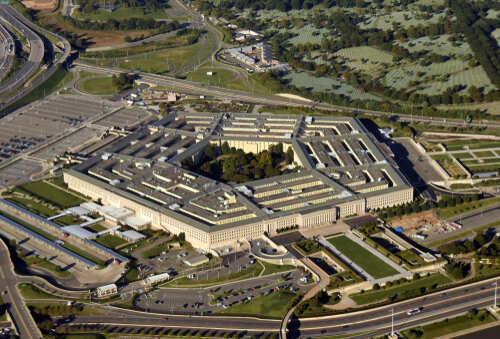
In a single 24‑hour directive, the Pentagon wiped out decades of union protections for tens of thousands of civilian workers in the name of “national security,” and now that move is on trial.
Story Snapshot
- Defense unions sued the Department of Defense, saying Pete Hegseth’s memo illegally terminated hundreds of union contracts and violated federal law.
- The April 9, 2026 order gave Pentagon leaders just 24 hours to cancel most collective bargaining agreements under Executive Order 14251.
- Tens of thousands of civilian workers, many veterans and military family members, suddenly lost long‑standing union rights and protections.
- The case highlights a growing pattern of both parties using “national security” to bypass worker protections and normal rulemaking.
Unions Take Pentagon to Court Over Sudden Contract Cancellations
More than 20 local unions from the American Federation of Government Employees and the National Federation of Federal Employees have filed a lawsuit against the Department of Defense in federal court in Maryland. They argue that Secretary Pete Hegseth’s April 9, 2026 memo ordering the termination of hundreds of collective bargaining agreements broke the Administrative Procedure Act, the main law that governs how agencies must make major policy changes. The unions say the department gave no real explanation, ignored existing law, and misread Executive Order 14251 when it tore up contracts that had been honored for over a year.
The unions’ complaint says the Pentagon had been following its union contracts even after President Donald Trump signed Executive Order 14251 in March 2025, which excluded many “national security” agencies from federal labor‑management law. That order aimed to remove collective bargaining rights from more than one million federal workers, including roughly 300,000 civilians at the Department of Defense. According to the lawsuit, the department could have continued to honor the contracts, but Hegseth suddenly reversed course without the careful, reasoned explanation that the Administrative Procedure Act requires for such a sharp policy change.
Hegseth’s 24‑Hour Memo and the National Security Justification
On April 9, 2026, Hegseth sent a memo directing leaders to “terminate all collective bargaining agreements” the department was party to, except those covered by court orders or a narrow set of prior exemptions. The memo gave commanders only 24 hours to carry out the cancellations and tied the move directly to Executive Order 14251, saying it was “required to align agency operations with national security requirements.” Follow‑up implementation instructions ordered components to not only end contracts but also move to decertify unions as exclusive representatives, ending formal bargaining on workers’ behalf.
Some unions, like the International Federation of Professional and Technical Engineers and the Federal Education Association, had already won preliminary injunctions blocking parts of Executive Order 14251, so their contracts were spared. But American Federation of Government Employees locals across the department were left exposed, despite having had union contracts with the Pentagon for roughly fifty years through wars, deployments, and past security crises. That history fuels skepticism among many workers who see “national security” now being used to justify a sweeping loss of rights that previous generations managed to keep even in dangerous times.
Impact on Workers and the Bigger Fight Over Federal Labor Rights
Union officials warn that tens of thousands of civilian Defense workers, including many veterans and military family members, lost key protections overnight when their collective bargaining agreements were terminated. Those contracts cover basics like fair schedules, discipline rules, safety concerns, and ways to challenge unfair treatment. Without them, workers have fewer tools to push back against unsafe or unreasonable orders, even as they support missions that are vital to the country. Leaders at the American Federation of Government Employees call the decision “cowardly” and say it attacks workers’ First Amendment right to join a union.
This lawsuit is part of a wider legal campaign against Executive Order 14251 and related actions. Other cases argue that the order and contract terminations violate the First Amendment, the Fifth Amendment’s due process clause, and the Administrative Procedure Act. In late 2025, Congress even passed bipartisan legislation called the Protecting America’s Workforce Act to overturn the executive order and restore collective bargaining rights, but the federal government’s leadership has continued to push ahead with its plan. The court now must decide whether the Pentagon’s national security claims and rushed process meet the legal standards or cross the line into unlawful government overreach.
Why This Fight Resonates Beyond Traditional Left‑Right Lines
For many Americans, this story taps into a deeper frustration that cuts across party labels. Long‑time conservatives worry about unaccountable agencies and a “deep state” that can rewrite rules overnight, while long‑time liberals fear widening gaps between workers and powerful elites. Here, a huge federal department used a sweeping executive order and a one‑day deadline to strip workers of contracts they relied on for decades, with very little chance for public input or debate. That kind of move looks less like careful governance and more like top‑down control.
This case also shows how both parties have learned to invoke “national security” to sidestep normal checks and balances. When agencies can say “security” and instantly crush worker protections, limit press access, or rush major changes without clear evidence, it feeds the sense that the rules are different for those at the top. Whether the court sides with the unions or the Pentagon, the outcome will shape how far future administrations can go in rewriting workplace rights for federal employees. For millions who still believe in the promise of fair work for fair pay, the question is simple: will the law still protect the people who do the country’s hardest jobs, or will “security” always trump their voice?
Sources:
military.com, afge.org, facebook.com, govexec.com, nffe.org, war.gov, media.defense.gov