After 38 years of uneasy tension, the Vatican has formally excommunicated six Society of Saint Pius X bishops — and is now offering a clear path back for those who want to return.
Story Snapshot
- On July 1, 2026, the Society of Saint Pius X consecrated four new bishops in Écône, Switzerland, without the required approval of the pope — triggering automatic excommunication under Catholic Church law.
- The Vatican’s Dicastery for the Doctrine of the Faith confirmed the excommunications on July 2, declaring the act schismatic and warning that lay members who formally embrace the schism face the same penalty.
- The Vatican has now issued guidelines spelling out how Society of Saint Pius X clergy and laypeople can return to full communion with the Catholic Church.
- Ordinary Catholics who attend Society of Saint Pius X Masses are not automatically excommunicated — the penalty applies only to those who consciously reject the pope’s authority.
What Happened on July 1
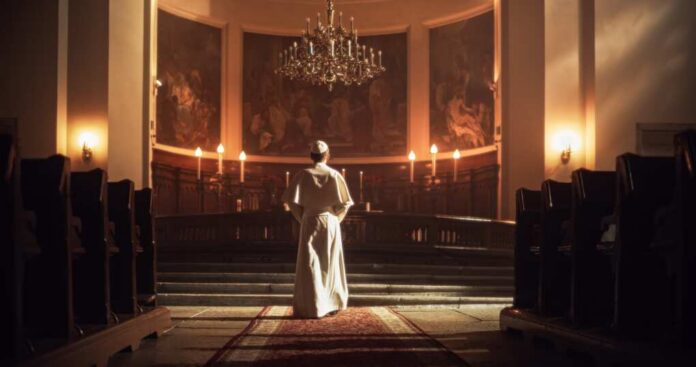
Bishop Alfonso de Galarreta consecrated four new bishops at the Society of Saint Pius X seminary in Écône, Switzerland, on July 1, 2026 — without a papal mandate. The four newly consecrated bishops are Pascal Schreiber, Michael Goldade, Michel Poinsinet de Sivry, and Marc Hanappier. Bishop Bernard Fellay served as co-consecrator. The ceremony went ahead despite a personal appeal from Pope Leo XIV to pause and allow more time for dialogue.
The Society acknowledged the consecrations happened without papal approval. In a statement, it said it “sincerely regrets” that the ceremony had to proceed under what it called “exceptional circumstances.” It also defended the move as necessary to preserve what it described as the “sacred heritage of Tradition.” The Vatican’s Dicastery for the Doctrine of the Faith published a formal decree the following day, July 2, confirming that all six bishops involved had incurred automatic excommunication.
A Conflict Decades in the Making
This is not the first time the Society of Saint Pius X has gone down this road. In 1988, the society’s founder, French Archbishop Marcel Lefebvre, consecrated four bishops without papal approval at the same location in Écône. Pope John Paul II declared it a schismatic act, and all six bishops involved were excommunicated. Pope Benedict XVI lifted those excommunications in 2009, but the society’s canonical status remained irregular — meaning its priests were never fully authorized to act in the Church’s name.
Pope Francis later extended limited sacramental permissions to Society of Saint Pius X priests. Starting in 2016, their priests were allowed to hear confessions validly. In 2017, Francis approved a provision making marriages witnessed by Society of Saint Pius X priests valid under certain conditions. Those concessions were seen as goodwill gestures — but they did not resolve the deeper question of the society’s standing within the Church.
The Vatican’s Olive Branch — and the Rejection
As recently as February 12, 2026, Cardinal Víctor Manuel Fernández, head of the Vatican’s Dicastery for the Doctrine of the Faith, met with Society of Saint Pius X Superior General Father Davide Pagliarani and offered a path to dialogue. The Vatican proposed identifying the “minimum necessary requirements for full communion” and finding a formal canonical structure for the society. The offer required the society to pause its planned bishop consecrations.
Vatican publishes guidelines for priests, laity of SSPX who wish to be received back into full communion with the Catholic Church: Priests must “find an Ordinary willing to accept him *ad experimentum*. Consequently, the priest must “write a letter in his own hand to the Holy…
— Rich Raho (@RichRaho) July 2, 2026
Pagliarani rejected the offer on Ash Wednesday, February 18, saying he could not accept the Vatican’s conditions. He confirmed the July 1 consecrations would proceed. On May 13, Cardinal Fernández issued a final warning, stating that proceeding without a papal mandate “will constitute a schismatic act” carrying automatic excommunication under Canon 751 of the Church’s Code of Canon Law. The society went ahead anyway.
What This Means for Everyday Catholics
The Vatican’s excommunication decree is sweeping for the bishops directly involved — but its reach does not automatically extend to the faithful in the pews. Canon law experts note that ordinary Catholics who attend Society of Saint Pius X Masses are not excommunicated unless they consciously reject the authority of the pope. The Pontifical Council for Legislative Texts made this distinction clear as far back as 1996. The Vatican has now published guidelines explaining how Society of Saint Pius X clergy and laypeople who wish to return to full communion can do so — a sign that Rome is keeping the door open even as it holds the line on authority.
Sources:
lifesitenews.com, cruxnow.com, americamagazine.org, facebook.com, ncregister.com, catholicworldreport.com