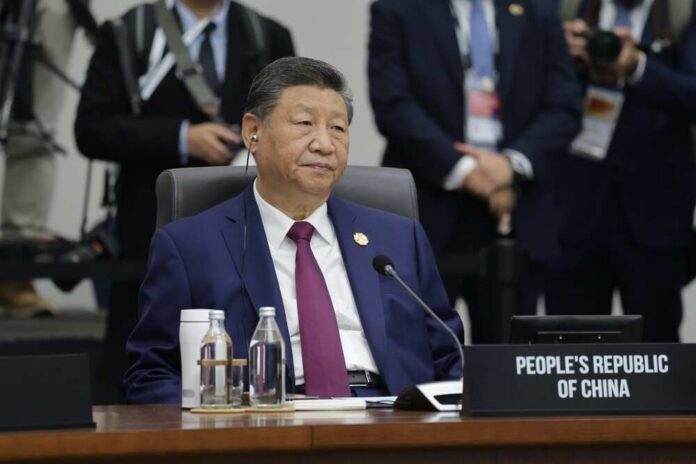
President Trump is flying into Beijing with war in the Persian Gulf, trade tensions, and Taiwan all on the table—an agenda where one wrong signal could spike prices at home or invite a global crisis abroad.
Quick Take
- Trump departed May 12 for a Beijing summit with Xi after the meeting was delayed by the Iran war and related supply-chain disruptions.
- Trade, energy security, Iran, and Taiwan are the core agenda items, with Taiwan remaining Xi’s top strategic priority.
- U.S. officials have signaled that prominent American business leaders may be part of the delegation, reflecting the economic stakes.
- Analysts are warning to expect high ceremony but limited concrete deliverables, given the competing priorities on both sides.
Why This Trip Matters to American Households
President Donald Trump left for China on Tuesday, May 12, for a high-stakes summit with Chinese President Xi Jinping, a rare U.S. presidential visit to China after nearly a decade. The White House has framed the agenda around trade, energy, Iran, and Taiwan. Those topics are not abstract: they shape consumer prices, supply chains, and the likelihood of military conflict. The summit was postponed earlier amid the Iran war, which has increased pressure on global shipping routes.
Iran’s conflict has pushed energy and shipping concerns into the center of U.S.-China diplomacy because disruptions near the Strait of Hormuz threaten a key artery for global oil flows, including China’s imports. Trump has said Iran will be discussed, and separate reporting indicates U.S. officials are watching whether talks can help stabilize the Gulf situation. If the conflict continues to choke shipping and raise risk premiums, Americans can feel it through higher transportation costs and broader inflation pressure.
Trade and Energy: “Quick Wins” vs. Long-Term Leverage
U.S.-China economic relations have cooled since the peak of the 2025 trade war, but the détente remains fragile. Reporting on the run-up to the summit describes a U.S. interest in narrower commercial agreements that can be presented as tangible progress without reopening the worst tariff-era instability. That approach fits a political reality: voters tend to judge foreign policy by what it does to jobs and prices. Beijing, by contrast, can afford to bargain longer, using market access and supply-chain dependence as leverage.
The business dimension is unusually visible. Multiple reports say prominent U.S. business leaders, including Elon Musk, Tim Cook, Larry Fink, and David Solomon, may join or are expected around the delegation. That detail matters because it signals the administration is prioritizing deal execution and market access, not only strategic messaging. At the same time, the reporting also notes uncertainty about exactly who will attend, underscoring how fluid the diplomacy remains as the trip begins and meetings are finalized.
Taiwan: The Red Line That Can Override Everything Else
Taiwan remains the issue most likely to turn a diplomatic trip into a security crisis. Trump has indicated Taiwan will be on the agenda, while reporting emphasizes Xi’s drive for reunification and his desire to achieve it without U.S. interference. Separate coverage has highlighted warnings that miscalculation or overreach could escalate quickly. Even if both sides intend to keep the trip “stable,” Taiwan is not a conventional bargaining chip; it is a core sovereignty claim for Beijing and a major security commitment question for Washington.
What to Expect: Big Optics, Limited Deliverables
Several observers expect the summit to produce more symbolism than breakthroughs. One expert assessment described high fanfare and low concrete outcomes, with Iran and trade dominating the practical conversations. That is consistent with the competing incentives: Trump is incentivized to show results, while Xi is incentivized to protect long-term strategic objectives, especially on Taiwan. The trip’s short duration—parts of three days—also limits the odds of complex, enforceable deals being finalized in person.
Even so, the meeting may still matter if it establishes guardrails. The two leaders previously met in Busan in October 2025 and discussed cooperation and regular interactions, and this Beijing summit is framed as a continuation of that channel. If the talks reduce the risk of a renewed trade spiral, calm energy-market anxieties tied to Gulf shipping, or clarify deterrence signals around Taiwan, those “boring” outcomes can be the most valuable. The public, however, should watch for specifics rather than headlines.
Sources:
Trump heads to China today for high-stakes meeting with Xi
China, Trump, Xi meeting: trade deal, Iran war, midterm elections
Chinese FM readout on Trump-Xi meeting in Busan (Oct. 30, 2025)
What happened when Trump met Xi
President Donald Trump participates in a bilateral meeting with Chinese President Xi Jinping