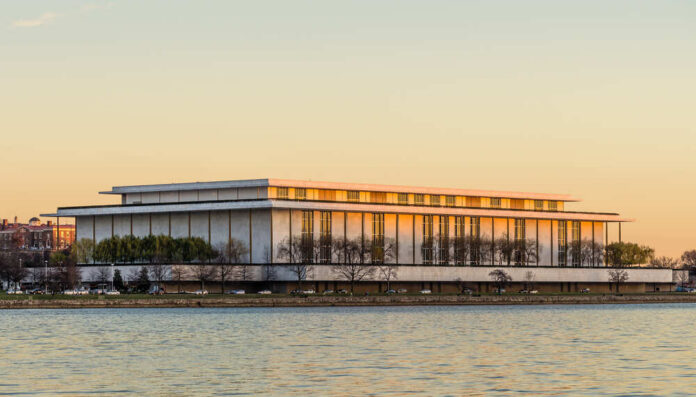
Video showing rusted steel and water damage beneath the Kennedy Center is forcing Washington to answer a simple question: how did a flagship national institution get this bad before anyone acted?
Story Snapshot
- A newly highlighted video and media tour documented decades of deferred maintenance at the Kennedy Center, including water intrusion and corrosion.
- The Trump administration has backed a $257 million federal renovation, with a full closure scheduled to start July 4, 2026, and last about two years.
- Kennedy Center officials argue a shutdown is necessary to keep the project fast, safe, and cost-controlled for taxpayers.
- Financial questions remain because capital repairs do not replace ticket revenue or cover the Center’s ongoing operating costs during a two-year shutdown.
What the footage shows—and why it matters now
Kennedy Center officials recently guided reporters through behind-the-scenes areas to document structural deterioration that has built up over decades. Coverage of the tour described water intrusion, corroded steel, and aging systems that have outlived their expected lifespan, alongside imagery such as exposed rebar and rusted infrastructure. The building’s problems are not cosmetic; they point to long-running maintenance backlogs that rarely attract attention until failure becomes unavoidable.
President Donald Trump, now in his second term, has publicly described the facility as “tired, broken, and dilapidated,” tying the planned overhaul to a broader argument that Washington institutions are often mismanaged until a crisis forces action. That framing resonates with voters who believe government and quasi-government cultural organizations can drift toward prestige projects while basics like maintenance, procurement discipline, and long-term asset planning get ignored.
The $257 million plan and the two-year shutdown
The renovation is slated to be funded with a $257 million federal allocation, and the closure is scheduled to begin July 4, 2026, with an expected two-year restoration period. Project leaders have described the work as a comprehensive modernization focused on core infrastructure—fixing water intrusion, replacing failing systems, and addressing corrosion—while keeping external aesthetic changes limited. The central tradeoff is time: a full shutdown accelerates work but removes programming entirely.
Kennedy Center leadership has argued that keeping the venue open during major construction would slow timelines and risk compromised workmanship. Officials have emphasized that closing the building allows contractors to work more efficiently, which they say protects taxpayers by reducing the chances of drawn-out schedules and repeated mobilization costs. That argument fits a basic conservative governance principle: if federal dollars are being spent, the project should be executed quickly, transparently, and with measurable deliverables.
Leadership shakeups, politics, and public confidence
The renovation is unfolding alongside significant leadership and staffing changes. Reporting cited the dismissal of roughly 40 staff members as part of an operational overhaul and noted that the board was replaced with Trump allies. Supporters see that as a management reset intended to impose accountability and move faster after years of drift. Critics see risk in politicizing a major cultural institution, especially as programming choices and donor relationships intersect with Washington power.
The available reporting establishes the fact of the shakeup and the size of the planned renovation, but it offers limited detail on internal decision-making and procurement controls that will govern the project once the doors close. That gap matters because public trust hinges on whether the renovation is run like a disciplined infrastructure program—clear scope, clear milestones, and honest disclosure of cost overruns—rather than like a typical D.C. process that expands quietly until taxpayers get the bill.
The real vulnerability: operating money during a closed period
Even if the capital plan stays on budget, analysts have raised a separate concern: a repaired building does not automatically solve a revenue problem. Reporting cited an annual Kennedy Center budget of about $268 million, with federal support around $43 million, and warned that a two-year closure removes ticket-driven income while fixed costs and obligations can remain. The $257 million allocation targets repairs, not a full operating bridge for two years.
Video exposes disrepair lurking beneath Trump Kennedy Center as $257M renovation looms
With @kencen for @FoxNews https://t.co/hT7uJSASPf— Jasmine Baehr (@JasmineBaehr) April 23, 2026
This is where frustrations on right and left overlap. Conservatives question why a nationally prominent institution can reach a point of visible decay while still relying on federal funding; liberals worry about disruptions to arts access and workforce stability. What’s clear from the documented disrepair is that deferred maintenance is not a partisan issue—it is a governance issue. The test will be whether Washington treats this as a one-time photo-op or a model for preventing similar backlogs elsewhere.
Sources:
Video highlights maintenance concerns at Trump Kennedy Center ahead of proposed $257M renovation
Kennedy Center Renovation: A $257M Liquidity Injection into a Closed Venue
Trump, Grenell Launch $257M Fast-Tracked Restoration of Trump Kennedy Center