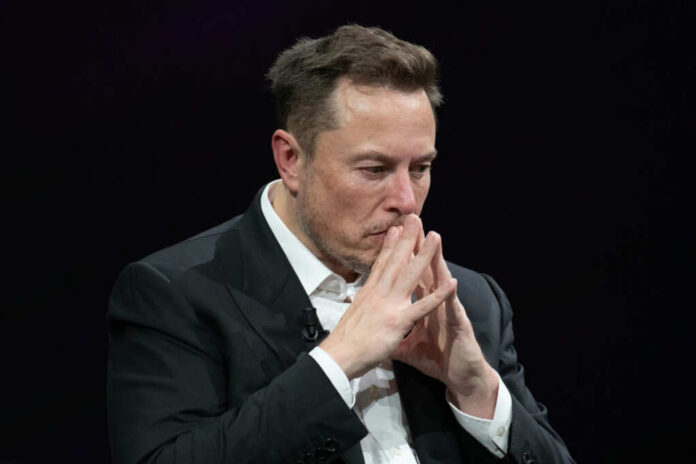
Even with Republicans running Washington, federal courts keep slamming the brakes on rapid “government efficiency” moves tied to Elon Musk—raising a basic question about who really has the power to reshape the bureaucracy.
Story Snapshot
- Federal judges repeatedly blocked or limited initiatives associated with Musk’s Department of Government Efficiency (DOGE), including actions involving SSA data access, the CFPB, and USAID.
- Musk’s formal government role was time-limited, and President Trump publicly suggested it could end as the 130-day window approached.
- Musk’s political spending in Wisconsin backfired when the Musk-backed candidate lost a high-profile state Supreme Court race.
- Polling and consumer surveys cited in reporting suggested Musk’s personal brand became a drag on Tesla, alongside a reported deliveries decline in Q1 2025.
Courts Halt Fast-Moving Bureaucracy Changes Despite GOP Control
Federal courts across the country curtailed attempts tied to Musk and DOGE to implement major bureaucratic changes, according to reporting that compiled multiple rulings. Judges denied DOGE employees access to Americans’ personal data at the Social Security Administration, blocked efforts aimed at dismantling the Consumer Financial Protection Bureau, and found the expedited closure of the U.S. Agency for International Development likely unconstitutional. Those outcomes highlight a recurring reality: executive-branch speed often collides with judicial process.
Musk hits legal losing streak ahead of showdown with OpenAI’s Altman https://t.co/jjCNzdKcHz
— FT Technology News (@fttechnews) April 12, 2026
For conservatives who want smaller government, these rulings are a double-edged sword. On one hand, the court system is functioning as a constitutional backstop—exactly what limited-government advocates say should happen when authority is stretched. On the other hand, the same brakes can keep entrenched agencies and long-standing programs insulated from even electorally validated reform efforts. The research provided does not include the full text of the court decisions, limiting a deeper legal comparison of each ruling’s rationale.
Musk’s 130-Day Clock and Signs of a White House Cooling-Off
Reporting described Musk as a “special government employee,” a designation that comes with a hard ceiling on how long an outside figure can serve. As that 130-day period neared expiration, President Trump told reporters Musk’s involvement might be ending soon. That matters politically because it frames DOGE less like a durable new power center and more like a temporary experiment—one that could be scaled back to reduce distractions without abandoning the broader Republican push for regulatory restraint.
Trump administration officials also reportedly voiced frustration with Musk’s “erratic behavior,” suggesting internal debate about whether his style helps or hurts the agenda. From a governance standpoint, the tension is familiar: voters often elect reformers to disrupt institutions, but governing still requires predictable process, coalition management, and legal durability. When a reform effort becomes too tied to one high-profile personality, setbacks can look less like policy disputes and more like a referendum on that individual’s judgment.
Wisconsin Spending Loss Shows Limits of Money-Driven Political Influence
Musk invested millions in Wisconsin’s Supreme Court election to support conservative candidate Brad Schimel, but Schimel lost to Susan Crawford. In practical terms, that result undercuts the assumption that national money and celebrity messaging can reliably translate into wins in state-level races—especially judicial contests where voters may react against overt politicization. For GOP strategists, the lesson is less about abandoning outside support and more about choosing messengers who fit the state and the moment.
Tesla Brand Fallout Becomes an Economic Warning Sign
The same reporting connected Musk’s political profile to Tesla’s business headwinds. Tesla vehicle deliveries declined 13% in Q1 2025 versus the prior year, and Musk’s favorability reportedly slid from roughly neutral to 10 points underwater by early April 2025. A Yahoo News/YouGov poll cited in the research said two-thirds of respondents would not purchase or lease a Tesla, with 56% attributing that decision to Musk himself. That linkage suggests politics can materially reshape consumer behavior.
Elon Musk hits legal losing streak ahead of showdown with OpenAI’s Sam Altman https://t.co/eAhF2PxYHr via @ft
— Thomas (@Blackboots00) April 13, 2026
None of this proves a single-cause explanation for Tesla’s performance, and the research summary does not provide deeper breakdowns such as pricing, competition, or broader EV demand trends. What it does show is how quickly a CEO’s political visibility can become a corporate liability—especially when opponents view the company as a proxy target. For Americans of all stripes who distrust “elites,” the irony is that concentrated cultural and economic power can cut both ways: the public can punish it as easily as it once rewarded it.
Sources:
https://www.axios.com/2025/04/02/elon-musk-favorability-tesla-sales-dropped-wisconsin-loss