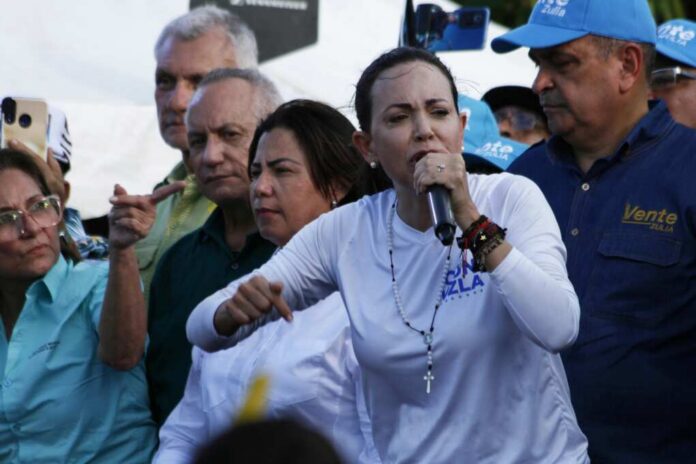
Venezuelan opposition leader María Corina Machado declared that restoring democracy to her nation could become President Trump’s defining geopolitical triumph, comparing it to the fall of the Berlin Wall while the administration navigates a complex transition after ousting socialist dictator Nicolás Maduro through military intervention.
Story Overview
- Machado, a 2025 Nobel Peace Prize laureate, met with Trump at the White House and compared Venezuela’s democratic potential to Reagan’s Berlin Wall moment
- Trump’s administration removed Maduro through military action in early 2026 but installed former regime vice president Delcy Rodríguez as interim leader, sidelining the opposition
- The transition ends 27 years of socialist autocracy that devastated Venezuela through economic collapse, hyperinflation, and alliances with Russia and Iran
- Machado provided few specifics on timelines or her return to Venezuela despite commanding massive popular support and backing the legitimate 2024 election winner
Trump Removes Socialist Dictator After Decades of Oppression
President Trump authorized U.S. military forces to capture Nicolás Maduro in January 2026, ending nearly three decades of Chavismo that plunged Venezuela from prosperity into humanitarian catastrophe. The socialist regime, which began under Hugo Chávez in 1999 and continued through Maduro’s reign, destroyed the oil-rich nation through mismanagement, corruption, and repression while forging dangerous alliances with Russia and Iran. Trump’s decisive action fulfilled promises that previous administrations failed to deliver, including the 2019 recognition of Juan Guaidó that produced no meaningful change. The intervention demonstrated renewed American resolve to confront tyranny in the Western Hemisphere.
Opposition Leader Presents Bold Vision Despite Uncertain Role
María Corina Machado addressed the Heritage Foundation on January 16, 2026, expressing confidence in an “orderly transition” to democracy while providing minimal details about timelines or her planned return to Venezuela after over a decade in hiding. The opposition leader, who received the Nobel Peace Prize in late 2025 for her pro-democracy efforts, met Trump the previous day and presented him with her medal. Machado backed Edmundo González in the 2024 presidential election after the regime banned her from running; opposition evidence showed González won decisively, but Maduro’s loyalists declared him victor through fraud. Her optimism contrasts with the reality that Trump endorsed Delcy Rodríguez, Maduro’s former vice president, as interim leader while CIA Director John Ratcliffe conducted meetings with the regime holdover.
Popular Mandate Clashes With Pragmatic Transition Strategy
Millions of Venezuelans rallied behind Machado during the 2024 election cycle, giving her undeniable popular legitimacy that two-thirds of citizens want translated into elections within one year according to Economist and Bloomberg polling. Yet Trump’s administration prioritized oil infrastructure revival and security concerns over immediately installing opposition leadership, creating tension between democratic aspirations and practical governance. Security forces remain loyal to the old regime structure, presenting challenges for any rapid transition. Experts including Harvard-affiliated José Ramón Morales-Arilla urged Machado to mobilize international pressure through the EU, Latin American allies, and Congress while affirming the opposition’s 2024 electoral mandate before momentum dissipates. The administration’s consideration of reopening the Caracas embassy signals engagement, though Trump’s focus on oil and curtailing drug trafficking suggests economic and security interests drive current policy.
Berlin Wall Analogy Highlights Hemispheric Freedom Stakes
Machado’s comparison of Venezuela’s democratic restoration to the Berlin Wall’s collapse frames the transition as a defining Cold War-style victory for American leadership and conservative values. A democratic Venezuela would eliminate a hostile socialist regime allied with America’s adversaries, reduce the migration crisis flooding the southern border, and transform a failed state into a regional partner. The Bush Center emphasized that supporting legitimate opposition leaders like Machado and González over regime remnants serves U.S. security interests by combating drug trafficking and restoring regional stability. Polling shows 80 percent of Venezuelans expect conditions to improve, and majority support exists for the American intervention despite traditional non-intervention principles. This presents Trump with an opportunity to deliver both hemispheric freedom and tangible benefits to Americans frustrated by illegal immigration and foreign policy failures under previous administrations.
Venezuela’s Opposition Leader Says Democracy in Venezuela Could Be Trump's Berlin Wall Moment
https://t.co/W3RRiqhZVR— Townhall Updates (@TownhallUpdates) January 26, 2026
The transition’s success depends on whether the administration empowers genuine democratic forces or settles for cosmetic changes under rebranded regime figures. Machado’s Nobel credentials and popular support position her as the natural leader, yet Rodríguez retains interim power with security apparatus backing. Trump’s pragmatic approach prioritizes deliverable results over ideological purity, creating uncertainty about whether Venezuela becomes a genuine freedom success story or another compromised transition that leaves socialist infrastructure intact. Conservative supporters hoping for a clear victory against leftist tyranny will watch closely as the administration balances strategic interests with the democratic aspirations of millions who suffered under decades of socialist oppression.
Sources:
Venezuelan opposition leader is confident about return of democracy but says little of her plans
How Machado Can Steer Venezuela Toward Democracy
A Democratic Opportunity for Venezuelans
Can Venezuela Still Reclaim Democracy?