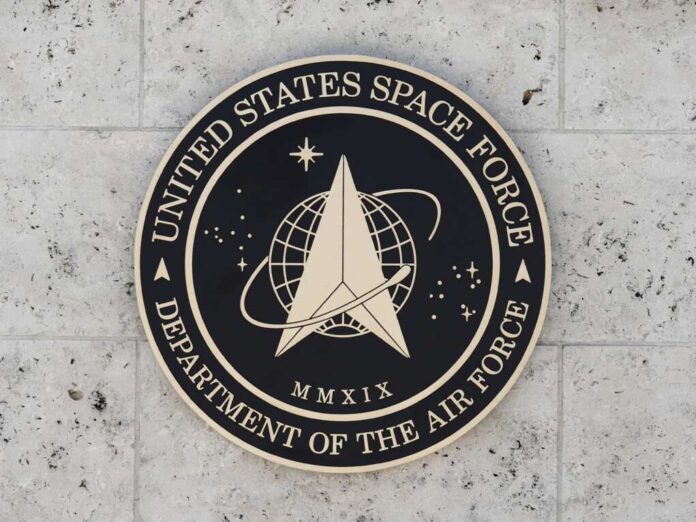
The U.S. Space Force is revolutionizing military logistics by requesting $20 million to develop rocket-based troop resupply and satellite refueling capabilities that could bypass traditional vulnerabilities and deliver cargo anywhere on Earth within 90 minutes.
Story Highlights
- Space Force seeks $20 million for Point-to-Point Delivery system using rockets for rapid global cargo transport
- $16 million allocated for on-orbit satellite refueling and repair capabilities to counter space threats
- Program leverages commercial partnerships with SpaceX, Blue Origin, and Rocket Lab as “anchor tenant” strategy
- Initiative addresses Indo-Pacific logistics challenges where contested airspace limits traditional resupply methods
Space Force Breaks New Ground in Military Logistics
The Space Force’s FY 2025 budget request establishes the Space Access, Mobility, and Logistics (SAML) portfolio under its newly created Servicing, Mobility, and Logistics program office. This represents a fundamental shift from relying solely on sea, air, and land domains for military sustainment. The initiative directly responds to U.S. Space Command’s demands for “dynamic space operations” capabilities that can operate in contested environments where traditional logistics face significant vulnerabilities.
Rocket-Based Cargo Delivery Transforms Battlefield Support
The Point-to-Point Delivery program transitions technology from the Air Force Research Lab’s Rocket Cargo Vanguard into operational capability. This system promises to deliver critical supplies to troops worldwide within 90 minutes, completely bypassing hostile airspace and geographical barriers. The program specifically targets scenarios like the Indo-Pacific theater, where vast distances and contested environments challenge conventional logistics. Transportation Command serves as the end-user for these rapid resupply missions.
Commercial Space Partners Drive Innovation Forward
The Space Force strategy relies heavily on commercial providers including SpaceX, Blue Origin, Sierra Space, and Rocket Lab, with the military serving as an “anchor tenant” to mature the orbital logistics market. Companies like Inversion Space are developing specialized spacecraft such as the ARK system, capable of on-orbit storage for up to five years before on-demand deorbit. Rocket Lab has committed to conducting Point-to-Point Delivery tests in 2026, demonstrating industry commitment to this revolutionary approach.
Recent exercises like REFORPAC 2025 highlighted critical logistics needs across the 3,000-mile Pacific theater, where traditional airlift faces significant challenges. The July 2025 exercise tested surge capabilities that would directly benefit from space-based resupply options. This real-world validation demonstrates why military leaders are pushing for these breakthrough capabilities that could fundamentally change how America projects power globally.
Why (and how) the US military wants to resupply troops from space https://t.co/lx5iBZ5C0f
— Task & Purpose (@TaskandPurpose) December 15, 2025
Satellite Defense Capabilities Counter Growing Threats
The $16 million on-orbit refueling component addresses satellite vulnerability by enabling maneuverability that makes them harder to target. Chief of Space Operations Gen. Chance Saltzman emphasized that these investments allow satellites to “maneuver without regret,” significantly enhancing defensive capabilities. This technology builds upon proven NASA models used for International Space Station resupply missions, adapting commercial spaceflight success for military applications that protect America’s critical space assets.
Sources:
Space Force Looks to Ramp Up Space Mobility, Logistics Research in FY ’25
Spaceborne Autonomous Resupply: The NASA Model for Prolonged Endurance in Multidomain Operations
REFORPAC 2025: US Air Force executes unprecedented surge into Pacific theater
NASA, Partners Adjust Next Cygnus Resupply Launch
Arc Orbital Supply Capsule Aims To Put Military Supplies Anywhere On Earth Within An Hour
Northrop Grumman’s 1st Cygnus XL spacecraft launches on cargo run to the space station