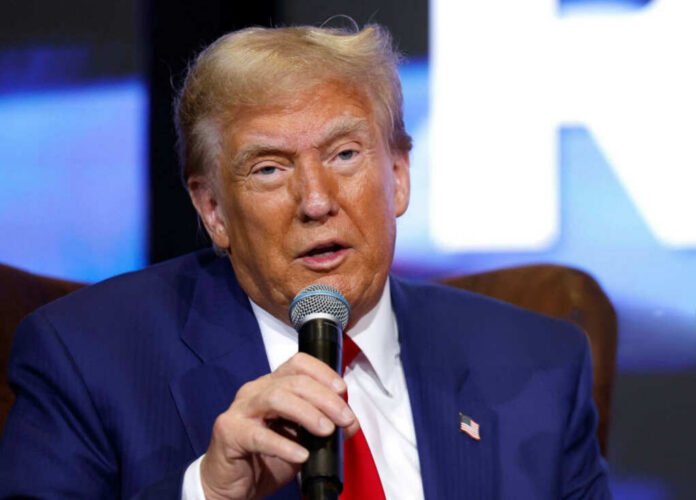
A viral claim that President Trump “confused” the Civil War with Reconstruction collapses under scrutiny—because the underlying quote can’t be verified in the available sourcing.
Story Snapshot
- No credible source in the provided research confirms Trump said Reconstruction was “a fancy way of saying the Civil War.”
- The closest verified development is Trump’s March 27, 2025 executive order targeting what the administration calls “revisionist” history at federal sites.
- The order directs Interior to review monuments altered or removed since 2020 and pushes upgrades tied to America’s 250th anniversary on July 4, 2026.
- The broader fight is over who controls federally presented history—elected officials, career bureaucracies, or ideological activist pressure.
What We Can Confirm About the “Civil War vs. Reconstruction” Claim
Search results provided with this topic do not substantiate the headline allegation that Trump equated Reconstruction with the Civil War, and they do not document any event timeline, transcript, or recording where he used that phrasing. The research summary explicitly flags the premise as unverified or possibly fabricated. Without a primary source—speech video, official transcript, or a credible outlet quoting it in context—treating the claim as fact would be irresponsible.
The absence of verification matters because Civil War-era language gets weaponized quickly in today’s politics. Civil War (1861–1865) and Reconstruction (1865–1877) are distinct periods with different legal and constitutional stakes: the war preserved the Union and ended slavery, while Reconstruction reshaped citizenship and voting rights through constitutional amendments, followed by violent backlash and political retrenchment. The research itself makes that basic distinction and finds no Trump “conflation” in the sources.
Trump’s Actual Move: A Federal “History” Executive Order
What is documented is Trump’s March 27, 2025 executive order titled “Restoring Truth and Sanity to American History.” The order argues that federal historical sites and museums have promoted a “race-centered ideology” that frames America as fundamentally oppressive, and it calls for a course correction toward themes like “American greatness” and national unity. It also targets specific institutions and presentations—such as exhibits and descriptions critics label “divisive.”
The order assigns the Department of the Interior a central role: reviewing and potentially restoring monuments that were removed or altered after 2020, and coordinating improvements at federal sites in advance of the July 4, 2026 semiquincentennial. The policy choice is significant because it uses executive authority to influence public-facing history in federally controlled spaces. Supporters view that as pushing back on ideological capture; critics view it as political meddling in education and culture.
Why Conservatives Care: Culture Power vs. Constitutional Guardrails
For many conservative readers, the core question is less about one viral “gaffe” and more about who gets to define America’s story using taxpayer-funded platforms. Federal museums and parks influence curricula, tourism, and civic education—and when those institutions drift into ideological messaging, it looks like state-backed activism rather than neutral stewardship. The executive order reflects an attempt to reassert elected oversight over agencies that often operate with long-term bureaucratic continuity.
At the same time, the research indicates the order could deepen polarization, because opponents argue it risks sanitizing hard chapters of American history or narrowing legitimate debate. The practical concern for constitutional conservatives is method as much as outcome: when any administration—left or right—governs culture primarily through executive directives, it raises questions about durable limits and accountability. The order’s implementation details and transparency will determine whether it remains a scoped administrative review or becomes a broader power struggle.
Political Pushback and the Incentive to Spread Dubious Narratives
Criticism of Trump’s rhetoric and agenda appears prominently in the research, including political opponents rejecting his framing in high-profile settings. That backdrop helps explain why sensational claims can spread fast: a shareable “confused Trump” storyline fits a preexisting narrative and generates clicks, even when documentation is thin. The research also notes analysis suggesting that outrage cycles—on both sides—can become a strategy that dominates coverage and crowds out specifics.
For readers trying to stay grounded, the takeaway is straightforward: insist on transcripts, official video, or credible contemporaneous reporting before accepting viral quotations as true. If the quote is real, it should be easy to locate in a full clip or an official record. If it isn’t, the public is being steered away from the real policy debate—how federally curated history will be shaped heading into 2026, and what standards should govern “truth,” context, and balance.
Until stronger documentation emerges, the verified story is Trump’s executive action and its implications for federal institutions—not an unproven line about Reconstruction. Conservatives who value constitutional order and limited government can legitimately debate the wisdom of using executive power in cultural disputes, but that debate should be based on what is actually sourced. In a media environment that rewards outrage, demanding receipts is one of the few ways citizens keep propaganda—any direction—from doing their thinking for them.
Sources:
https://thefulcrum.us/ethics-leadership/trump-extreme-rhetoric
https://afro.com/trump-state-union-critics-reject/