President Trump’s threat to block a vital U.S.-Canada bridge exposes a stunning reversal that puts American trade and Michigan jobs at risk over ownership claims contradicted by the actual facts.
Story Snapshot
- Trump threatens to block the Gordie Howe International Bridge opening unless Canada meets unspecified demands, reversing his 2017 support for the project
- Michigan and Canadian officials confirm the U.S. already owns 50% of the bridge through joint ownership with Michigan, contradicting White House claims
- Canada financed the entire $4 billion project and will recoup costs through tolls, while the U.S. got half-ownership with zero investment
- The bridge represents North America’s largest crossing and is critical to Michigan’s economy and U.S.-Canada trade flows
Trump Administration Reverses Course on Critical Infrastructure
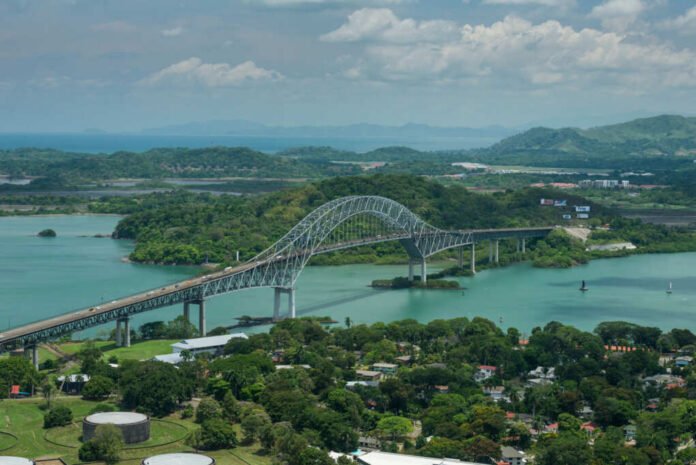
President Trump announced on February 10, 2026, his intention to block the opening of the Gordie Howe International Bridge connecting Detroit and Windsor, Ontario, unless Canada provides compensation and meets unspecified demands. The threat represents a complete reversal from 2017, when Trump and then-Canadian Prime Minister Justin Trudeau jointly praised the bridge as “a vital economic link between our two countries.” White House Press Secretary Karoline Leavitt stated the administration finds it unacceptable that Canada will control bridge crossings and owns land on both sides, while demanding more American-made materials in construction.
Michigan Officials Correct Ownership Claims
Michigan Governor Gretchen Whitmer and Representative Debbie Dingell immediately countered the White House claims, clarifying that the ownership structure is already 50/50 between Canada and the state of Michigan. The joint ownership agreement is explicitly documented, contradicting assertions that Canada owns both sides. Former Michigan Governor Rick Snyder, who championed the project, emphasized in a Detroit News op-ed that Canada financed the entire $4 billion construction cost and will be repaid with interest through toll revenues. Michigan and the United States received half-ownership without any financial investment, making it an extraordinarily favorable deal for American interests.
Economic Stakes for American Workers and Businesses
The Gordie Howe International Bridge represents the largest crossing in North America and serves as a critical artery for trade between two major economic partners. Governor Whitmer stressed the bridge is “a really important part of our economy” and emphasized the importance of opening on schedule. Blocking or delaying the bridge would directly harm Michigan businesses and workers, particularly in the automotive industry where Detroit and Windsor form interconnected manufacturing hubs. The threat comes as the two nations prepare to renegotiate a major trade pact later in 2026, suggesting the bridge is being used as leverage in broader negotiations.
Canadian Leadership Seeks Resolution
Canadian Prime Minister Mark Carney spoke with Trump by phone on February 11, 2026, expressing confidence the dispute will be resolved. Carney clarified that Canada and Michigan share ownership of the bridge, contradicting the White House characterization. Ontario Premier Doug Ford also expressed confidence the bridge will open on schedule. The Canadian position emphasizes that their $4 billion investment justified exclusive toll revenue collection to recoup costs, while the United States received half-ownership without contributing financially. Canada’s willingness to fully finance critical cross-border infrastructure while granting joint ownership demonstrates the kind of partnership that benefits American economic interests.
The dispute raises concerns about using infrastructure approval as a negotiation weapon when the facts clearly show the United States already secured favorable terms. Michigan received half-ownership of a $4 billion bridge without investing a single dollar, while Canada assumed all financial risk. Blocking this bridge would harm American workers and businesses in Michigan and across the nation who depend on efficient trade flows with our northern neighbor. The administration’s reversal from its 2017 position supporting this “vital economic link” creates uncertainty for future cross-border projects and may discourage partners from financing infrastructure that benefits American communities.
Sources:
Michigan, Canadian officials counter Trump claims about Gordie Howe Bridge – Michigan Public Radio
Trump rethinking Canada bridge permit, amid Michigan jeers, cheers – Bridge Michigan
Michigan, Canadian officials counter Trump’s claims about Gordie Howe Bridge – WCMU Radio