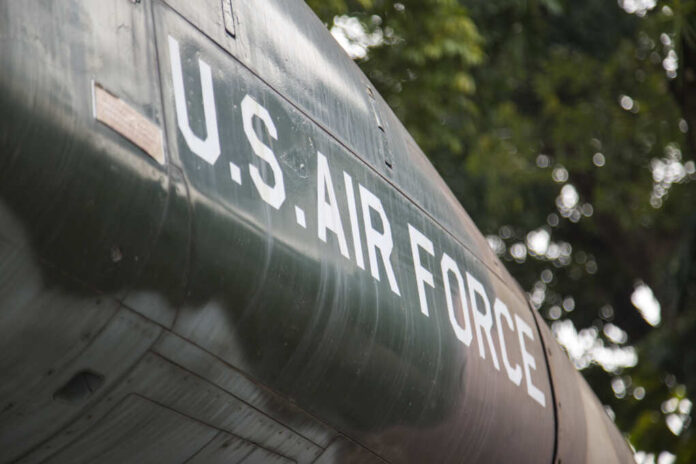
The U.S. Air Force’s decision to award a $2 billion contract for B-52 engine replacements marks a significant step in military modernization, promising to extend the bomber’s service into the next century.
Story Highlights
- The $2 billion contract awarded to Boeing aims to re-engine two B-52 bombers, replacing outdated engines.
- The upgrade is part of a broader strategy to extend the aircraft’s service life into the 2050s and beyond.
- This initiative underscores a shift toward maintaining and modernizing existing military assets.
- It aligns with plans to phase out older bombers while integrating newer models like the B-21 Raider.
Contract Details and Strategic Implications
On December 23, 2025, the U.S. Air Force awarded a $2.04 billion contract to Boeing under the B-52 Commercial Engine Replacement Program (CERP). This contract is part of a critical effort to replace the aging Pratt & Whitney TF33 engines on two B-52H Stratofortress bombers with the new Rolls-Royce F130 engines. This upgrade is pivotal in extending the service life of these 1950s-era bombers into the 2050s and 2060s, ensuring a century of operational capability.
The contract is not just an isolated upgrade but a crucial component of a broader $48.6 billion B-52J redesignation program. This includes a comprehensive overhaul of avionics, communications, and weapons systems. The goal is to align the bomber fleet with the U.S. Air Force’s strategic vision, which includes retiring B-1 and B-2 bombers while integrating the advanced B-21 Raider. This move is a testament to the Air Force’s commitment to maintaining a robust and versatile bomber fleet to meet future challenges.
Stakeholders and Economic Impact
The key stakeholders in this program include the U.S. Air Force, Boeing, and Rolls-Royce North America. The Air Force, as the contracting authority, aims to ensure cost savings, reliability, and fuel efficiency through this modernization effort. Boeing, acting as the prime integrator, will handle the modification, integration, and testing phases across multiple sites, including Oklahoma City and San Antonio. Rolls-Royce, the engine supplier, will manufacture over 600 engines in Indianapolis, having already invested over $600 million in this project.
This program is expected to have significant economic implications, particularly for the defense industrial base in the U.S. It will provide a boost to the manufacturing sector, sustaining jobs in facilities like San Antonio and Indianapolis. The program also reinforces the strategic deterrence capabilities of the U.S. without the need for new airframe acquisitions, highlighting a preference for modernizing existing assets over developing new ones.
Future Prospects and Industry Effects
The ongoing developments in the B-52 re-engine program represent a major step forward in extending the operational life of the bomber fleet. The anticipated timeline includes engine and radar testing in 2026, with a production decision expected by late 2028. The task order for testing the two aircraft is expected to be completed by May 31, 2033. This timeline suggests that the program is on track, despite minor delays previously encountered.
Thank you, @USAirForce, for your partnership to continue development of the B-52 Commercial Engine Replacement Program. This phase focuses on modifying and flight-testing two B-52 aircraft before full production to increase efficiency, range and operational lifespan of the… pic.twitter.com/rhrQ5TR6iF
— Boeing Defense (@BoeingDefense) January 6, 2026
In the broader industry context, this initiative validates the use of commercial engines like the Rolls-Royce F130 for military applications, potentially influencing future military procurement strategies. It also positions Rolls-Royce as a key player in the U.S. defense sector, given its substantial investment and manufacturing capacity. The shift from Pratt & Whitney’s legacy engines to Rolls-Royce’s modern solutions marks a significant transition in the defense industry, which will likely have ripple effects across the sector.
Sources:
Boeing secures $2bn contract to continue work on B-52 re-engining
US Air Force awards Boeing $2B contract to begin B-52 engine upgrades
Boeing secures $2bn contract to continue work on B-52 re-engining
Air Force signs $2 billion deal to re-engine B-52s for testing
US B52 bomber engine upgrade