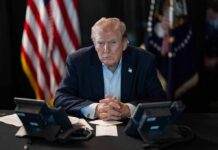
As President Trump lands at the G7 in France, he is touting a U.S.–Iran memorandum that could end a brutal war, reopen vital oil lanes, and test whether Washington finally stops appeasing Tehran and starts dealing from strength.
Story Snapshot
- Trump says the U.S.–Iran memorandum of understanding is “all signed” from the American side and will end the war.
- The draft deal would reopen the Strait of Hormuz, easing pressure on gas prices and global energy markets.[4]
- Iran is expected to halt nuclear weapons work and accept strict limits, but many details are still pushed into later talks.[1]
- Critics warn Tehran is seeking early sanctions relief and cash while treating the deal as only a short “pause,” not real peace.
Trump Arrives at G7 Claiming Iran Deal Is Signed
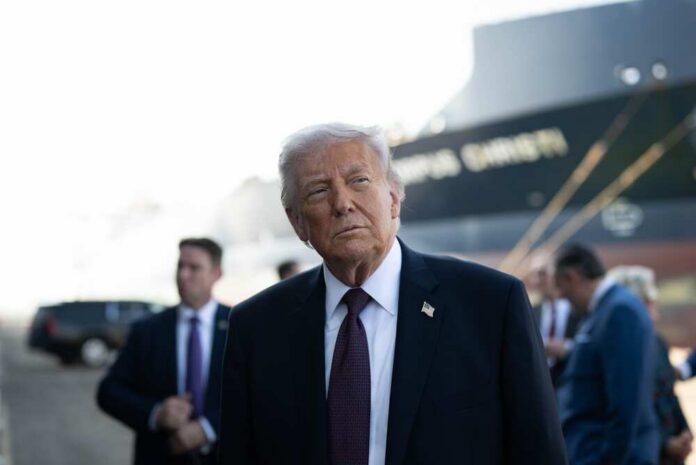
President Donald Trump arrived at the Group of Seven summit in France saying the Iran peace memorandum is “all signed” on the U.S. side and will end the war once delegations formalize it in Geneva on Friday.[1] Speaking to reporters, he said the agreement was signed electronically, and that Vice President J. D. Vance will lead the U.S. team at the in‑person signing ceremony.[1] Other leaders gathered in the French resort town expecting Iran to dominate the summit agenda.[2][3]
Television coverage showed world leaders preparing to confront not only Russia and China, but this surprise move with Iran that Trump is eager to frame as a win for peace without another endless Middle East occupation.[2][3] Trump stressed that the memorandum will keep Iran from getting a nuclear weapon and includes “strong policing powers,” drawing a sharp contrast with the Obama‑era nuclear agreement he has long attacked as weak and dangerous.[1] He promised the text will be released soon after the formal signing so Americans can judge it themselves.[1]
What Is in the U.S.–Iran Memorandum Trump Is Selling
Reports from multiple outlets describe a short memorandum of understanding that stops the fighting now and creates a tight deadline for a bigger, final deal.[1][4] Negotiators built it around two urgent goals: ending the shooting war and reopening the Strait of Hormuz, the narrow waterway that carries about one‑fifth of the world’s oil and natural gas.[4] Draft terms say Iran will clear mines and fully reopen the strait while the United States lifts its naval blockade on Iranian ports and allows global shipping to resume.[4]
Energy‑focused analysts say the draft framework would ease the blockade on transit through the Strait of Hormuz within about a month, which would ease pressure on fuel prices that have hit American families and truckers hard.[4] The memorandum also lays out at least a 60‑day extension of the current ceasefire, requiring all sides to end hostilities, including Iran‑backed forces near Israel and Lebanon.[4] During that window, negotiators are supposed to hammer out a permanent agreement on Iran’s nuclear program, sanctions, and regional militias.[4]
Nuclear Limits and Sanctions Relief: Real Pressure or Old Mistakes?
On the nuclear front, U.S. officials and think tank analysts say Iranian negotiators have verbally agreed to a long‑term suspension of uranium enrichment and to send their stockpile of highly enriched uranium out of the country for reprocessing.[4] That stockpile is large enough, if further enriched, to fuel multiple nuclear weapons, which is why hawks have pushed hard for it to leave Iran.[4] Early drafts discuss a moratorium on enrichment lasting well over a decade, with violations triggering automatic extensions.[1]
At the same time, Iran expects significant economic rewards if a final deal is reached, including phased lifting of sanctions, access to frozen assets, and possibly a multi‑hundred‑billion‑dollar reconstruction and development package involving the United States and regional partners.[4] One draft cited by reporters includes unblocking a large share of Iran’s central bank funds and suspending secondary sanctions on Iranian oil sales.[4] Trump officials counter that the memorandum only commits Washington to negotiate relief, and that real unfreezing happens later, after Iran proves compliance.[4]
Why Skeptics on the Right Are Wary
Even as Trump calls the deal “complete,” public reporting shows key parts are still moving, and that both sides see this memorandum more as a bridge than a final peace treaty.[1][4] Axios reported White House officials saying no binding agreement was finalized when the memo was first described, only that the United States and Iran were closer than ever to a one‑page framework.[1] The Soufan Center likewise wrote that Trump aides see the memorandum as a war‑ending outline that keeps the ceasefire going for at least 60 days while negotiators work toward a permanent accord.[4]
🚨🇺🇸 🇮🇷 US-Iran deal said to allow Iran to charge Hormuz toll— Trump would have known Iran's & Oman's legal rights from the outset.
The memorandum of understanding between the U S and Iran gives Iran and Oman control over "the future of the administration of maritime… pic.twitter.com/b9PVymKuKA
— Càitrin Níall (@Kate03986) June 15, 2026
Iranian media and analysts are openly framing the text as a two‑stage process that front‑loads economic benefits for Tehran while pushing hard nuclear decisions into later talks. Reporting on Iranian statements says the first stage covers ending the war, reopening the Strait of Hormuz, sanctions relief, release of frozen funds, and ending the U.S. blockade, with a second stage later for the nuclear file. Fortune reported Iran has even circulated competing versions of the memorandum, all sharing early sanctions relief and oil export gains, while pressing for maximum cash up front.
What This Means for Conservatives at Home
For many conservative readers, the stakes are simple: will this memorandum protect American lives and wallets without repeating the appeasement mistakes of past globalist deals? If the strait reopens and energy markets calm, families could feel real relief at the pump and on utility bills.[4] But Iran has a long record of breaking promises and using cash to fund terror proxies, so front‑loaded sanctions relief and reconstruction money raise serious concerns about moral hazard and wasted taxpayer dollars.[4]
Trump insists this deal is different because it ties economic rewards to behavior and keeps strong enforcement tools in U.S. hands.[1][4] Yet watchdog groups warn Tehran may see the memorandum as a tactical pause, not a surrender of its ambitions, and is working to structure the timeline to reduce American leverage before the real nuclear fight even begins. As G7 leaders press for details in France, conservatives will be watching closely to see whether this is a hard‑nosed peace through strength, or another short‑term fix that leaves our children to face a richer, more dangerous Iran.
Sources:
[1] Web – Trump in G7 summit in France as he touts signing of Iran memorandum
[2] Web – US, Iran closing in on one-page memo to end war, officials say – Axios
[3] YouTube – US Iran Peace Deal Inside Details | Strait Of Hormuz
[4] Web – The US and Iran have agreed on the text of a … – Facebook