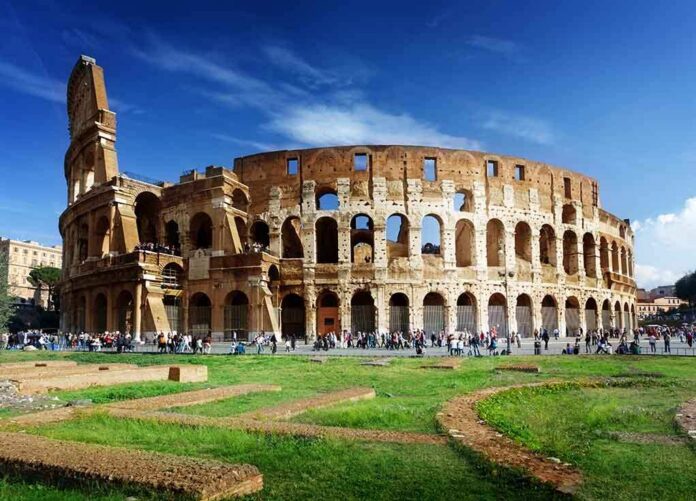
Protesters briefly forced their way into Rome’s Colosseum as street clashes flared in Italy and unrest hit Barcelona.
Story Highlights
- Associated Press reported several hundred protesters briefly occupied the Colosseum in Rome.
- Reports say Rome police used water cannons and tear gas after bottles were thrown.
- Barcelona saw vandalism, fires, and looting, with about 100 arrests reported, including minors.
- Coverage spans multiple outlets, but links between cities’ protests are not established.
What Happened In Rome
Associated Press reported that several hundred students and young protesters entered the Colosseum on October 25, waved Palestinian flags, and then left after a brief occupation. Local reports described separate clashes in Rome, where demonstrators hurled bottles at officers. Police responded with water cannons and tear gas near central routes used by the march. The protest criticized the Gaza war and the Italian government. The incident drew global attention because it reached one of the world’s best known heritage sites.
Reports varied on exact movement and timing, which is common in fast-moving street events. One account said officers first stopped a group outside an entrance, and later some protesters gained access and exited without major damage. The key established fact is that protesters breached access at the Colosseum and briefly occupied space inside, according to the Associated Press video report. Authorities did not release a full incident report in the sources cited here.
Unrest And Arrests In Barcelona
Separate coverage from Spain described disorder around Plaça de Catalunya in Barcelona. Reports said masked youths vandalized shops, looted businesses, burned trash containers, and threw stones at Catalan police. An outlet cited about 100 arrests, including about 30 minors, tied to the late-night chaos. Those numbers appeared in secondary reporting rather than a posted police bulletin. The accounts still align on fires, damage to storefronts, and confrontations as the night wore on.
Local videos and write-ups placed the Spanish events alongside other European tensions. But the available reporting did not show a single command structure or shared organizer across borders. Instead, the stories point to different grievances by city. Rome protests centered on Gaza and national policy. Barcelona’s crowd mixed political anger with opportunistic vandalism described by officials and outlets. That split tracks with past research: large protests often combine peaceful marches and smaller groups that break off to confront police or damage property.
Are These Events Linked Across Countries?
Multiple outlets reported unrest in Rome and Barcelona, creating a sense of a wider wave. However, the sources here do not establish one coordinated movement spreading from France into Italy and Spain. The reports do not cite shared leadership, common logistics, or a documented chain of direction between cities. That matters because people across the spectrum worry that leaders spin disorder to fit agendas. Clear sourcing helps separate local anger from claims of a grand, unified push.
Large-scale protests are taking place in several Italian cities, including Turin, Rome, Bologna, Milan and Florence, as well as Barcelona in Spain, where clashes have erupted between police and demonstrators. Protesters threw bottles, stones and fireworks at police, while… pic.twitter.com/xFBB530O8M
— TAM (@Awakeningmedia1) October 25, 2026
Research on protests shows why the picture often looks mixed. One study of thousands of protests in German cities found that violence appears in a minority of events, while most remain peaceful. That pattern warns against judging every participant by the worst footage, yet it also shows that clashes are not rare outliers. The Rome and Barcelona scenes fit this pattern: large crowds, some confrontations, rapid police moves, and dramatic clips that travel fast online.
Why This Matters For Readers At Home
These stories echo concerns many Americans share about order, rights, and honest leadership. People on the right see rising street crime and fear lenient policies that excuse damage. People on the left see police tactics they believe can escalate tension and chill speech. Both sides see governments that react to headlines more than they solve root problems like high costs, war anxiety, and bleak paths for the young. The result is pressure that can spill into the streets, here and abroad.
When iconic places like the Colosseum become protest stages, it signals a breakdown in trust. Leaders should explain clear rules, protect peaceful speech, and act fast against violence and vandalism. Police should be transparent about tools, injuries, and arrests. Protest organizers should set firm lines against attacks on people and property. Citizens deserve facts, not spin. Straight reporting on what happened in Rome and Barcelona helps people judge risk, responsibility, and what comes next.
Sources:
facebook.com, ground.news, redstate.com, apnews.com, emakedonia.gr, b92.net