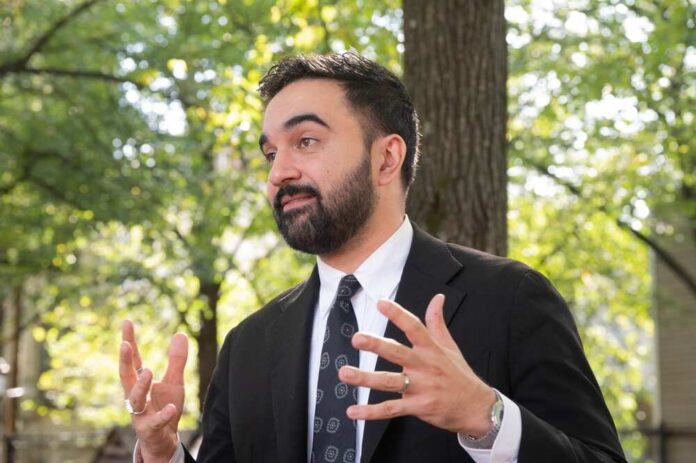
New York City’s teachers union backed Zohran Mamdani for mayor — and now they are battling him over pay and school control.
Story Snapshot
- The United Federation of Teachers (UFT) formally endorsed Zohran Mamdani for mayor with a 64% delegate vote.
- The union cited alignment on changing mayoral control and educator priorities; Mamdani accepted the support.
- Some members and Jewish educators protested the endorsement, saying it split the union.
- A year later, the union is clashing with City Hall over a $10,000 aide payment bill and reading policy.
What The Union Actually Did And Why It Matters
On July 8, 2025, the United Federation of Teachers’ top governing body voted to endorse Zohran Mamdani for New York City mayor. The union issued a press release and a formal resolution stating its support for the November general election. Delegates approved the move with 64% after a special debate session. Union leaders framed Mamdani as a partner on teacher priorities, not a transactional pick, and highlighted shared goals on school governance and classroom needs.
Chalkbeat reported that union leaders praised Mamdani’s pledge to overhaul the current model of mayoral control to give educators and parents more voice. Mamdani said he was honored to have the union’s backing. Coverage also linked the endorsement to issues like pension fixes, class size funding, and stronger roles for educators in policy talks. Those items described the political alignment, but did not show a written bargain or binding promises between the union and the campaign.
Internal Friction And Public Backlash
Soon after the vote, dissent surfaced inside the union. The New York Post reported that some teachers felt blindsided and threatened to stop giving to the union’s political fund. Advocacy and community groups tied to Jewish educators urged union leaders not to endorse any mayoral candidate due to deep divisions over the race and concerns about bias. Those critics later urged the UFT to retract the endorsement, saying members felt let down by the choice.
Commentary framed the endorsement as a power play over school governance, arguing that reducing mayoral oversight would boost union sway over policy. That criticism echoed a long New York City fight about who runs the schools. The union has said it opposes the current version of mayoral control but supports models with real checks and balances on the mayor’s power. State education reviews show that centralized mayoral control has drawn debate since it began in 2002.
From Alliance To Conflict In City Hall
By mid-2026, the political alliance faced hard tests. A City Council bill called the Respect Check Act sought about $10,000 annual payments for teaching aides. The United Federation of Teachers supported the bill. Mayor Mamdani filed a lawsuit to block those payments. Union President Michael Mulgrew argued the law did not threaten bargaining rights and should stand. The fight showed that endorsements do not erase later clashes over money, contracts, or power.
Zohran Mamdani cashed the United Federation of Teachers like a campaign check. Then City Hall sued to stop the money.
July 16: City Council passes the RESPECT Check Act 51–0. Up to $10,000 for paraprofessionals adults on as little as $32,000 sitting with the highest-need kids in… pic.twitter.com/jO6v6cNRyD
— NRAW (@unownz2pd) August 30, 2026
Separately, the union warned it could pull support for the city’s reading program after poor results, pressing for changes in how the policy rolls out. That pressure campaign underscored that, even with a friendly mayor, the union uses public leverage to shape classroom policy. Together, the lawsuit and reading dispute mark a shift from campaign-season hopes to street-level governance, where budgets, contracts, and student outcomes drive the agenda.
Why Voters Across The Spectrum Should Care
New Yorkers on the left and right share a core worry: powerful institutions make deals, but students and taxpayers bear the cost when plans break. The union’s endorsement was formal and real. The promised returns were mostly goals, not guarantees. The later conflicts over aide pay and reading policy reveal a system where labor, City Hall, and advocates wrestle for control. That struggle shapes class size, staffing, and what children learn each day.
Bottom Line: Track Promises Against Results
Voters should separate documented facts from spin. The United Federation of Teachers endorsed Mamdani through a valid delegate vote. The union linked that support to changes in school control and teacher priorities. Critics raised alarms and demanded restraint. One year on, lawsuits and program fights show no simple quid pro quo. The next honest test is the budget and policy record: who got what on class size, early childhood, pay, and who holds the steering wheel over New York City schools.
Sources:
redstate.com, uft.org, nypost.com, midtowntribune.com, chalkbeat.org, foxnews.com, facebook.com, jpost.com, youtube.com