As U.S. strikes push into a second week, the biggest unanswered question isn’t whether Iran can hit back—it’s how long Americans will be asked to absorb the economic shock and security risk of a widening regional war.
Quick Take
- U.S. and Israeli forces continue Operation Epic Fury into early March 2026, with Washington signaling the campaign could last weeks.
- Iran’s retaliation has included missiles and drones across the region, including reported damage from a drone strike on the U.S. embassy in Riyadh.
- Shipping and energy markets remain under pressure as threats around the Strait of Hormuz raise the risk of price spikes and supply disruptions.
- Key claims about target destruction and casualty totals remain difficult to independently verify amid fog-of-war reporting and conflicting accounts.
What “Second Week” Means: Sustained Strikes, Not a One-Night Raid
U.S. operations against Iran have continued into a second week after the initial late-February strikes described as a large joint campaign with Israel targeting military infrastructure, air defenses, and nuclear-related sites. Multiple accounts frame the effort as Operation Epic Fury, launched after nuclear talks faltered and tensions rose around the Strait of Hormuz. President Trump has publicly signaled a multi-week timeline, while U.S. and Israeli forces press what they describe as air and naval dominance.
U.S. officials and allied reporting describe repeated follow-on strikes through early March, including attacks on missile sites and command nodes, alongside Israeli strikes in and around Tehran. Some reports claim large numbers of Iranian naval assets have been sunk and hundreds to thousands of targets struck, but those figures vary by source and are not uniformly corroborated. Even where tactical success is asserted, the broader strategic outcome depends on whether Iran’s ability to retaliate is truly being degraded.
Iran’s Retaliation: Missiles, Drones, and a Region on Alert
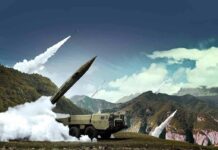
Iran’s response has been portrayed as a mix of direct missile and drone attacks, plus pressure through regional networks and proxy-linked forces. Reporting from early March includes sirens and heightened alerts in Gulf states and continued missile activity impacting Israel and regional infrastructure. A notable escalation point is the reported drone strike that damaged the U.S. embassy in Riyadh, underscoring that retaliation is not confined to a single battlefield and can reach diplomatic and civilian-adjacent locations.
Iranian political messaging has also emphasized resistance and rejection of negotiations under fire, even as U.S. messaging has oscillated between deterrent warnings and talk of potential talks. This matters because diplomacy during active combat often becomes more about leverage than peace. With both sides broadcasting strength, the near-term risk is miscalculation: one successful strike on a sensitive target or a mass-casualty event can force leaders into responses that shrink the off-ramps.
Economic Front Line: Hormuz Pressure, Oil Volatility, and Household Costs
The Strait of Hormuz remains the economic choke point hanging over the conflict. Prior reporting in the timeline describes Iranian missile activity near the strait and threats around maritime passage, while U.S. statements have included offers of escorts for shipping. In practical terms, even partial disruption can drive higher insurance costs, reroute traffic, and spike oil prices. For American families already wary of inflation after years of overspending, energy volatility becomes a kitchen-table issue fast.
Fog of War: Casualty Counts, Target Claims, and What Can’t Yet Be Proven
Claims around this conflict are sweeping: large strike totals, major naval losses, and significant leadership impacts are all cited across sources. Civilian harm has also been reported, including allegations of strikes hitting non-military locations and high casualty incidents. At the same time, some details remain disputed—such as responsibility for specific tragic events—and casualty estimates beyond broad thresholds are hard to confirm independently. Several summaries explicitly caution that exact tolls and some target claims remain uncertain.
That uncertainty is not a small footnote; it shapes whether Americans should treat official statements as battlefield reporting or as messaging. Conservative readers will recognize the pattern from past conflicts: early numbers can be inflated, minimized, or simply wrong. The responsible approach is to separate what is clearly documented—ongoing strikes, regional retaliation, diplomatic targets being hit, and market disruption—from what is still contested and evolving in real time.
US strikes continue as Iran war enters its second week https://t.co/oYwNIjA1vn
— Task & Purpose (@TaskandPurpose) March 8, 2026
As the campaign continues, the constitutional and strategic stakes sit side by side. A prolonged operation can demand more resources, more deployments, and more executive-branch urgency—conditions that historically tempt Washington toward secrecy and mission creep. Supporters of a strong national defense will still want clear objectives, honest timelines, and accountability, especially when Americans face rising costs at home and escalating risks abroad. For now, the public evidence shows momentum, not closure.
Sources:
A closer look at the Iran war’s 1st 3 days — and where things stand now.
War US & Israel vs Iran timeline 2026 – 2026-03-04