
A federal judge froze the Federal Communications Commission’s fast-track review of ABC’s broadcast licenses, saying the network is likely facing government retaliation for its speech.
Story Snapshot
- A preliminary injunction blocks the Federal Communications Commission’s early review of eight ABC station licenses.
- The judge said ABC is likely to win on its First Amendment retaliation claim, at least for now.
- The order followed President Trump’s public criticism of Disney and Jimmy Kimmel, raising timing concerns.
- The Federal Communications Commission says the early review ties to an ongoing discrimination investigation, not speech.
What the Court Ordered and Why It Matters
Judge Loren L. AliKhan granted a preliminary injunction that stops the Federal Communications Commission from taking any further steps in its early license renewal push against ABC’s eight owned-and-operated stations. The court also denied the agency’s motion to dismiss. The judge said ABC is likely to prevail on its claim that the government targeted the company because of its speech, which is protected by the First Amendment. The case continues, but the near-term pressure on ABC’s licenses is paused.
The ruling focuses on process and motive. The order blocks only the early renewal track, not every possible investigation the Federal Communications Commission might pursue. That narrow scope gives ABC relief now while the court reviews the facts and law. Preliminary injunctions require a strong early showing. The judge found that ABC met that standard on retaliation and free speech grounds, which signals concern about how the agency used its licensing power in this instance.
How Timing Raised Red Flags
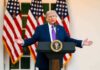
The Federal Communications Commission told Disney to file early renewal applications on April 28, 2026. That directive came one day after President Trump publicly urged Disney to fire late-night host Jimmy Kimmel, an ABC star. Reporters noted the close timing and the unusual nature of calling in licenses that were not due for renewal until 2028 or later. That sequence supported ABC’s claim that the action punished speech and could chill future editorial choices.
Courts watch for government steps that follow sharp political criticism, especially when officials hold leverage over a speaker’s business. Broadcast licenses are government-issued, but the First Amendment bars using that power to control viewpoints. That tension sits at the heart of this case. The court’s order says the evidence so far supports ABC’s version enough to justify a pause, but it does not make a final ruling on the ultimate legality of the agency’s actions.
What the Federal Communications Commission Says It Is Doing
The Federal Communications Commission says the early review was part of an ongoing probe into alleged unlawful discrimination tied to diversity, equity, and inclusion practices at Disney and ABC. An agency official said the proceeding concerns nondiscrimination and the duty to serve the public interest, not policing content or settling scores between President Trump and a television host. The agency called ABC’s lawsuit meritless and said it would follow the facts and the law wherever they lead.
That stated rationale presents a direct conflict of explanations. ABC points to timing and speech; the agency points to workplace rules and the Communications Act. The court sided with ABC for now on the likelihood of success, but the order leaves room for the Federal Communications Commission to keep investigating in other ways while avoiding steps that look like content-based punishment. That split result underlines how narrow and procedural the current win is.
Why People Across the Spectrum Care
Many Americans on the right and left fear that powerful players bend rules to punish enemies and protect friends. This case speaks to that fear. If a regulator can speed up license reviews after a president blasts a network, then speech risks becoming a bargaining chip. If an agency can hide behind technical probes to pressure coverage, trust drops even further. The court’s order tries to hold a line that says viewpoints should not decide who gets squeezed.
NEW: A federal judge has blocked the FCC from putting eight Disney-owned ABC station licenses up for early review, calling the case "not a close case."
U.S. District Judge Loren AliKhan granted Disney a preliminary injunction Wednesday, finding the company is likely to succeed… pic.twitter.com/s05x4zKpxG
— National Debrief (@NationalDebrief) November 26, 2026
The bigger lesson is about guardrails. The judge did not shut the door on every inquiry into Disney or ABC. She blocked only the early renewal track that raised the clearest speech concerns. That balance matters. It reminds agencies to follow regular processes, build clean records, and avoid actions that look like payback. It also reminds media companies that they must meet public interest duties without fear that their news or jokes will trigger government threats.
What Comes Next
The case now moves into deeper fact-finding. Expect requests for emails, drafts, calendars, and testimony about who pushed the April 28 order and why. Expect comparisons to past practice to see if early renewals like this have real precedent. Expect more evidence about whether ABC changed any programming due to fear of government action. The preliminary nature of this ruling means the final outcome is still open, but the message on speech protections is already clear.
Sources:
cbsnews.com, courtlistener.com, apnews.com, nbcnews.com, ca.news.yahoo.com