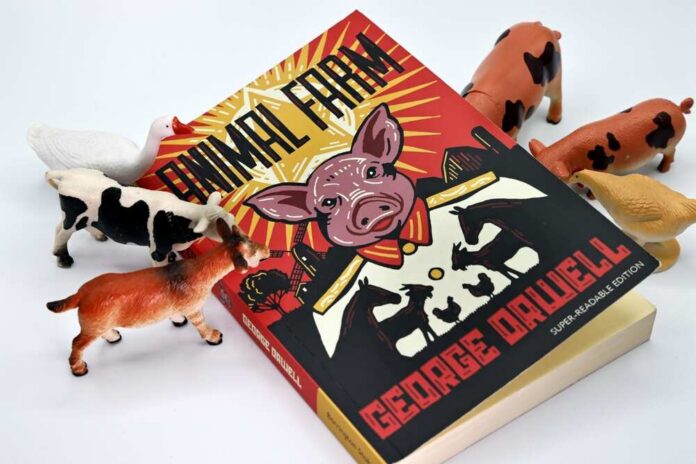
Hollywood’s latest Animal Farm adaptation betrays George Orwell’s stark warning against communist tyranny by twisting it into an anti-capitalist screed, sparking fury among those who cherish the novella’s defense of freedom and limited government.
Story Highlights
- Andy Serkis’s CGI film inverts Orwell’s critique of Stalinist Russia, replacing communist pigs with a billionaire villain driving a Cybertruck-like vehicle.
- Napoleon, the Stalin figure, demoted to supporting role voiced by Seth Rogen; new ending offers “hope” instead of totalitarianism’s triumph.
- Critics like historian Rafe Heydel-Mankoo call it a “complete perversion,” turning anti-totalitarian allegory into attack on capitalism.
- Released May 1, 2026, by Angel Studios after 14 years of development, the film gender-swaps characters and adopts a comedic tone for children.
Orwell’s Original Warning Against Totalitarianism
George Orwell published Animal Farm in 1945 as a direct allegory for the Russian Revolution and Stalin’s Soviet regime. Farm animals rebel against human farmer Mr. Jones, mirroring the 1917 uprising. Pigs, led by Napoleon as Stalin’s stand-in, seize power and establish tyrannical rule. The novella exposes how communist leaders betray revolutionary ideals of equality, becoming as oppressive as their predecessors. Orwell crafted this tale to highlight centralized power’s corruption, not economic systems generally.
Major Departures in Serkis’s Adaptation
Director Andy Serkis spent 14 years developing the CGI-animated version, released May 1, 2026, by Angel Studios. Key changes include downgrading Napoleon to a supporting antagonist voiced by Seth Rogen. A new billionaire villain emerges as primary foe, driving a Cybertruck-like vehicle—producers deny Elon Musk resemblance. Snowball receives a gender swap, and the tone shifts to comedy. These alterations pivot the story from Soviet critique to capitalism and corporate greed.
Critical Backlash and Ideological Inversion
Historian Rafe Heydel-Mankoo labels the film a “children’s comedy travesty” that “literally inverts Orwell’s message,” swapping warnings about socialism for anti-capitalist rhetoric. Mario Nawfal notes the adaptation replaces totalitarianism critique with hopeful ending where animals overthrow pigs for a “brighter future.” Serkis justified this by saying, “We wanted some hope.” Reviewers argue it betrays source material, missing communism’s exploitation of equality promises.
Broader consensus holds the film misleads on Orwell’s intent, potentially shaping children’s views with inverted politics over anti-totalitarian truth. In 2026, with President Trump’s America First policies curbing federal overreach, this Hollywood rewrite fuels frustrations across left and right over elites distorting foundational principles like individual liberty against corrupt power.
Animal Farm Film A Hollywood Perversion Of Orwell's Anti-Communist Classic https://t.co/6AYIJfdrlz
— zerohedge (@zerohedge) May 4, 2026
Cultural and Educational Ramifications
The adaptation risks confusing generations about Orwell’s lesson on revolutionary corruption, especially as a family film. Social media erupts in backlash, questioning Hollywood’s fidelity to classics amid ideological pressures. This precedent challenges whether politically charged literature survives intact under current production norms. Americans weary of deep state manipulations see parallels: promises of hope masking elite agendas, eroding hard-won freedoms.
Sources:
Hollywood Turns Orwell’s ‘Animal Farm’ Woke, Shifting Warning from Communism to Capitalism