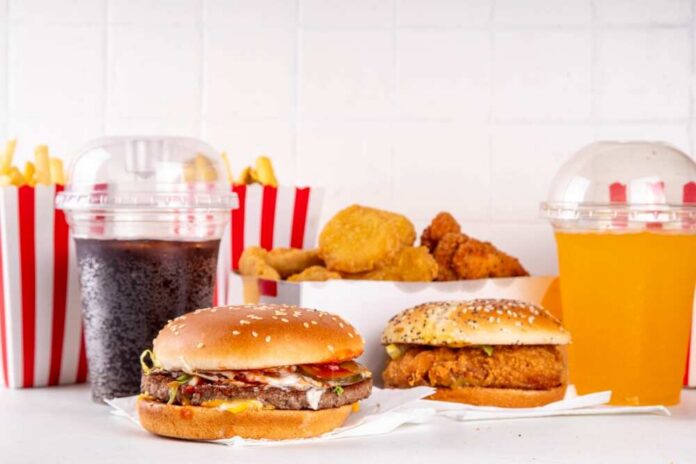
Ultra-processed foods are looking less like “just convenience” and more like a quiet health hazard embedded in the modern American diet.
Story Snapshot
- Multiple peer-reviewed studies in 2025–2026 link high ultra-processed food (UPF) consumption to higher cardiovascular risk and higher mortality in cancer survivors.
- A U.S. analysis of NHANES data (2021–2023) found adults with the highest UPF intake had a 47% higher risk of heart attack or stroke than those with the lowest intake.
- Researchers argue the industrial processing itself—additives, emulsifiers, and chemical exposures—may contribute to harm beyond calories and basic nutrition labels.
- Evidence is largely observational, meaning it shows strong associations; experts still call for randomized trials while urging practical steps now.
What the New Research Actually Says About Risk
Researchers are not claiming that every packaged snack is an instant disaster, but the strongest warnings are aimed at people whose diets are dominated by ultra-processed products. A Florida Atlantic University analysis using NHANES 2021–2023 data (4,787 U.S. adults) found those with the highest UPF intake had a 47% higher risk of heart attack or stroke than those with the lowest intake, even after adjusting for multiple demographic and lifestyle factors.
Separate research focusing on cancer survivors adds to the concern. In a cohort of 802 cancer survivors followed for a median of 14.6 years, those in the highest third of UPF consumption showed a 48% higher rate of death from any cause and a 59% higher rate of cancer-specific death compared with the lowest third. Importantly, the association reportedly persisted even after adjusting for overall diet quality, pointing to processing as a variable worth isolating.
Why “Processing” Is Becoming the Center of the Debate
For years, nutrition fights were framed around sugar, saturated fat, and calories—numbers that big manufacturers learned to market around with “low-fat” claims and portion tricks. The newer UPF literature shifts attention to the industrial methods used to create shelf-stable, hyper-palatable products. Research summaries describe UPFs as typically lower in fiber and essential nutrients and higher in additives such as emulsifiers, preservatives, flavorings, and added sugars, raising questions about inflammation and metabolic disruption.
The Nova classification system, developed in 2009, is central to how these studies define “ultra-processed.” It groups foods by the nature and extent of processing rather than simply nutrient totals. The Lancet series and related analyses draw on surveys across 13 countries, suggesting this is not a niche American issue but a broad pattern tied to modern food supply chains. That global scope matters for evidence consistency, even if it complicates one-size-fits-all policy solutions.
How Worried Should You Be? Watch the “Dose” and the Pattern
The strongest signal in the research appears at the high end of consumption, which is a practical takeaway for families trying to make realistic changes without falling for food-fear hysteria. One analysis reported that each 10% increase in UPFs as a share of the daily diet correlated with a 34.7 kilocalorie increase in total daily energy intake, alongside higher free sugars and saturated fat and lower fiber and protein. That pattern aligns with weight gain and metabolic risk pathways.
What the Studies Can’t Prove Yet—and Why Action Still Makes Sense
The honest caveat is that much of the evidence is observational, so it cannot definitively prove UPFs cause disease outcomes on its own. Several sources explicitly call for large randomized trials to confirm causation, and dietary reporting often relies on recalls that can be imperfect. Still, when multiple independent teams keep finding similar associations across conditions—cardiovascular disease, metabolic syndrome indicators, and mortality—waiting for perfect certainty can become an excuse for doing nothing about a clearly modifiable risk factor.
Practical Steps That Don’t Require Government Overreach
The public-policy conversation often drifts toward taxes, marketing restrictions, and labeling mandates. Conservatives are right to be cautious: Washington’s track record on “helpful” interventions often ends in higher costs, more bureaucracy, and less personal freedom, without solving the underlying behavior. The research supports a simpler approach that respects choice: reduce the share of UPFs in your weekly routine, prioritize minimally processed staples, and treat packaged “food-like products” as occasional items rather than the foundation of family meals.
https://twitter.com/HITpol/status/2034568650515255637
For readers asking whether this is comparable to tobacco, that comparison appears in expert commentary as a public-health framing rather than a settled scientific equivalence. The responsible conclusion from the current data is narrower and more useful: if your pantry is dominated by ultra-processed items, the weight of evidence says you should be meaningfully concerned and start cutting back. If UPFs are occasional conveniences, the urgency is lower—focus on patterns, not perfection.
Sources:
Global Health Crisis: Ultra-Processed Foods Emerge as Major Public Health Threat
High intake of ultra-processed foods linked to 47% higher risk of heart attack or stroke
High consumption of ultra-processed foods linked to higher mortality in cancer survivors
The rise of ultra-processed food and its detriment to global health
Ultra-processed foods and public health: evidence, mechanisms, and policy implications