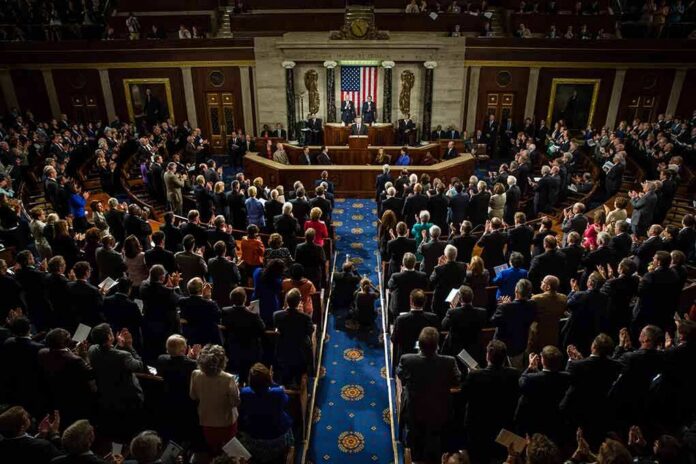
House Speaker Mike Johnson urged Republicans to hold firm to “American values” after the party’s election losses, framing defeat as a call to stand, not fold.
Story Highlights
- Speaker Mike Johnson told Republicans to keep core values despite losses.
- President Trump publicly accepted the midterm results and responded to the setback.
- Commentators on the left mocked conservative reactions as overblown.
- Research shows parties often keep core ideas but adjust at the edges after defeat.
Johnson’s Post-Election Message To His Party
RedState reported that Speaker Mike Johnson called on Republicans to stay true to “American values” after the party’s election losses. His message focused on holding ground rather than rewriting the platform in the wake of defeat. Johnson’s stance echoed a common debate after losses: change course or keep faith. He framed the moment as a test of conviction. The report did not include vote totals or race-by-race detail. It centered on message and tone, not certified returns.
FOX 11 Los Angeles aired President Trump acknowledging the midterm results and reacting to the outcome. Trump’s comments accepted the results and emphasized moving forward. That posture signaled a tactical reset rather than a fight over counting. It also placed the White House in a message lane that stressed resilience over denial. Acceptance of the outcome sets a baseline for discussion inside the party on what to fix and what to defend.
How Parties Typically Respond To Defeat
Peer-reviewed political research finds that parties often protect their core beliefs after a setback and adjust their peripheral policies instead. Scholars describe a pattern: losses can push parties to change emphasis, not identity. Leaders may bank on steady positions to help voters learn what they stand for over time, even if it costs short-term wins. This helps explain Johnson’s stance. He is signaling continuity on fundamentals while leaving room to tweak strategy or messaging at the edges.
Historical studies also show that defeat can spark internal argument over whether to moderate or double down. Parties debate how much to change, which issues to highlight, and where to sharpen contrasts. These fights are not new in American politics. They reflect a normal sorting process after a loss. The key tension is simple: protect what defines you while fixing what hurt you. Johnson’s call fits that pattern by placing values first while implying operational review later.
Media Reaction And The Broader Public Mood
The Humanist Report highlighted voices on the left that mocked some conservative reactions as melodramatic and apocalyptic. That framing painted the right as out of touch and prone to extreme claims after the loss. Such media narratives can harden partisan feelings. Academic work links pro-attitude media to stronger negative feelings toward the other side. That cycle can make regrouping harder, because it rewards heat more than repair.
Voters across the spectrum remain frustrated with Washington. Many believe leaders from both parties protect their own power while problems stack up. High prices, border strain, and rising distrust feed that anger. Johnson’s message tries to answer that mood by vowing to defend bedrock ideas. The open question for Republicans is tactical, not just moral: which policy changes, candidates, or organizing moves can win back persuadable voters while keeping faith with core beliefs?
What To Watch Next Inside The GOP
Party strategists will study where losses were largest and why. They will weigh turnout, candidate quality, fundraising, and issue salience. The research suggests the path forward likely blends message clarity with selective updates, not a full rewrite. Expect fights over which “peripheral” policies to adjust and which to shelve. Expect calls to tighten ground game and small-dollar fundraising. Expect leaders to test ways to talk about cost of living, border security, and public safety with broader appeal.
For readers, the stakes are concrete. If Republicans lock in on values but fix execution, they could compete better in suburbs and among working families. If they only trade blame, they risk repeating mistakes. If Democrats read the map as a green light for sweeping change, they could also overreach. The country needs problem solving more than slogans. That means budgets that add up, energy that is reliable and affordable, and immigration rules that are enforced and humane.
Bottom Line
Johnson’s call to hold firm after losses signals a bet on identity first and tweaks second. Trump’s acceptance of results sets a floor for honest review. Media crossfire will be loud, but voters will judge results at the kitchen table. Watch whether party leaders pair core values with real fixes on costs, security, and trust in government. That is where elections are won—by showing that the people come before the political class.
Sources:
redstate.com, cambridge.org, academic.oup.com, historyandpolicy.org, onlinelibrary.wiley.com