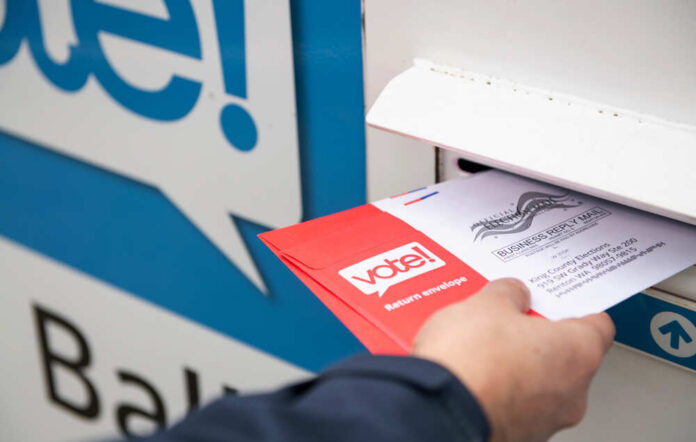
California just took 38 days to certify its primary election results, and millions of voters are asking whether slow rules or a broken system are to blame.
Story Snapshot
- California certified the June 2, 2026 primary on July 10, exactly when state law says it must.
- Mail-in and provisional ballot rules, not last-minute changes, drive the long 38-day timeline.
- Slow counting feeds anger on both left and right, even as officials say the process protects every vote.
- Debates over speed versus accuracy show deeper mistrust in government and the people running elections.
State Certifies 2026 Primary Right On Legal Deadline
On July 10, 2026, the California Secretary of State’s office announced that the results of the June 2 statewide primary election were officially certified and final, completing the legal process 38 days after voters went to the polls. State law for the 2026 primary says counties must finish their official results by early July and that the Secretary of State will certify them on July 10, making this timing not a surprise but a planned part of the calendar. The Secretary of State’s election results site showed all 19,788 precincts reporting by July 3, with vote totals still shifting slightly as late-counted mail-in and provisional ballots were added before certification.
In the race for California Secretary of State itself, the official statewide results show Democrat Shirley Weber leading the top-two primary field with about 58.7 percent of the vote, far ahead of Republican Donald Wagner at 36.7 percent and two Green Party candidates, Gary Blenner and Michael Feinstein, each below 3 percent. These numbers matter because the Secretary of State oversees elections, so voters are choosing not just who runs their ballot box now, but who will set rules and defend the process heading into the heated November 2026 general election. For many citizens who already doubt the system, seeing the chief election official on the ballot while that office controls the certification calendar adds another layer of tension.
Why California’s Count Takes So Long
The long lag between Election Day and certification in California is driven mainly by mail-in voting and strict rules for including every valid ballot. State guidance explains that vote-by-mail ballots must be postmarked by Election Day but can arrive up to seven days later and still count, and that counties then have up to 30 days after the election to finish counting mailed ballots, provisional ballots, and same-day registration ballots. County election offices must send final tallies to the Secretary of State by early July, and the state then compiles and certifies the results by July 10, a process meant to favor completeness over speed. In San Bernardino County, for example, reports show the canvass starting June 3 and continuing through July 2, with detailed tracking of “unprocessed ballots” until the total remaining reached zero near the deadline.
Officials say this extended canvass is about accuracy and fairness. The Secretary of State’s public election information stresses that all valid mail-in and provisional ballots cast by eligible voters are counted and included in the official results, even if they are not part of the early Election Night totals. They also point out that counties must update results on their websites several times in the weeks after the election so the public can see changes as more ballots are processed. For voters, though, this looks less like a careful audit and more like a slow-motion reveal, especially when media outlets and social feeds highlight shifting totals and use phrases like “still counting” and “partially reporting,” which can fuel suspicion among people who already believe the system favors insiders.
Growing Anger And Mistrust Across The Political Spectrum
The 38-day certification has become another flashpoint in the broader fight over election trust in America. Conservative voters who already question mail-in voting see the long California timeline as proof that elites are “playing games” with their ballots, pointing to the fact that more than a week after the primary, officials were still processing mail-in votes and adjusting totals. Liberal voters, meanwhile, worry about other forms of manipulation, such as big money influence, complex ballot measures, and laws they fear might be used to block some groups from voting or from having their votes fully respected. Both sides share a deeper belief that government responds more to donors, party leaders, and career bureaucrats than to average citizens, and slow, opaque election processes feed that story.
This frustration is not just emotional; it connects to real questions about how election certification works and who has the power to change it. National analysis of state and local certification explains that certifiers like secretaries of state generally do not have the legal authority to reject valid results based only on doubts about administration; their job is to accept what counties report, as long as the process followed the law. At the same time, court cases and legal guides highlight strong rules against election interference, warning that no official, whether in Washington, Sacramento, or a county office, can step in and alter results for political reasons without breaking federal and state law. For voters who distrust “the deep state,” these guardrails sound good on paper but can feel hollow when they see how slowly information moves and how rarely insiders face real consequences.
Speed Versus Accuracy And What Comes Next
Election experts and reform advocates in California have spent years studying how to speed up ballot processing without cutting corners, especially in a state that leans heavily on mail-in voting and has long, complex ballots. Reports from groups like the California Voter Foundation describe possible changes, such as better equipment, more staff during peak times, and different rules about when and how mail-in ballots are verified, but they also admit there is no easy fix that keeps full access while delivering instant results. As the 2026 general election approaches, pressure will grow on state lawmakers and the next Secretary of State to show they can protect both accuracy and timeliness, rather than forcing voters to always choose one over the other.
The California Secretary of State has officially certified the results for the 2026 Primary Election! ✨🗳️✨
Elections officials have worked diligently to ensure the thorough and accurate processing of ballots, with every eligible vote counted. pic.twitter.com/dK7zhuwJ4m
— California Secretary of State (@CASOSVote) July 11, 2026
For now, the July 10 certification stands as both a legal milestone and a symbol of the deeper problem many Americans see: a government that follows its own rules yet still feels distant, slow, and unaccountable. California did what its election code says it must do, but millions of citizens across the country view the 38-day wait as another sign that the system works best for insiders who understand the process, not for regular people trying to trust that their vote was counted correctly and on time. That shared anger, from right and left, is likely to shape not only how people see this primary, but how they judge every election that follows.
Sources:
twitchy.com, sierradailynews.com, ballotpedia.org, sos.ca.gov, calmatters.org, facebook.com, dp.electionresults.sos.ca.gov, votingrightslab.org, youtube.com, brennancenter.org, admin.cdn.sos.ca.gov