When America is already at war with Iran, a public credibility fight between Kyiv and Washington raises a blunt question for taxpayers: who is steering U.S. commitments—and on what terms?
Quick Take
- Secretary of State Marco Rubio said President Volodymyr Zelenskyy falsely claimed U.S. security guarantees were conditioned on Ukraine withdrawing troops from Donbas.
- Rubio stated U.S. security guarantees would apply only after a war ends, and he emphasized the U.S. role as a mediator relaying Russian positions, not endorsing them.
- Talks and side meetings around the Munich Security Conference highlighted pressure for “hard” concessions tied to Russia’s narrowed focus on Donbas consolidation.
- Conflicting public messages risk eroding trust and complicating upcoming diplomatic tracks, including discussions referenced around Geneva.
Rubio Calls Out Zelenskyy’s Claim on Donbas and Guarantees
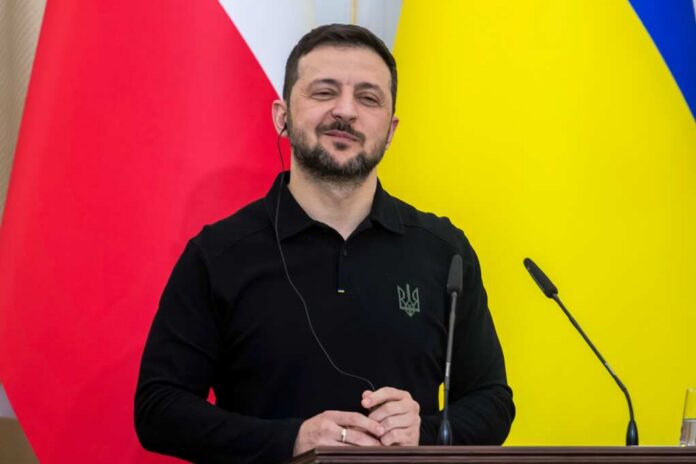
Secretary of State Marco Rubio publicly rejected President Volodymyr Zelenskyy’s claim that U.S. security guarantees for Ukraine were contingent on Kyiv withdrawing forces from the Donbas region. Rubio said the linkage was “not true” and argued Zelenskyy “knows” it is not true, framing the dispute as a matter of basic accuracy in high-stakes diplomacy. Rubio also stressed that security guarantees, as discussed, would only be triggered after the war ends.
Zelenskyy, for his part, warned that a forced pullback from Donbas would endanger Ukraine and Europe, amplifying the political stakes of any perceived U.S. condition-setting. The available reporting does not include a full, verbatim transcript of Zelenskyy’s disputed statement, which limits outside verification of wording and context. What is clear is that Rubio treated the claim as a serious misrepresentation, not a minor misunderstanding.
Munich Meetings Show a Mediation Track, Not an Open-Ended Blank Check
Rubio’s comments landed amid intensive diplomatic activity around the Munich Security Conference, where he met Zelenskyy for roughly 40 minutes and discussed frontline conditions, Russian attacks on energy infrastructure, and ongoing diplomatic tracks. Reporting also describes U.S. messaging that Washington is pushing to end the conflict while acknowledging that any viable deal could require “hard” concessions, especially as Russia concentrates on consolidating control in Donbas rather than pursuing maximal aims.
Rubio’s broader posture, as reported, is that the U.S. is communicating Russian demands to Kyiv without adopting those demands as American policy. That distinction matters for Americans who are weary of foreign entanglements and suspicious of “mission creep,” especially in 2026 with U.S. forces and resources pulled toward the Iran war. A mediator role can still draw the U.S. deeper into commitments if expectations are not clearly defined and honestly communicated.
Why the Donbas Dispute Hits a Nerve for America-First Voters
For Trump-aligned voters, the clash is not just about Ukraine’s battlefield map—it is about transparency, leverage, and whether U.S. leadership is setting conditions that protect American interests first. Rubio’s insistence that guarantees are “post-war” aligns with a limiting principle: commitments are tied to an end state, not an indefinite escalation. When allies publicly claim the U.S. demanded specific territorial or troop moves, it risks pressuring Washington politically to “prove” support.
The reporting also places the dispute inside a wider reality: Russia’s narrowed objectives in Donbas still demand painful tradeoffs from Ukraine, and the U.S. is trying to test whether a settlement is even possible. Rubio acknowledged uncertainty about whether talks will succeed. That blunt assessment, while unsatisfying, is more consistent with an America-first demand for measurable outcomes than vague promises that turn into permanent financial and military obligations—especially as energy costs and war priorities squeeze American households.
Political Fallout: Trust, Timelines, and What Can Be Verified
Conflicting statements at this level can complicate diplomacy quickly. If Washington believes Kyiv is misstating U.S. positions, U.S. officials may tighten message discipline, reduce public flexibility, or slow-roll sensitive commitments until claims can be corrected. If Kyiv believes Washington is quietly pressuring concessions while publicly denying it, Ukrainian leaders may harden their stance. Either way, the dispute injects mistrust ahead of the referenced Geneva track and other efforts described as “intermittent” progress.
Rubio Accuses Zelenskyy of Telling a Significant Lie About US Security Guarantees: ‘He Knows That’s Not True’
READ: https://t.co/heRvMK8SR2 pic.twitter.com/jGdpIdz0Yp
— The Gateway Pundit (@gatewaypundit) March 28, 2026
For Americans watching from the outside, the key limitation is sourcing: Rubio’s denial is quoted directly, while Zelenskyy’s specific phrasing is not fully reproduced in the cited summaries. That makes it harder to judge whether Zelenskyy made an absolute claim, relayed an interpretation, or referenced a separate conversation. The immediate takeaway is narrower but important: U.S. policy messaging is contested in public, and that alone can shift negotiating leverage and taxpayer exposure.
Sources:
US Security Guarantees Not Linked to Withdrawal of Ukrainian Armed Forces from Donbas – Rubio
Rubio Meets Zelenskyy In Munich As U.S. Pushes For End To Russia’s War On Ukraine