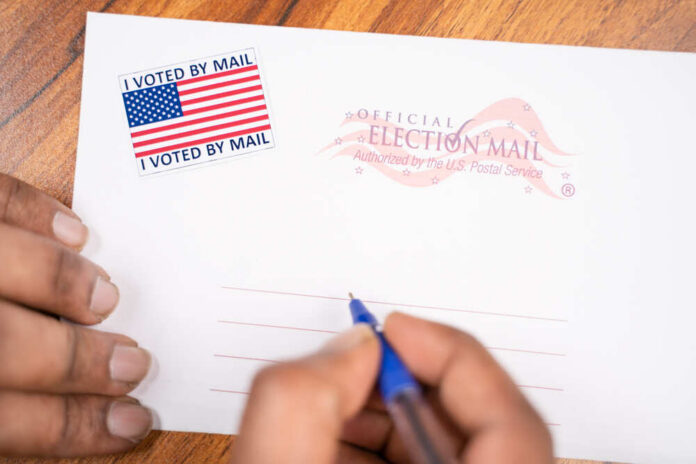
President Trump’s bold executive order clamps down on mail-in voting fraud just months before midterms, igniting a fierce battle over election integrity and federal power.
Story Snapshot
- Trump signed the order on March 31, 2026, mandating federal voter lists and bar-coded USPS envelopes to stop alleged cheating.
- Federal agencies like DHS and Social Security must compile citizen eligibility lists for ballot matching.
- Non-compliant states face withheld federal funds; AG Pam Bondi tasked with investigations.
- Democrats and states like California vow immediate lawsuits, calling it unconstitutional overreach.
Order Targets Mail-In Vulnerabilities
President Donald Trump signed Executive Order on March 31, 2026, directing the U.S. Postal Service to implement special bar-coded envelopes for tracking mail-in ballots. Federal agencies, including DHS, USCIS, and Social Security Administration, must create lists of verified U.S. citizens aged 18 and older with state residency. States submit eligible voter lists to USPS beforehand. Ballots not matching these lists cannot be transmitted, aiming to prevent fraud ahead of November midterms.
Trump Defends Integrity Measure
Trump described the order as essential to combat massive cheating in mail-in voting, a concern he has raised since 2020. He dismissed legal challenges, stating only rogue judges would oppose it and crediting great legal minds for drafting. Commerce Secretary Howard Lutnick defended it as ensuring safe, secure, and accurate ballots. The measure echoes the GOP-backed SAVE America Act, requiring proof of citizenship for registration, now pending in Senate after House passage.
Federal Agencies Mobilize for Enforcement
Attorney General Pam Bondi received directives to investigate wrongful mail-in ballot distribution. The order threatens to withhold federal funds from non-compliant states, pressuring adherence. USPS faces new responsibilities in ballot design and distribution controls. Nearly 50 million Americans used mail-in voting in 2024, highlighting stakes for voter access, especially military, disabled, and remote participants reliant on the system.
This action revives Trump’s long campaign against mail-in insecurities, despite his own recent use of mail-in ballots in Florida. Previous similar orders faced court blocks from states like California. Election experts dismiss fraud claims as unfounded, but Republicans frame restrictions as vital security.
Legal Firestorm Looms
Democratic attorney Marc Elias threatened immediate challenges, declaring the order unconstitutional and vowing not to bluff. California officials promised to stop it again, citing state election authority under the Constitution. Brennan Center argues presidents lack power over federal elections, reserved for states and Congress. Courts previously rejected voter file demands and upheld state grace periods, signaling vulnerabilities in the order’s provisions.
Implementation risks disrupting midterm preparations, potentially reducing turnout if mail-in systems falter. Conservatives wary of federal overreach question if this upholds limited government principles, even as it targets fraud. Outcomes could reshape federal-state power balance and public trust in elections.
Sources:
POLITICO: Trump Signs Executive Order Limiting Mail-In Voting Ahead of Midterm Elections
Bloomberg: Trump to Sign Order to Curb Mail-In Ballots
Brennan Center for Justice: Status of Trump’s Anti-Voting Executive Order
U.S. Senate Records: Padilla Statement on Trump’s Illegal Election Takeover Executive Order
White House: Preserving and Protecting the Integrity of American Elections