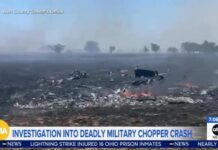
Belgium is battling its largest wildfire on record as flames race through the High Fens toward Germany, forcing evacuations and a multinational air-and-ground response.
Story Snapshot
- Fire started Friday in the High Fens and grew into Belgium’s biggest recorded wildfire.
- Authorities evacuated nearby villages as crews fought shifting fire lines.
- Belgium activated European help; aircraft and foreign crews joined the fight.
- Scientists link rising wildfire risk in Europe to a warming climate.
Record Blaze Escalates Near German Border
Firefighters said the High Fens nature reserve in eastern Belgium has burned since Friday, marking the nation’s largest wildfire on record. Crews from across Belgium, plus Germany and Luxembourg, tried to hold lines as wind pushed flames toward the German border. Local officials ordered evacuations in at-risk villages as smoke reduced visibility and ash fell across towns. Broadcasters reported the main fire front shifted with gusts, which made containment harder and more dangerous.
Belgium’s emergency managers described the fire as a cross-border threat based on spread direction and terrain. The High Fens covers bogs and forests that are hard to reach, slowing bulldozers and tankers. Commanders focused on protecting homes and key roads while scouting safe anchor points for backburns. Weekend winds created spot fires ahead of the main line. Night operations aimed to exploit cooler, wetter air, but crews warned smoldering peat can reignite when wind returns.
International Help and Aerial Support
Belgium asked the European Union to activate its Civil Protection Mechanism, unlocking aircraft, helicopters, and specialist teams. European officials said planes and crews were on the way to reinforce local units. The response showed how shared assets now backstop countries when large fires outrun local capacity. Reuters reported neighbors Germany and Luxembourg sent personnel, while Belgium’s army and farmers assisted ground operations with equipment and water transport.
Officials used aircraft to slow the head of the fire and cool hot spots that ground teams could not reach safely. Commanders said drops helped shield evacuation routes and power lines during wind shifts. Local media described long refill cycles due to distance from suitable scooping waters, which limited sortie rates during peak burn periods. Authorities kept public access closed across the reserve to reduce new ignitions and to free roads for engines and ambulances.
Why Fire Risk Is Rising Beyond The Mediterranean
European fire scientists and government agencies say a warming climate is making severe fire weather more likely, including in regions not known for big burns. Studies find that heat, drought, and wind combinations that drive extreme fires are now more frequent than in past decades. Data cited by Reuters links human-caused warming to a higher chance of hot, dry, and windy conditions that prime forests and peatlands for fast spread and long-lasting smoldering, which can defeat short rain breaks.
European monitoring shows recent years brought more days with high to extreme fire danger across much of the continent, even where total burned area sometimes fell due to stronger suppression. Analysts warn that suppression alone cannot offset sharp spikes in fire weather. Land managers are testing fuel breaks, prescribed fire, and peatland rewetting to lower intensity. Belgium’s own risk assessments now rank wildfires as a high-priority hazard under expected climate patterns.
Shared Concerns: Rapid Aid Versus System Gaps
This fire highlights both the value and limits of centralized help. The European Civil Protection pool moved fast and filled key gaps, but local agencies still faced strained staffing, limited aircraft access, and tough terrain. Residents on all sides want clear plans for early alerts, evacuations, and rebuilding standards that match new risks. Officials said final burned-area figures will settle after mapping, a normal step in fast-moving disasters with shifting estimates.
Firefighters backed by Dutch helicopters battled Belgium's largest wildfire on record Sunday as flames burned through about 3,000 hectares in the country's eastern High Fens nature reserve and advanced toward the border with Germany, according to Reuters.#Belgium #Wildfire pic.twitter.com/0ytW4DB0fT
— Barlaman Today (@BarlamanToday) August 16, 2026
Cross-border smoke affected air quality in parts of Luxembourg and Germany as authorities urged people to stay indoors if sensitive to pollution. Health agencies reminded residents to close windows, run air filters if available, and watch for updates on changing wind patterns. Emergency crews warned drivers to expect closures near the reserve and to keep drones grounded so firefighting aircraft can operate. Investigators will review ignition causes once the fire is contained.
Sources:
youtube.com, aljazeera.com, gulf-times.com, today.rtl.lu, yahoo.com, xinhuanet.com, brusselsmorning.com