Kuwait says hostile drones hit a vital air-defense site and two Italian technicians died, while Iran flatly denies any role.
Story Snapshot
- Kuwait reported hostile drones and blamed Iran for a deadly strike at a military site.
- Italy said two Rheinmetall Italia technicians died at an air-defense detection station.
- The Gulf Cooperation Council backed Kuwait’s attribution and cited material damage.
- Iran’s military denied any operation and rejected Kuwait’s claim as false.
What Kuwait and Italy Say Happened
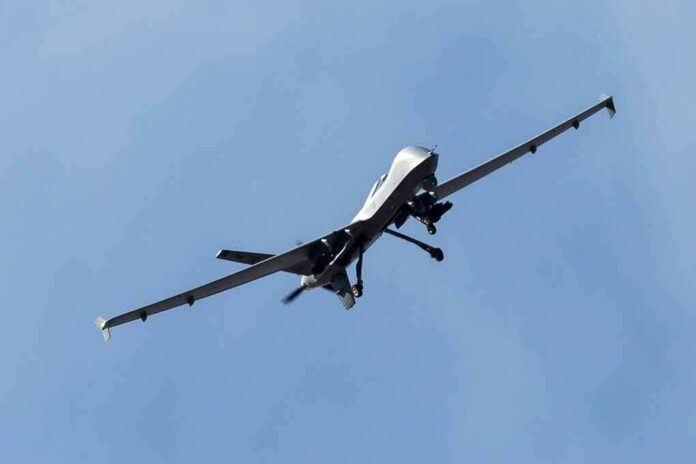
Kuwait’s Defense Ministry said its forces detected several hostile drones in Kuwaiti airspace and took action to intercept them. Officials reported two people were killed and two were hurt near a vital military site. Italy’s foreign minister told lawmakers that two Italian Rheinmetall Italia technicians died after an explosion at an air-defense detection station where they were working. News outlets in Kuwait and abroad matched the deaths and injuries reported by both governments.
Italian government statements linked the blast to a surveillance or detection facility tied to Kuwait’s air-defense network. Reports identified the victims as technicians performing maintenance, with two others, a Kuwaiti and a Pakistani national, injured. Kuwait’s account said debris from intercepted drones caused injuries, while other reports described a drone attack on or near the facility. That difference leaves the exact cause unclear, even as the casualty figures align across multiple outlets.
Attribution And The Denial From Tehran
Kuwait’s Defense Ministry publicly attributed the incident to Iran, and the Gulf Cooperation Council’s secretary-general condemned what he called an Iranian attack on a vital Kuwaiti site. He cited two Italian deaths, two injuries, and material damage. Iran’s armed-forces spokesperson, Brigadier General Abolfazl Shekarchi, categorically denied any role. He said Iran carried out no military or offensive operation in the region and rejected Kuwait’s claim as completely false.
Iran’s denials appeared in state and international media and included suggestions that others could be to blame. However, those counter-claims did not come with specific evidence tied to this incident. The strongest public links to Iran remain official statements from Kuwait, Italy, and the Gulf Cooperation Council. None of the cited material includes released radar tracks, drone fragments with identifying marks, or an independent forensic report that would settle the launch origin beyond dispute.
Why This Matters To Readers At Home
The incident hits core public worries about safety, truth, and accountability. Drone warfare lets distant actors strike critical sites and then dispute blame. Governments often cite security to withhold evidence, which leaves citizens guessing. That vacuum feeds claims and counter-claims that few can verify. People across the political spectrum see a pattern: leaders argue over attribution while workers—here, foreign technicians doing a job—bear the risk and families suffer the loss.
Clear next steps could reduce doubt and prevent escalation. Kuwait could publish redacted radar tracks and engagement logs, share photos of debris with chain-of-custody, and seek an outside technical review. Italy could release anonymized medical findings with family consent to clarify how the men died. A joint inquiry with neutral experts could compare flight paths, fragments, and blast effects. These steps would not fix the harm, but they could give the public the facts they are owed.
Sources:
insiderpaper.com, reuters.com, us.cnn.com, ilfoglio.it