A missile-sized object crossed into Poland during a major Russian strike on Ukraine and crashed near a village, reviving fears that the war could spill onto North Atlantic Treaty Organization soil.
Story Highlights
- Poland reported an unidentified object entered its airspace and crashed near the Ukraine border during Russian attacks.
- NATO forces scrambled jets and activated defenses as a precaution.
- Ukrainian officials said Russian cruise missiles briefly crossed into Polish airspace during the barrage.
- Polish authorities opened an investigation and have not publicly released a final identification of the object.
What Poland Says Happened Near the Border
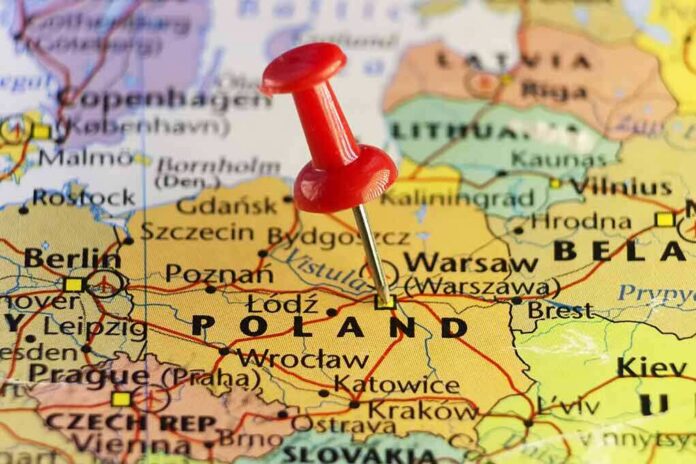
Polish authorities said an unidentified object crossed into Poland and landed near Tarnawa-Kolonia as Russia launched a large overnight missile and drone attack on Ukraine. Local responders found a crater and debris that pointed to a real impact, not a false alarm. Officials did not call it a deliberate strike on Poland. They opened a criminal and technical inquiry to learn exactly what flew in, where it came from, and why it fell where it did.
NATO officials said allied air and ground defenses were put on alert after Polish radars tracked the object near the border region. Allied jets scrambled to ensure control of alliance airspace. The response matched standard practice for any unknown object near a tense frontier. Leaders voiced support for Poland while they waited for technical findings, which often take days to verify and release. The goal was to deter further risk while avoiding quick claims that could later prove wrong.
Why the Timing Raised the Stakes
The crossing happened during a heavy wave of Russian strikes on Ukrainian cities and energy sites, which provided clear context for a missile or related debris to drift off course. Ukrainian officials said Russian Kh-101 cruise missiles briefly crossed into Polish airspace during the attack window, suggesting the object could be part of that salvo. Such barrages send many missiles and interceptors into the sky at once, which increases the chance of navigational errors or fragments falling beyond the target area.
Poland’s step-by-step approach reflects lessons from a 2022 blast in Przewodów, when early reports sparked panic before investigators said the likely cause was a Ukrainian air defense missile fired to stop a Russian attack. That case showed how first assumptions in a fast-moving fight can be wrong and how alliance leaders must balance strong defense signals with careful attribution. NATO vowed then, and now, to defend every inch of its territory without racing ahead of facts.
What Is Known, What Is Not
Facts now on record say: an object entered Polish airspace and crashed near the border; NATO scrambled jets; local teams found a crater and debris; and Polish experts are reviewing the scene and radar data. What remains unknown to the public is the object’s final identification, its exact flight path inside Poland, and whether it was an intact missile, a stray stage, or debris from an engagement over Ukraine. Officials have not released forensic results or serial matches that would settle type and origin.
NEWS : A large impact crater was discovered near the village of Targowisko in eastern Poland after a Russian Kh-101 stealth cruise missile crossed into Polish airspace and crashed approximately 105 km from the Ukrainian border.
• Local residents reported a window-shattering… pic.twitter.com/SxbMapOPe2
— ConflictX (@ConflictXtweets) July 30, 2026
Analysts warn that early certainty often collapses complex events into simple headlines, especially when a NATO border is involved. Governments face pressure to signal strength fast, while investigators need time to test metal fragments, analyze residue, and align radar tracks. That tension can feed distrust among citizens who already feel elites hide the ball. Transparency on findings, even if limited, helps the public see the difference between caution and cover-up.
How This Fits a Wider Pattern and Why It Matters
Cross-border incidents have recurred since the full-scale war began, with missiles, drones, and interceptor debris at times pushing beyond Ukraine’s edge. Each event risks a wider fight if leaders misread intent or rush blame. NATO’s playbook aims to slow that spiral: secure the sky, gather evidence, consult allies, and then message with care. Poland’s careful words and NATO’s readiness signal both resolve and restraint, the mix most likely to keep the war from widening.
Americans watching from afar see a familiar problem: swift official moves, slow official answers. People on the right worry about open-ended commitments and rising risks. People on the left worry about conflict spillover and the human cost. Both sides fear that powerful players make choices without clear accountability. Clear timelines for releasing radar data and lab results would show respect for the public and reduce room for spin by any side.
What to Watch Next
Watch for Poland to release initial technical findings, even if partial, on fragments, residue, and flight path. Look for NATO statements that align on attribution and next steps. Track whether Russia, Ukraine, or Poland share radar plots from the incident window. If the object is confirmed as a Russian missile, expect louder calls for tighter air defense on the alliance’s eastern flank. If it is debris or an interceptor, expect debate on better deconfliction tools near the border.
Sources:
military.com, deccanchronicle.com, devdiscourse.com, bbc.com, abc7ny.com, cepa.org