
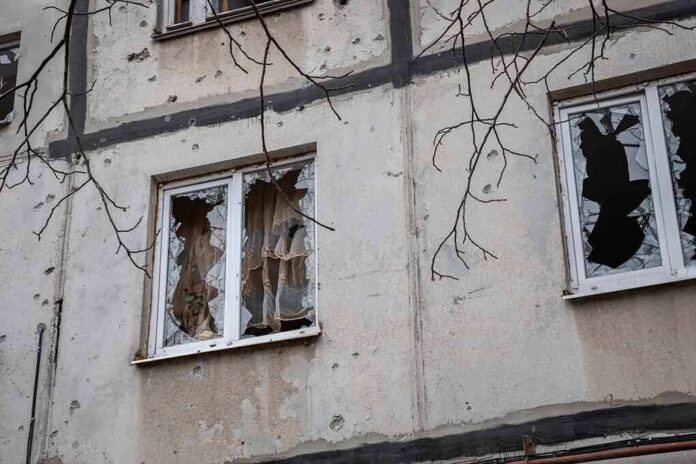
When a forced entry fails because the window will not yield—even to repeated blows from a handgun—that is not a viral oddity; it is a case study in how layered home security and modern building materials change criminal opportunity in real time.
The Short Version
- Fort Lauderdale police say two masked suspects tried to force entry into an occupied home, striking a hurricane-impact window with a handgun; the glass held and the pair fled.
- Legally, an attempted residential burglary is still a serious offense; completion of theft is not required for the crime category.
- Laminated impact glass resists penetration by absorbing and distributing energy across a polymer interlayer—harder to break, louder to attempt, and slower to defeat.
- Most household burglaries do not involve violence against residents, but presence at home raises stakes and potential harm.
What Happened: A Thwarted Attempt on an Occupied Home
According to reporting that attributes its description to the Fort Lauderdale Police Department, two masked suspects approached an occupied residence shortly after 6 p.m. and tried to force entry through a hurricane-rated window. Surveillance footage, as described, shows one suspect in a black hoodie and red pants striking the glass repeatedly with a handgun—using the firearm as an improvised impact tool rather than immediately discharging it—before abandoning the effort when the pane refused to break. The pair fled; police sought the suspects and public tips to identify them.
That snapshot carries several implications. First, the target was not an empty property after dark—it was an occupied home during evening hours, a context that law consistently treats as high-risk for escalated harm. Second, the visible tactic illustrates a recurring pattern in opportunistic burglaries: speed and noise are the enemy, and materials engineered to buy time, create commotion, and resist easy failure often do exactly that. Third, the firearm’s presence matters for threat assessment even when it is used as a striking object; a weapon at the scene changes the dynamics of any confrontation that might follow.
How the Window Won: The Mechanics of Impact Glass
Hurricane-impact windows are not ordinary glass. They are a laminate assembly—two sheets of glass bonded to a polyvinyl butyral (PVB) or similar interlayer—that behaves like a safety windshield. The outer lite may crack under force, but the interlayer keeps the assembly intact and anchored in its frame. The engineering goal is twofold: survive windborne debris at hurricane velocities and maintain the building envelope to prevent catastrophic internal pressurization. A side effect is enhanced resistance to forced entry; blows that would shatter a standard pane into a pass-through hole instead create a spiderweb crack that stays largely in place, demanding many more strikes, more time, and more noise to breach.
From a security perspective, this matters because most residential break-ins are opportunistic and time-constrained. A conventional pane can be defeated in seconds with a hammer or a heavy object. Laminated impact assemblies convert that quick attack into a prolonged, attention-drawing struggle—one that many offenders will abandon once the risk calculus turns unfavorable. Industry demonstrations and testing standards consistently show this gap: where ordinary glazing fails at first or second strike, laminated systems typically require sustained, forceful, repeated impacts and still may not produce an opening large enough for entry. In the Fort Lauderdale incident, that differential likely turned a dangerous encounter into a failed attempt.
What the Law Sees: Attempt, Presence, and Weapons
In criminal classification, attempted residential burglary is not an administrative footnote. National victimization frameworks place unlawful or forcible entry and attempted entry within the same household-burglary category, precisely because the intrusion on safety and privacy exists independent of whether a theft is completed or even attempted. An occupied dwelling magnifies the stakes: the possibility of an encounter between resident and intruder increases the risk of injury, and statutes often reflect that concern in charging and sentencing structures.
Contrary to popular imagination, most household burglaries do not involve direct violence against occupants. Historical Bureau of Justice Statistics analyses show that when violence accompanies a household burglary with someone present, the majority of offenders are actually unarmed; firearms are a minority share of those incidents. But “minority” is not the same as “rare,” and the presence of a firearm, even holstered or used as a bludgeon, radically changes the potential outcome if occupants confront the intruders or if the situation escalates under stress.
Why This Pattern Repeats: Offender Tactics and Target Hardening
Burglars generally optimize for quick, low-resistance entry points—rear doors, windows shadowed from the street, or garages—using tools at hand. They avoid protracted engagements that draw witnesses or activate alarms. Target hardening disrupts this calculus. Impact windows and reinforced doors do three things that matter to offenders: they increase the number of actions required to breach, they raise the acoustic signature of the attempt, and they lengthen exposure time in the open. In the language of situational crime prevention, these measures increase effort, increase risk, and reduce rewards, producing deterrence at the margin.
The Fort Lauderdale case is textbook: the suspects chose what they may have assumed was a vulnerable pane; the glass did not yield; the attempt was noisy, slow, and conspicuous; the pair cut losses and retreated. That is not exceptional luck; it is physical security working as designed. For homeowners in hurricane zones—Florida especially—the investment in impact-rated assemblies thus does double duty: life-safety during storms and meaningful resistance to smash-and-grab entries the rest of the year.
Practical Takeaways for Homeowners
Engineering alone is not a security plan, but it is a foundation. An effective residential posture layers physical barriers, visibility, and response. Laminated windows and reinforced door frames deny easy access; motion-activated exterior lighting and trimmed landscaping remove concealment; audible alarms and visible cameras add both real and perceived risk to the offender. Crucially, even excellent glazing benefits from compatible hardware—secure locking mechanisms, anchored frames, and proper installation—because attackers will pivot from glass to frames, latches, and hinges once the pane resists.
Equally important is policy inside the home. When someone is present and a forced entry is underway, the safer choice is usually to avoid confrontation: retreat behind a locked interior door, call 911, and let the barriers and alarms do their work. The presence of a firearm on the offender’s side—even if not fired—raises the stakes of any face-to-face encounter. The aim of target hardening is to buy time for help to arrive and to remove the intruder’s quick path to success, not to invite a test of wills.
Why This One Case Belongs in a Bigger Story
Individual incidents attract attention because they are visceral—masked figures, pounding glass, a weapon in hand—but their value is in what they reveal about system dynamics. The national victimization framework treats attempts and completions together because the core harm—violation of the home—begins at the first forced strike. At the same time, the physics of materials science now regularly tilt these encounters in the resident’s favor: laminated glass and solid-core doors convert seconds into minutes, and minutes are where police arrive, neighbors notice, and suspects decide to leave. Far from a curiosity, that is the practical path to fewer break-ins succeeding and fewer confrontations turning violent.
Sources:
nypost.com, cityofevanston.org, publicapps.troopers.ny.gov, wsvn.com