
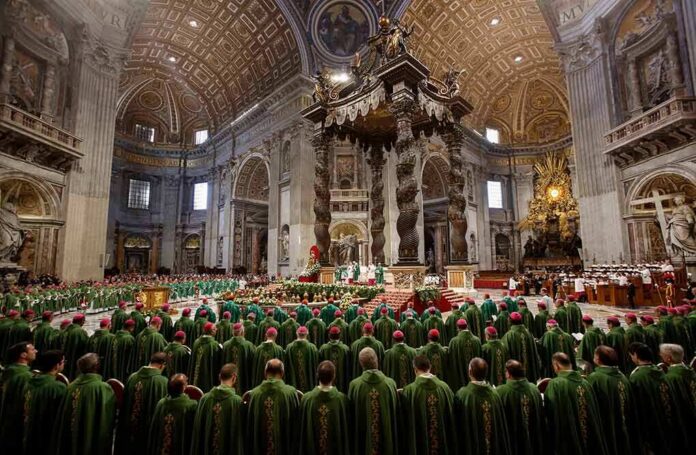
The Vatican warned bishops about “extremism” tied to fights over how Catholics receive Communion, saying such clashes turn the Mass into a battlefield instead of a place of unity.
Story Highlights
- A Vatican office flagged “extremism” and “instrumentalization” of the Mass linked to disputes over Communion posture and veiling.
- Officials said the Eucharist is the sacrament of unity and must not become an object of contention.
- Church law allows Communion kneeling or standing and protects receiving on the tongue, with norms set by bishops.
- Advocacy outlets cast the warning as unfair to long-standing traditions like kneeling and veiling.
What Vatican Officials Said in the Panama Briefing
The Vatican’s Dicastery reported talks with Panama’s bishops about the “danger of extremism in the liturgical sphere.” It said some groups “instrumentalize” the Eucharist by stirring fights over kneeling, Communion in the hand, and women’s veils. The office said these efforts cause “division and confusion.” It also stressed a core point: the Eucharist is the sacrament of unity and should not become a topic for campaigns or power struggles inside parishes.
The public account did not name the groups involved or give case details. The summary did not list dates, speakers, or parish incidents. That gap leaves room for clashing interpretations of the warning. Still, the message was clear on aim: stop liturgy from turning into a culture war and keep the focus on worship and communion with Christ and with each other, not on winning arguments in the pews.
What Church Law Already Permits on Receiving Communion
Existing Vatican rules set guardrails that make room for more than one practice. The instruction Redemptionis Sacramentum says the faithful may receive Communion kneeling or standing, as set by each country’s bishops with Vatican approval. It also says no one may be denied Communion only because they kneel or stand, and every person has the right to receive on the tongue. Communion in the hand is allowed where bishops have approval to permit it.
These rules show the Church protects both traditional and commonly used options. The Vatican’s warning targets heated campaigns, not the practices themselves. That distinction matters. If the message is about conduct, it fits the law. If people hear it as condemning kneeling or veiling, it will sound inconsistent with those same rules. Clear language and examples from Rome would help close that gap and limit confusion at the parish level.
Why the Dispute Resonates Beyond Church Walls
Clashes over posture and veils reflect deeper battles over authority, identity, and trust. Many believers, like many Americans in politics, feel leaders talk unity while avoiding real answers. When rules seem vague or shift by place, people suspect elites make it up as they go. That breeds anger, then organizing, then conflict. Researchers have long described these “liturgy wars” as social conflicts that play out through ritual choices, not only through ideas or doctrine.
Advocacy outlets argue the warning sidelines long-standing reverence, such as kneeling and receiving on the tongue. They present these customs as ancient and respectful, not extreme. That claim will land with Catholics who see tradition as a stabilizing anchor in a fast-changing Church. It will also fuel charges that leaders dismiss rank-and-file concerns, a pattern many Americans see in government, too: rules for the people, exceptions for the powerful.
What Would Move This Forward Constructively
Vatican officials could publish the full meeting record, define what “extremism” means in practice, and give concrete examples of harmful conduct. Bishops could restate local norms and remind pastors that posture alone cannot bar anyone from Communion. Parish leaders could set a calm tone: explain options clearly, protect rights, and discourage pressure tactics on all sides. These steps would lower the heat while keeping the focus on worship and unity anchored in longstanding law.
Sources:
lifesitenews.com, thecatholicherald.com, misyjne.pl, actssocial.com