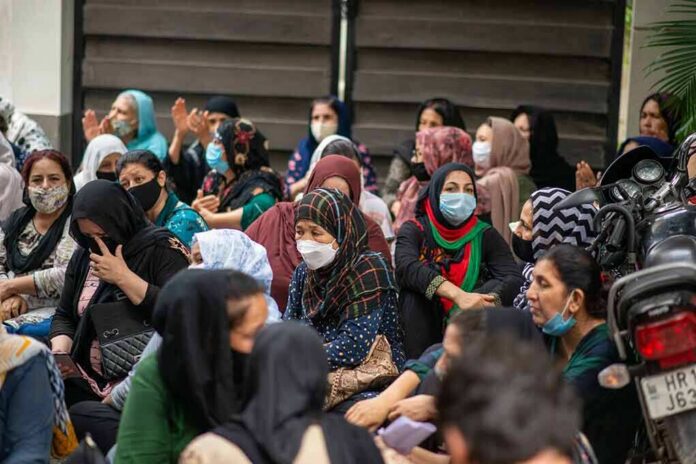
Britain’s Home Office says it handed out nearly 1,000 hijabs to recent Channel arrivals under welfare rules that require basic, including cultural and religious, clothing.
Story Snapshot
- Officials say short-term holding rules require basic clothing; cultural and religious items may be included.
- Reports cite 974 hijabs issued between January and June 2026; the raw dataset was not published.
- Standard packs include dry clothes for health and safety after sea crossings; hijabs appear within that inventory.
- Critics call taxpayer funding for religious items an insult and a pull factor for illegal crossings.
What Happened and Why It Touched a Nerve
British media reported that the Home Office distributed 974 hijabs to small-boat arrivals in the first half of 2026. The reports quote officials who say the law requires a basic dry clothing pack for people processed at short-term holding sites. They add that cultural and religious items may be provided when needed. The number became a flashpoint in the border debate. Many see it as proof the system helps rule-breakers, while others view it as a basic dignity measure.
The Home Office position rests on rules for short-term holding facilities. Those rules state that detainees must get clothing adequate for warmth and health when required. Home Office materials also say religious and cultural needs should be met as far as practicable. That framework predates this dispute and has existed since 2018. It places the clothing issue inside routine welfare practice, not a new benefit unique to recent arrivals.
What The Clothing Packs Include and The Health Rationale
Officials describe the packs as simple and driven by health and safety. People often arrive soaked by seawater and sometimes splashed with fuel. Staff swap wet or dirty items for clean, dry clothes. Typical packs include tracksuits, underwear, socks, T-shirts, trousers or jogging bottoms, sweatshirts, supportive footwear, and weather items when needed. Reports indicate children also receive age-appropriate clothing. Within that inventory, a hijab can be issued when a woman wants a head covering for cultural or religious reasons.
The figure of 974 hijabs is notable because it singles out one item tied to faith. The number comes from internal figures described by press outlets. The underlying dataset and item-level logs were not released in those stories. That gap fuels suspicion among critics. They argue the public cannot judge need or cost without records. Supporters counter that the larger welfare list shows the focus is basic care, not special favors, during short stays at intake sites.
How Critics and Supporters Frame The Stakes
Conservative politicians and commentators blasted the practice. They say taxpayers should not fund religious items for people who crossed illegally. Some argue this kind of aid signals no consequences and may draw more crossings. Others object to the hijab on ideological grounds, calling it a symbol of female oppression. These claims link the clothing packs to a wider anger over costs, border control, and a system seen as unaccountable to voters.
'We have to help them.'
Imam and Director of the Oxford Islamic Information Centre Dr Sheikh Ramzy reacts as the UK hands out 1,000 hijabs to Channel migrants.
🇬🇧 Become a Friend of GB News: https://t.co/c2dfqbeDpJ pic.twitter.com/Q52K0rA2iZ
— GB News (@GBNEWS) October 4, 2026
Supporters point to the legal duty and basic decency. They stress that the rule applies to anyone held in short-term custody. They also note that many democracies respect religious clothing in detention, when feasible, as part of human rights norms. In the United States, guidance for short-term holding says religious clothing and head coverings should remain with the person whenever possible. That shows the idea is not unique to Britain’s approach at intake sites.
What We Know, What We Do Not, and Why It Matters
We have clear statements that the law requires basic clothing and allows cultural and religious items. We have press reports naming 974 hijabs over six months. We have descriptions of health and safety reasons for dry clothes at intake. We do not have the raw government dataset or itemized procurement records in public. That missing detail leaves room for doubt and spin across the political spectrum. It also shows how secrecy, even if unplanned, erodes trust.
This dispute is less about one garment and more about faith in government. People on the right and left share a view that the system is not working. Many feel elites manage optics while daily costs, border challenges, and community tensions rise. A narrow rule on clothing turned into a symbol of that frustration. More sunlight could help. Publishing the exact guidance and the full clothing logs would let voters judge whether the practice is fair, frugal, and lawful.
Sources:
thegatewaypundit.com, uk.news.yahoo.com, aol.co.uk, ground.news, express.co.uk, oxfordshire.gov.uk