Trump’s new vaccine order puts family choice and public health on a collision course, while leaving the biggest fight over how much power Washington really has.
Quick Take
- The order calls for fewer routine childhood vaccines and more spacing between shots.
- It says parents should have more choice, while still keeping vaccine access in place.
- The plan leans on peer-country comparisons, not new U.S. trial data.
- Doctors and critics say the proposal could confuse families and weaken trust.
What the Order Says
President Trump signed an executive order that tells federal agencies to cut recommended childhood vaccines and spread some shots across more doctor visits. The White House says the goal is to protect religious liberty and parental authority while aligning U.S. guidance with “peer, developed countries.” It also says the combined measles, mumps, and rubella vaccine should be given as three separate shots once those products are available in the United States.
The order also pushes a smaller core schedule. Reporting says the new approach would recommend 11 core vaccines, down from the earlier broader list, and would steer families toward “shared clinical decision” talks with doctors for some other shots. The White House and allied reporting say current vaccine access should be preserved, and the American Hospital Association says private insurers, Medicaid, the Children’s Health Insurance Program, and the Vaccines for Children Program should keep covering immunizations without cost sharing.
Why Supporters Say It Matters
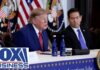
Supporters can point to the administration’s claim that it is not banning vaccines. Instead, it says the order gives parents more timing choices and more flexibility with visit schedules. Trump also used the signing event to say the new policy lets parents decide whether to follow the guidelines. That framing fits a broader argument from the White House that federal recommendations should reflect international practice and not force one-size-fits-all medicine on every family.
That argument may sound simple, but the policy path is not. Reuters and the Centers for Infectious Disease Research and Policy both report that the Centers for Disease Control and Prevention and the Advisory Committee on Immunization Practices must review the Health and Human Services assessment before any schedule change moves forward. The public record also shows that school vaccine rules are largely controlled by states, which limits how much direct force a federal order can have on daily life.
President Donald Trump on Monday signed an executive order calling for revamped childhood vaccine recommendations that promote his long-held belief that childhood shots should be spaced out into separate medical visits. https://t.co/CaNGPE4jny
— FOX 29 (@FOX29philly) August 11, 2026
Where the Pushback Lands
The sharpest criticism is about evidence. Several reports note that doctors say splitting the measles, mumps, and rubella vaccine has no proven medical benefit, and that the autism-linked claims around childhood vaccines remain unsupported. That matters because the order’s public case depends on a scientific comparison with other countries, but the supplied record does not include a U.S. study proving that the revised schedule is safer or better for children in real-world care.
There is also a practical concern that cuts across politics. If federal agencies, states, insurers, and doctors give different signals, families may not know which schedule to follow. That kind of split can frustrate parents who want clear rules, not more political theater. It also feeds a wider belief, shared by many people on both the left and right, that government institutions talk past each other while ordinary Americans deal with the confusion and the bill.
Sources:
facebook.com, trumpwhitehouse.archives.gov, politico.com, bbc.com, cnbc.com, apnews.com, nytimes.com, govinfo.gov, cnn.com, 6abc.com