A downtown Asheville shooting that killed two people and injured seven has been linked by police to an earlier gun attack, raising fresh questions about how quickly violence can spiral when a city’s core is treated like a battlefield.
Quick Take
- Asheville police said the July 19 Biltmore Avenue shooting was a **direct retaliatory act** tied to the July 5 Maple Crest shooting.
- Officers said the earlier Maple Crest case already led to an arrest, which gives the link between the two shootings more weight.
- Police also said a **Glock switch** was recovered, meaning one gun was illegally altered to fire like a machine gun.
- Officials have not publicly explained every detail behind the retaliation claim, and they have not directly answered whether the people involved were gangs.
Police Connect Two Shootings
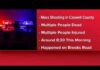
Interim Police Chief Jackie Stepp said investigators believe the downtown shooting was a direct act of retaliation for a July 5 shooting at Maple Crest Apartments. Police said the July 19 attack happened outside Dalton’s Distillery on Biltmore Avenue, where two people were killed and seven others were hospitalized. Officials also said an arrest had already been made in the earlier case, which suggests the violence was not random.
Police described the case as part of a longer pattern of retaliatory violence among people who know one another. That framing matters because it shifts the event away from a simple public-space shooting and toward an ongoing feud. At the same time, the public record still leaves gaps. Officials have not laid out every piece of evidence that led them to the retaliation conclusion, so the full basis for the claim remains partly behind the investigation.
What Police Have Said, and What They Have Not
Authorities said they recovered a firearm with a Glock switch during the investigation. A Glock switch is an illegal device that can turn a handgun into a machine gun. That detail points to a more dangerous level of preparation and firepower than an ordinary street shooting. It also helps explain why police have treated the case as a serious, coordinated event rather than a spur-of-the-moment fight.
Police have not publicly given a full answer on whether the groups involved are gangs. They also have not said whether the July 19 victims were the intended targets. Those missing details matter because they shape how the public understands the shooting. Without them, the case sits in a gray zone between a targeted feud and a broader outbreak of urban gun violence.
Why the Case Matters Beyond Asheville
Asheville is known for its mountain views, tourism, and busy downtown streets, so violence there draws wide attention fast. When shootings are described as retaliatory, residents often hear more than a crime report. They hear a warning that public spaces can become part of a cycle of revenge. That warning can fuel fear, but it can also push pressure on police to show more of the proof behind their conclusions.
🚨 JUST IN: DEADLY RETALIATION SHOOTING ROCKS DOWNTOWN ASHEVILLE, NORTH CAROLINA.
Two people were killed and seven others wounded in the latest downtown shooting, with police calling the attack a direct act of retaliation.
Despite acknowledging gang activity in the city,… pic.twitter.com/nDbXfEaWWJ
— Allen H. Blackwell (@MrAlenBlackwell) August 9, 2026
The city now faces two problems at once: solving the case and convincing the public that its account is complete. Police say the investigation remains active and continues with local, state, and federal partners. That means more details may still emerge through charging papers, forensic reports, or court filings. Until then, Asheville is left with a troubling picture: a deadly downtown shooting, an earlier linked case, and an official retaliation theory that is strong, but still not fully public.
Sources:
facebook.com, wlos.com, noticias.foxnews.com, wpde.com, wral.com, citizen-times.com, foxcarolina.com, anniedance.substack.com, youtube.com, reddit.com, mountainx.com