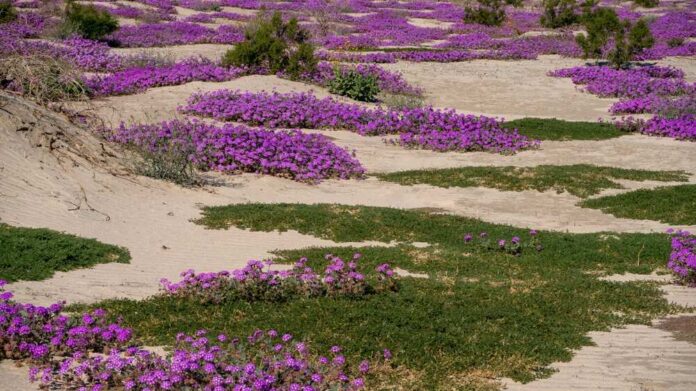
California’s deserts are exploding in vivid wildflower colors earlier than ever, offering a rare natural spectacle that boosts local economies without relying on federal overreach or green mandates.
Story Highlights
- Early 2026 blooms in Anza-Borrego and Death Valley signal potential superbloom, strongest since 2016, driven by winter storms.
- Purple sand verbena, yellow desert gold, and orange poppies dominate, visible from January in desert parks.
- State Parks and NPS forecast moderate-to-strong season, urging visitors to plan ahead and follow conservation rules.
- Record rainfall sets optimal conditions, contrasting past dry spells under mismanaged policies.
- Tourism surge promises economic wins for communities, replenishing seed banks for future resilience.
Early Desert Blooms Defy Expectations
California State Parks confirmed early wildflower displays at Anza-Borrego Desert State Park in January 2026, featuring purple sand verbena and yellow flowers. These sights emerged after fall 2025 storms provided essential moisture for seed germination. Red Rock Canyon also shows vibrant growth. This timing beats typical mid-March starts, thanks to record rainfall making it the second-wettest season through January in the Los Angeles area. Mild temperatures and sunlight further optimized conditions for these ephemeral annuals.
Peak Timeline and Key Locations
Mid-February 2026 marks peak onset in deserts and low elevations, with California poppies blooming in Antelope Valley Poppy Reserve. Broader Southern California and Death Valley reach highs in March-April, while higher elevations extend into May-June. National Park Service updates note Death Valley’s displays as the best since 2016, with desert gold leading. UC Riverside plant ecologist Loralee Larios states the bloom began a month earlier due to rain pattern shifts. Visitors should check local forecasts for variable site conditions.
Expert Warnings and Conservation Needs
Botanist Naomi Fraga from Rancho Santa Ana Botanic Garden highlights ideal rain but cautions January heat spells could cause a fizzle, similar to past risks. State Parks and NPS enforce leave-no-trace principles to protect fragile soils from trampling. Historical precedents like 2016 Death Valley floods and 2023 post-fire recovery show superblooms follow above-average El Niño winters. Agencies promote eco-tourism for revenue while prioritizing public safety and ecosystem health. Park superintendents manage trail access to balance crowds.
Short-term tourism surges strain parks but boost hotels and guides in areas like San Diego and Lancaster. Long-term, seed bank replenishment strengthens native resilience against weather shifts. This natural event underscores self-reliant local benefits over globalist climate agendas.
California's wildflower boom is inching closer to a superbloom – see the colors that are exlpoding in the desert https://t.co/ExozuuzWIl pic.twitter.com/8tBcHLY8l2
— New York Post (@nypost) March 10, 2026
Economic Boost for American Communities
Millions of petal-peeping visitors drive economic gains through photography hikes and local businesses, enhancing the ecotourism sector without taxpayer burdens. Political pushes for park funding arise amid conservation talks, favoring practical management over overspending. Diverse ecosystems from Mojave deserts to coastal ranges host these displays, with deserts leading due to early rain. Limited data on exact peak intensity advises on-site checks, but consensus points to strong season.
Sources:
Where to See California Wildflowers This Spring
This hot, dry weather could spell doom for 2026 superbloom
Will 2026 Be a Super Bloom Spring in Death Valley?
Best superbloom in Death Valley since 2016