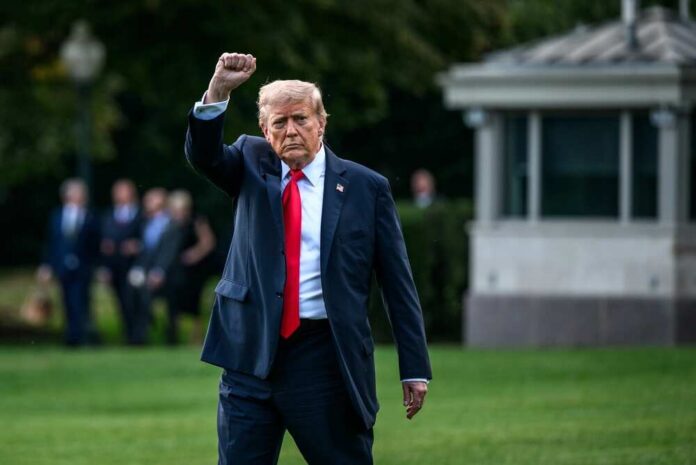
Chants of “USA” greeted President Trump in North Dakota, turning a routine arrival into a rallying signal for a country split over power, truth, and who gets heard.
Story Highlights
- Trump drew loud support in North Dakota as fresh visits underscore his ongoing pull with the state’s Republicans.
- Past Fargo rallies mixed celebration and sharp political attacks, fueling praise and fact-check pushback.
- Supporters point to court wins and patriotic themes; critics cite errors and divisive language.
- The moment fits a long trend where the same speech reads as “authentic” to some and “inflammatory” to others.
What Happened In North Dakota
Local media reported North Dakota prepared for a new presidential visit, signaling continued engagement with a loyal base. Video from past Fargo stops shows large crowds and a campaign feel. Supporters cheered and chanted as Trump highlighted victories and national pride. That pattern returned as he stepped into the state again, with “USA” chants capturing the mood. The scene offered a snapshot of a country that rallies hard, even as it argues over facts, tone, and where the line is in politics.
Earlier North Dakota rallies set the playbook. In 2018, The Washington Post described Trump’s Fargo event as “triumphant,” noting how he used wins, like the travel ban decision, to energize voters. NBC News reported he urged voters to unseat a Democratic senator and called out named Democratic leaders. That mix of celebration and confrontation has long defined his events. It draws big crowds and also sparks media scrutiny and voter backlash, sometimes on the same night.
Why The Reactions Split So Sharply
Trump’s message often leans on patriotic praise and “amazing Americans,” themes he also stressed in formal speeches like the State of the Union. Fans hear a defense of country and common sense. Critics hear attacks that paint enemies and escalate anger. After the Fargo rally, The New York Times flagged several claims as misleading or false, including on health care and steel, which drove a second-day narrative that focused on accuracy and trust.
This divide is not new. Research on campaign language finds the parties use different moral frames. Republicans emphasize loyalty, authority, and tradition. Democrats emphasize care and fairness. The result is a natural split in how the same words land with voters. What sounds like “pride and order” to one side can sound like “threat and exclusion” to the other. That helps explain why rallies can feel both inspiring and alarming, depending on who is listening.
Claims, Pushback, and The Information Gap
Supporters point to institutional wins to argue legitimacy. In Fargo, Trump touted Supreme Court backing on policy as proof of results, a move meant to anchor rhetoric in official validation. Critics answered with fact checks and examples of pointed attacks on opponents, arguing that the tone divides more than it informs. NBC News cited direct criticisms of Democratic leaders at the Fargo rally, underscoring why the other side viewed the event as polarizing rather than unifying.
🚨BREAKING: The TRUMP TRAIN just made a stop in North Dakota to a roaring and loving crowd as President Trump stepped off.
This Freedom 250 train is incredible! We the People LOVE TRUMP!
Follow: @BoLoudon pic.twitter.com/Yt6z7rAX3l
— Bo Loudon (@BoLoudon) July 1, 2026
There are still gaps. No full public transcript of the specific North Dakota remarks is provided in this research set, which limits granular review of exact lines and context. That makes it harder to settle disputes about tone and accuracy line by line. In a media system driven by clips and posts, short videos amplify cheers or barbs, not nuance. That dynamic feeds a broader worry shared by many: the system rewards heat over light, while real problems keep piling up.
Why This Moment Matters Beyond One Rally
Today’s federal gridlock and mistrust set the backdrop. Republicans control Congress and the White House, but many Americans on both left and right still feel the government serves the well-connected first. A loud rally can feel like voice and power to some, and like a warning to others. The deeper point is sobering. If we only hear the chant or the clap-back, we miss what matters: whether leaders explain plans, own misses, and fix hard problems that hit families every day.
Sources:
democrats.senate.gov, back.nber.org, facebook.com, washingtonpost.com, instagram.com, nytimes.com, youtube.com