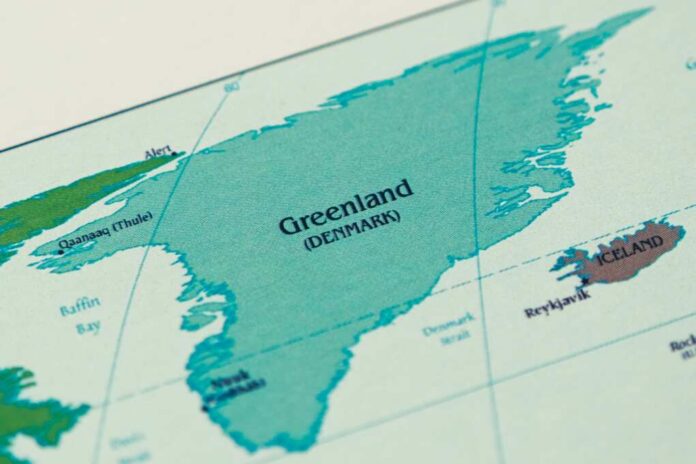
As Washington debates buying Greenland, the real fight is over whether this deal strengthens American security or risks another round of costly foreign entanglements that ignore Main Street priorities.
Story Snapshot
- Trump’s team is again exploring a U.S. purchase or acquisition of Greenland, citing national security and strategic resources.
- Internal talks reportedly include direct cash offers to Greenlanders and a House bill to authorize negotiations and even rename the island.
- Some Senate Republicans and key European allies are pushing back, especially against any mention of military options.
- For conservatives, the question is whether this Arctic gamble truly protects America or distracts from border security and fiscal sanity.
Trump’s Renewed Push to Bring Greenland Under the U.S. Flag
After reclaiming the White House in 2024, President Trump revived an idea that first rattled global elites back in 2019: bringing Greenland into the American fold. His administration now frames the proposal as part of a broader “American expansionism” strategy rooted in national security, energy independence, and great‑power competition in the Arctic. Supporters argue that in an era of Chinese and Russian encroachment, letting an ice‑covered strategic goldmine sit in European hands is short‑sighted and leaves North America exposed.
Greenland’s status makes the issue more complex than a simple real‑estate transaction. The island is a self‑governing territory within the Kingdom of Denmark, with its own elected government handling internal affairs while Copenhagen controls foreign policy and defense. Any change would require both Danish and Greenlandic consent under their constitutional setup. That legal reality collides with Washington’s view that Greenland, sitting astride Arctic sea lanes and near Russia, is too strategically important to ignore in an increasingly unstable world.
Cash Offers, Military Talk, and a Bill to Rename the Map
Reports say internal discussions inside the administration have floated directly paying every Greenland resident between $10,000 and $100,000 to incentivize breaking from Denmark and joining the United States. The total cost could reach roughly $6 billion, a number that sounds huge but is a rounding error compared with the trillions burned on failed globalist adventures or Biden‑era spending binges. For many conservatives, the question is not just the price tag, but whether this is a smart investment in long‑term security or another political lightning rod.
On Capitol Hill, House Republicans have introduced the “Red, White, and Blueland Act of 2025” (H.R. 1161), authorizing negotiations to purchase or otherwise acquire Greenland and rename it “Red, White, and Blueland.” That symbolic rebranding reflects the populist impulse to plant the American flag proudly, yet it has also handed ammunition to critics who dismiss the entire effort as a vanity project. More troubling to some in the GOP is that administration officials have refused to rule out military options, insisting the president will keep all tools on the table while claiming diplomacy comes first.
Republican Dissent and European Resistance to Coercive Options
The most serious friction is not coming from progressive activists or European bureaucrats, but from parts of Trump’s own party and from U.S. allies who share our NATO commitments. Some Senate Republicans have publicly opposed any talk of using force against a NATO partner’s territory, warning that coercion would undercut the very alliance that has long anchored Western security. These lawmakers are not rejecting Greenland’s strategic value; they are rejecting the idea that America should threaten an ally to get it, especially after years of criticizing Biden for projecting weakness and chaos abroad.
Denmark and Greenland, backed by other European leaders, have repeated a simple message: Greenland is not for sale, and its future belongs to the Greenlandic people and the Danish kingdom. Their leaders are seeking urgent consultations with Secretary of State Marco Rubio, signaling that trust is being strained. For constitutional conservatives who care about national sovereignty, that argument cuts both ways. On one hand, respecting Denmark’s legal authority is consistent with opposing aggressive globalism. On the other, allowing European elites to dictate Arctic security policy feels like outsourcing American defense to the same crowd that cheered Biden’s climate treaties and open‑border rhetoric.
Strategic Stakes: Security, Resources, and the Shadow of China and Russia
Behind the headlines and political theater lies a hard reality: Greenland is a strategic linchpin. The island hosts a crucial U.S. installation used for missile warning and space surveillance, and its location offers unmatched access to Arctic shipping lanes and North Atlantic approaches to North America. Military planners have long warned that as sea ice recedes, the Arctic becomes the shortest and least defended route for potential adversaries to reach our homeland, especially with hypersonic and next‑generation weapons in play.
Greenland is also rich in rare earths, minerals, hydrocarbons, and fisheries—exactly the kind of resources that Beijing and Moscow covet to fuel their military‑industrial machines. U.S. officials now openly frame the acquisition push as a way to block Chinese and Russian influence in the Arctic, prevent rival bases near our northern flank, and secure critical materials that reduce dependence on hostile supply chains. For voters who watched Biden ship energy leverage and manufacturing power overseas, that national‑interest argument is compelling, even if they bristle at any hint of open‑ended foreign commitments.
What This Means for Conservatives Focused on Borders, Budgets, and Sovereignty
For a conservative movement already exhausted by decades of globalist overreach, the Greenland question cuts straight to first principles. On one side, the proposal promises a once‑in‑a‑century opportunity to strengthen U.S. sovereignty, secure strategic resources, and outflank China and Russia in a region that will shape future conflict and commerce. On the other, the path chosen—cash payments, renaming bills, and loose talk of military options—raises red flags about mission creep, alliance strain, and whether Washington is again prioritizing far‑flung projects while the southern border remains under assault.
REPORT: U.S. considering buying Greenland, some Senate Republicans dissenthttps://t.co/HhkC018GiC
— ConspiracyDailyUpdat (@conspiracydup) January 8, 2026
Ultimately, the deal’s merits hinge on execution and limits. If the administration keeps faith with constitutional constraints, rejects any use of force against allies, and insists on clear up‑front costs instead of open‑ended commitments, many conservatives could see Greenland as a rare example of strategic thinking that serves American workers and taxpayers, not global institutions. If, however, this effort drifts toward coercion, endless negotiations, or serves as a distraction from securing our own borders and reining in spending, grassroots patriots will rightly question whether another grand project abroad is worth the risk.
Sources:
Trump admin reportedly considers paying each Greenland resident up to $100K amid U.S. takeover talks
Proposed United States acquisition of Greenland
Rubio says Trump wants to buy Greenland while White House dangles military option
H.R.1161 – Red, White, and Blueland Act of 2025
Trump and Greenland: Logic, Chaos, and Geopolitics
Trump eyes military expansion in Greenland under 1951 defense agreement