Georgia lawmakers just voted to keep controversial QR-code voting machines in place through 2028, and many conservatives see it as one more blow to true election integrity.
Story Snapshot
- Georgia’s “embattled” QR-code vote-counting system will stay in use for the 2026 midterms after lawmakers delayed a planned ban.[3]
- A 2024 law said QR codes must be removed from ballots by July 2026, but the state never funded or built a replacement system.[1]
- Republicans passed a bill to push the deadline to 2028 and add limited hand recounts, while Democrats attacked the hand-count idea as unworkable.[3][7]
- Voters still cannot read what the QR codes actually encode, keeping a black box between them and their vote totals.[7][20]
Georgia Extends Its QR-Code Voting System Into 2028
Georgia legislators have chosen to stick with a vote-counting system that uses QR codes on ballots for at least two more election cycles.[3] Two years ago, the state passed a law saying QR codes could not be used to count votes after July 1, 2026, but lawmakers never agreed on or funded a new way to tally results.[1] Faced with that deadline, the Republican-controlled legislature advanced and then passed a bill to push the cutoff date out to January 1, 2028.[2] The same bill creates a committee to study options and recommend “specifications, standards, and requirements” for a future voting system that would replace the QR codes.[1]
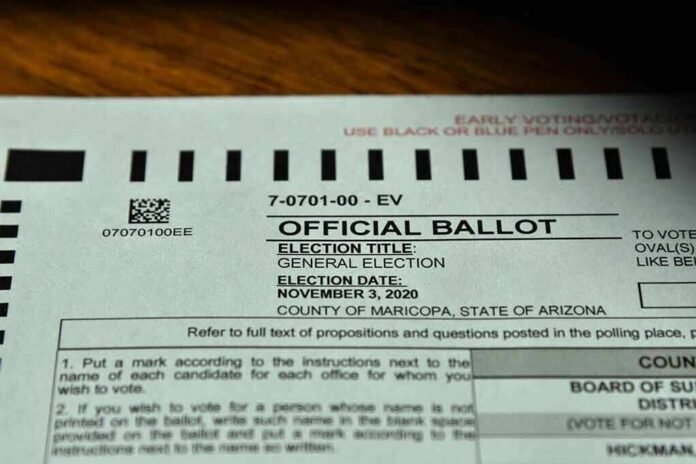
Georgia’s current setup uses touchscreen machines to print a paper ballot that shows a summary of the voter’s choices in plain text plus a separate QR code that scanners actually read to count the votes.[6][7] Critics argue that because voters cannot read the QR code, they cannot truly confirm what the machine is tabulating in their name.[7][20] Supporters point out that the printed summary lists the voter’s selections in clear language, and elections so far have not produced court-verified evidence of QR-code fraud or manipulation.[6] Still, the fact that the human-readable text is not what gets counted leaves a layer of technology between citizens and their vote totals, and that is exactly what many Trump supporters and election integrity advocates have opposed from the beginning.[5][16]
Hand Recounts Added, But Full Transparency Still Missing
To calm some of the pushback, Republicans in the legislature added a hand-count requirement for certain contests.[3] Under the final bill, counties must conduct hand recounts of the top two races statewide before certifying results, creating a second check on the numbers coming from the QR-code scanners.[3][6] Election officials and Democrats attacked the idea as logistically “too late” and burdensome, warning that large counties would struggle to find staff and time to count high-profile races by hand.[7] Their argument helped shift media coverage away from questions about QR-code security and toward talk about whether manual counting is practical.
This change means Georgia will run two counts in key races: the machine count using QR codes on election night and a later tally based on human-readable ballot text before state certification.[7][8] However, under the proposal, county-level certification still rests on the QR-code totals, not the text-based recount.[7] That structure lets officials claim there is an extra safeguard while still leaving the original black-box technology in charge of the official numbers at the local level. For voters who do not trust QR codes on ballots at all, partial hand counts may feel more like political cover than a true fix.
Why QR Codes On Ballots Worry Election Integrity Advocates
Conservatives concerned about election integrity point to a simple problem: QR codes are built for machines, not people.[18][20] Security groups note that QR codes can hide large amounts of data that only a scanner can read, making it harder for ordinary users to know exactly what is being processed.[18] Verified Voting, a nonpartisan election technology group, has warned that while codes make sense to flag ballot type or precinct, they “shouldn’t be used to encode votes” because voters cannot verify what the machine is tallying.[20] In Georgia, that is exactly how the system works now: the QR code encodes the choices, and the scanner reads that code, not the text summary.[6][7]
Georgia wrapped up special session today by passing bill to delay ballot QR code removal & set next steps to replace the state’s voting system in 2028.
Final vote incl. Democrat Josh McLaurin, nominee for Lt Gov. running vs Republican Greg Dolezal (also voted “yes”). #gapol pic.twitter.com/1OynrpJo28
— Beau Evans (@beauvans) June 23, 2026
President Trump and many of his supporters have long pushed for hand-marked paper ballots counted in the open by humans, not hidden codes on machine-printed slips.[5][16][21] Trump’s executive order on elections called on federal officials to move away from barcodes and QR codes in vote counting, arguing that true paper records must be directly verifiable by the voter’s own eyes.[16] Georgia even passed its 2024 ban on QR-code counting with that same concern in mind, but the new delay shows how hard it can be to unwind complex machine systems once they are locked into place.[7][16] Without full funding, clear leadership, and strong constitutional safeguards for transparent vote counting, technology that voters cannot read will continue to stand between Georgia citizens and the results that decide who governs them.
Sources:
[1] Web – Georgia’s QR codes for counting votes will remain for midterms after …
[2] Web – Georgia’s QR codes for scanning ballots will remain for midterms …
[3] Web – Georgia’s vote-counting method will soon be banned. Lawmakers …
[5] Web – Georgia Democrats blast requirement to recount votes by hand in …
[6] YouTube – Inside Georgia’s effort to secure voting machines as experts raise …
[7] Web – Georgia legislators passed a law two years ago barring the use of …
[8] Web – Georgia’s QR codes for counting votes likely to remain for midterms …
[16] Web – Georgia must eliminate QR codes from ballots by July. Is the state …
[18] Web – Senate Republicans pushed through a divisive voting system …
[20] Web – Election Security | Brennan Center for Justice
[21] Web – Decoding your ballot: The role of QR codes and barcodes