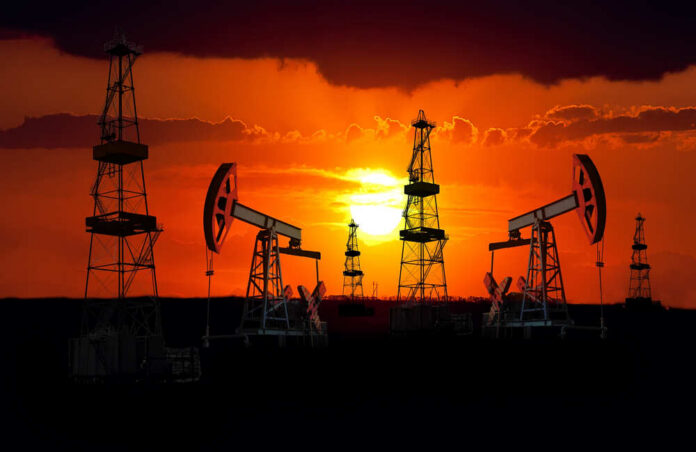
President Trump’s announcement of a two-week ceasefire with Iran triggered the largest single-day oil price collapse since the 1991 Gulf War, exposing just how vulnerable American families and businesses remain to global energy blackmail orchestrated by hostile regimes.
Story Snapshot
- Crude oil plunged 13-20% below $100 per barrel after Trump announced Iran ceasefire, marking biggest drop since 1991 Gulf War
- Pakistan-brokered deal requires Iran to reopen Strait of Hormuz—controlling 20% of global oil supply—in exchange for US halting attacks
- Oil prices had skyrocketed over 50% in March 2026 after Iran blockaded the strategic waterway, hitting Americans with soaring fuel costs
- Ceasefire is temporary and fragile, leaving ordinary citizens exposed to renewed price shocks if negotiations fail
Markets Erupt as Energy Chokepoint Reopens
Crude oil prices crashed below $100 per barrel on April 8, 2026, with West Texas Intermediate falling to approximately $94-97 and Brent crude dropping to around $95, representing a 13-20% plunge in early Asian trading. Global stock markets surged simultaneously while the dollar weakened as investors reacted to President Trump’s social media announcement of a conditional two-week ceasefire with Iran. The Pakistan-mediated agreement requires Iran to coordinate safe passage through the Strait of Hormuz while the United States suspends military strikes, offering temporary relief from a conflict that sent energy costs spiraling and threatened to devastate household budgets across America.
Conflict Drove Historic Oil Price Surge
The US-Iran conflict erupted in late February 2026, triggering a cascade of events that hammered American consumers and businesses. Iran’s blockade of the Strait of Hormuz—a narrow waterway through which one-fifth of the world’s oil and gas flows—strangled global energy supplies and sent prices from approximately $73 per barrel to a staggering $144.42 for Dated Brent crude, the highest level since the 2008 financial crisis. March 2026 recorded the steepest monthly oil price increase in history, surging over 50% as US-Israeli strikes met Iranian threats to deny energy to American allies “for years.” This government-fueled crisis demonstrated how political elites’ foreign policy failures translate directly into pain at the pump for working Americans.
Trump’s Social Media Diplomacy Reverses Course
President Trump’s approach shifted dramatically from ultimatum to negotiation within hours. On April 7, Trump issued a stark warning on social media, threatening Iran with “obliteration” and declaring “a whole civilization will die tonight” unless the Strait reopened. By April 8, Trump announced a “double-sided ceasefire” based on Iran’s 10-point proposal, which he praised as “workable” for achieving long-term peace. Pakistan Prime Minister Shehbaz Sharif facilitated the agreement and invited both nations to Islamabad on April 10 for permanent negotiations. Iran’s Foreign Minister Abbas Araqchi confirmed Iran would halt attacks and coordinate Strait passage through Iranian forces, though Iran’s Supreme National Security Council simultaneously claimed a “historic defeat” for the United States.
Fragile Peace Leaves Americans Vulnerable
The ceasefire’s temporary nature and unresolved tensions expose fundamental problems with America’s energy security and government leadership. Experts including IG’s Tony Sycamore cautioned this represents a “good start… but lots of ifs” regarding permanent reopening of the Strait. Bloomberg analyst Anthony di Paola noted markets remain “complacent” without proof of actual vessel movements, warning the Strait lacks “permanent/reliable” access while costs stay elevated. Gulf states continue reporting drone and missile activity, suggesting the threat persists beneath the surface. This precarious situation reflects a broader failure: political leaders on both sides prioritize short-term optics over solving the structural vulnerabilities that allow foreign adversaries to hold American prosperity hostage through energy manipulation.
The whipsaw in energy markets—from $73 to $144 and back to $95—illustrates how ordinary citizens bear the consequences when government officials engage in brinkmanship rather than pursuing energy independence. While stocks rallied and wealthy investors celebrated, families nationwide remain one diplomatic failure away from another crippling surge in gasoline, heating, and transportation costs. The ceasefire may provide breathing room, but it does nothing to address the fundamental reality that America’s energy security remains dangerously dependent on the decisions of hostile regimes and the competence of politicians more focused on headlines than on protecting citizens from economic devastation.
Sources:
Oil prices plunge as US and Iran agree to ceasefire – Axios
Crude prices plunge, stocks surge as US and Iran agree ceasefire – CNA
Oil Prices Plunge Below $100 as Trump Announces Iran Ceasefire – OilPrice.com
Oil prices plunge, US stocks jump as Iran agrees to two-week ceasefire – 1News